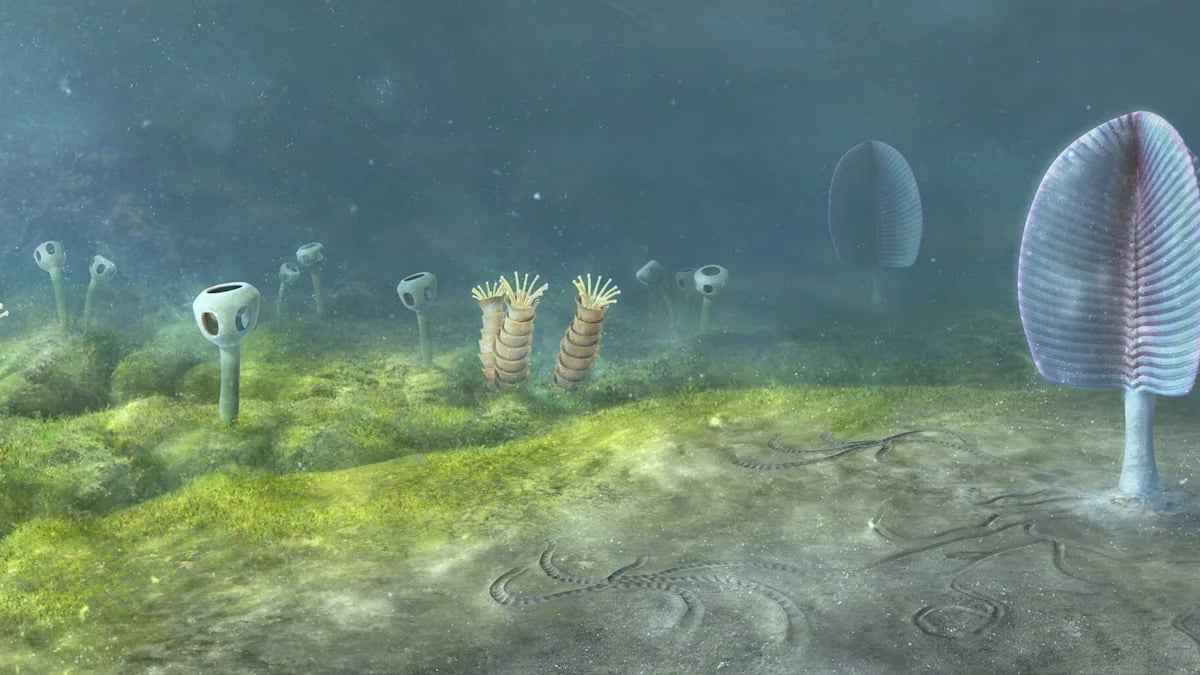
Using scanning electron microscopy on more than 140 samples, researchers analyzed the Kheseen Biota in Mongolia to test whether the absence of animal fossils proves animals were absent from the ecosystem. Published October 2, 2026, in Science Advances, molecular-clock analysis suggests the animal kingdom may have originated 800 to 700 million years ago, up to 200 million years earlier than undisputed fossil evidence indicates.
Unambiguous body fossils of early animals extend back to about 574 million years ago during the Ediacaran period. Scientists have long debated when the earliest animals first inhabited Earth. That timeline relied on an assumption that exceptionally well-preserved microfossil deposits, such as the Weng’an Biota in China, would have captured animal remains if animals had existed when those rocks formed.
A new research team argues that logic breaks down. Testing younger fossil sites where animals certainly lived elsewhere revealed that exquisite preservation does not guarantee animal fossils are present, forcing a recalculation of evolutionary history.
Testing Mongolian Kheseen Biota Against Chinese Microfossils
The research team examined the Kheseen Biota in Mongolia. This assemblage is younger than the Weng’an deposit in China. Because animals were flourishing in other parts of the world by the time the Kheseen sediments accumulated, the researchers expected to find animal remains in the rock.
The team uncovered exquisitely preserved microscopic species. Despite that extraordinary level of detail, none of the microfossils could be identified as an animal.
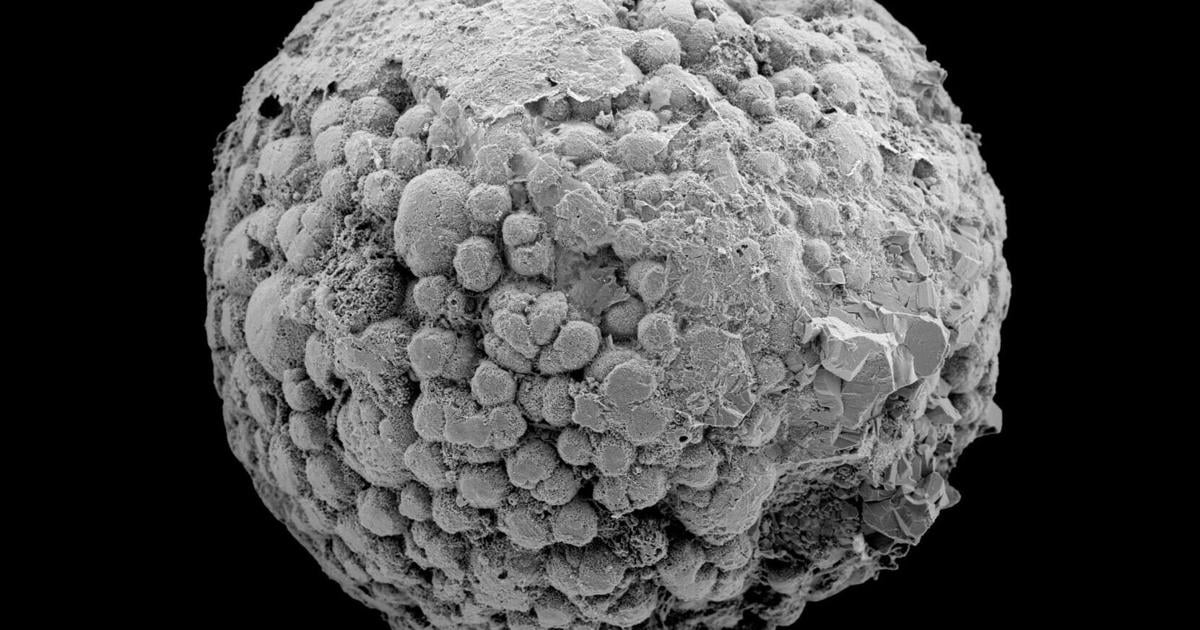
“The Kheseen Biota breaks the argument that the exceptional microfossils of Weng’an mean we would have seen animal fossils in the assemblage had they existed at the time. The Kheseen microfossils are just as well-preserved, yet animals continue to be absent — despite the fact we know at that point they existed.”
That discovery undermines the use of the Weng’an Biota as an upper limit for when animals could have evolved, according to researchers at Yale University and Oxford. Environmental factors or chemical conditions after death likely prevented animal remains from fossilizing in those specific sites.
Recalibrating Molecular Clocks With Tonian-Age Deposits
Molecular clock analysis calculates evolutionary rates by comparing genetic differences between living species and working backward using established fossil dates as reference points.
The team substituted older rock formations dating between roughly 850 and 730 million years ago. These included the Bitter Springs Group in Australia, the Svanbergfjellet Formation in Norway, and the Chuar Group in Arizona.
- Bitter Springs Group: Australian fossil-rich deposits dating to the Neoproterozoic era.
- Svanbergfjellet Formation: Norwegian rock strata sharing potential for early fossil preservation.
- Chuar Group: Arizona rock units providing deep geological calibration points.
Shifting to these older constraints pushed the estimated origin of crown-group animals backward by roughly 200 million years. The analysis places the emergence of animal life between 800 million and 700 million years ago, deep within the Neoproterozoic era.
Intersecting With Cryogenian Glaciations and Snowball Earth
An origin between 800 and 700 million years ago places the earliest animal emergence right before or during the Cryogenian period, which began around 720 million years ago.
During this interval, massive glaciers covered the planet in episodes known as Snowball Earth. Researchers note that chemical biomarkers, such as lipid traces interpreted as sponge signatures, already hint that sponges lived at least 650 million years ago.
The study authors emphasize that future investigations must explore diverse fossil deposits representing different environments and modes of fossilization, incorporating body fossils, trace activity, and chemical biomarkers.
Worth a look
- University of Copenhagen Researchers Reveal Earth and Mars Formed Differently
- Moon to Occult Jupiter Over Eastern North America on October 6
- Magdeburg researchers say Alzheimer’s memory loss may be partially reversible (world-today-news.com)
- Does the MLB Playoff Bye Help or Hurt? What Four Years Show (daybreakwire.com)
University of Copenhagen Researchers Reveal Earth and Mars Formed Differently
Earth and Mars formed side by side from the same cosmic cloud roughly 4.5 billion years ago, yet...

Moon to Occult Jupiter Over Eastern North America on October 6
Skywatchers across much of eastern North America can watch a rare lunar occultation early Tuesday morning as a...

Saturn Reaches Closest Approach to Earth for the Year
Saturn stands roughly 784 million miles from Earth as opposition positions the ringed giant at its closest annual...

Researchers Identify Candidate Second-Generation Planet Orbiting White Dwarf
Circling its parent dead star every 4.4 days, a Jupiter-sized gas giant orbits the white dwarf HS 0209+0832...