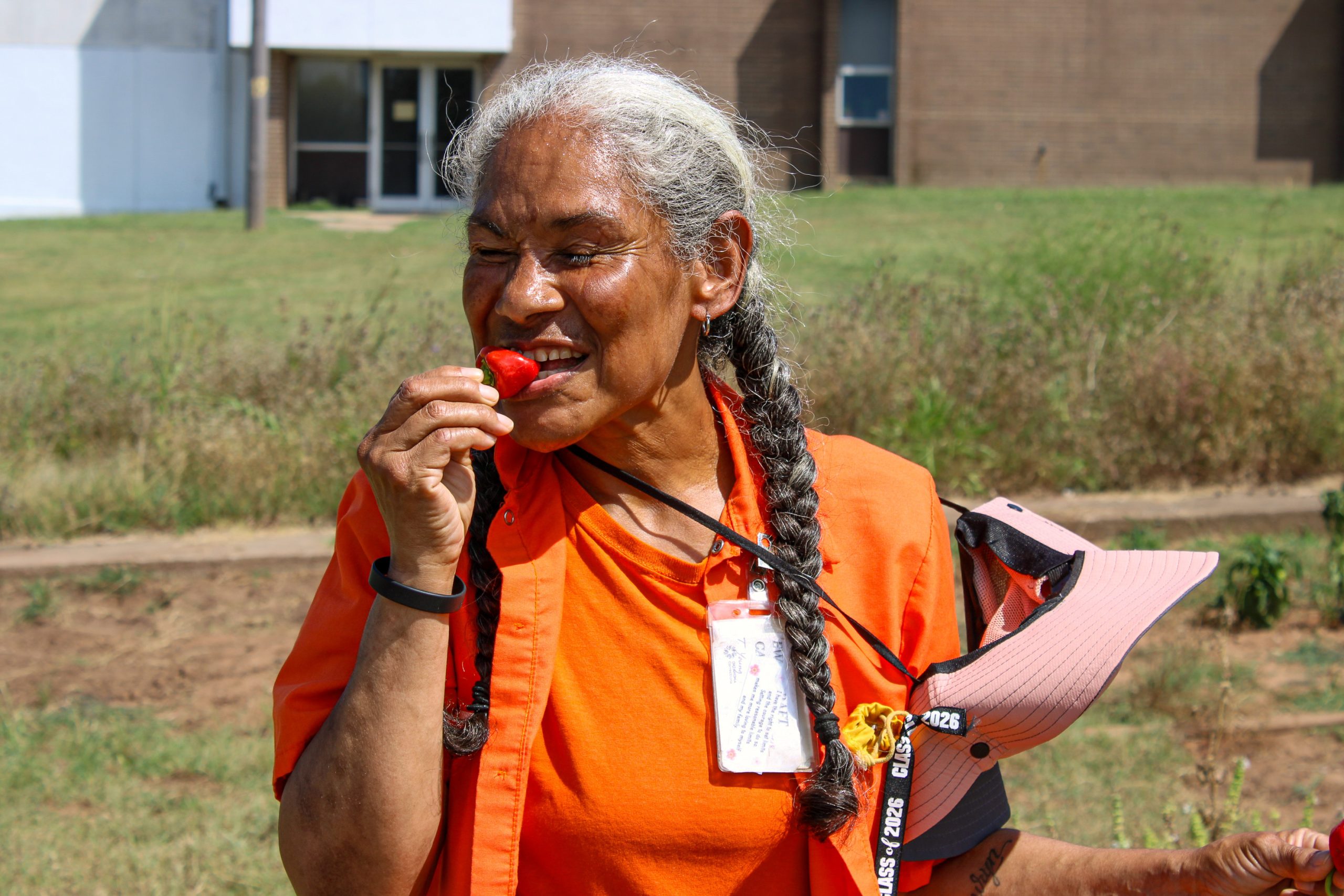
“It’s been the most freeing experience, even in a place where you don’t have much freedom,” said LaShay Rhodes, a participant in the Women in Agriculture program at Eddie Warrior Correctional Center.
Behind the razor wire in Taft, Oklahoma, a prison garden now spans nearly an acre and produces more than a ton of fresh vegetables each year, Tulsa Flyer reported. The harvest feeds roughly 250 incarcerated women at least once a week, supplementing standard prison menus with arugula, turnip greens, tomatoes, peppers, carrots, Brussels sprouts, asparagus, okra, watermelon, berries and fresh herbs.
The program launched officially in 2024 when Oklahoma State University Extension Master Gardeners began teaching soil preparation, planting schedules and pest management using only rudimentary hand tools. Participants work full days assigned to specific beds or the nursery, planning crops around recipes they study from shows like “America’s Test Kitchen” and “Milk Street” on OETA.

“You want quick gratification. You learn humility — you want something, but the reward comes later. And, what is coming you know will be good,” said Taima Young, another participant.
The produce also travels beyond the fence line. Tulsa nonprofit caterer Carabelle’s Legacy folds the prison-grown microgreens, edible flowers, herbs and vegetables into dishes that fuse soul and Indigenous food traditions, serving them at events and at She Brews Coffee on North Lewis Avenue.
Founder Maria Morris started the business after her daughter died in a 2018 house fire, a loss that led to addiction, homelessness and her own incarceration. In recovery, she returned to culinary training, built a kiosk at Legacy Plaza into a catering operation, and five years ago launched a culinary training program for formerly incarcerated women. Nineteen women have completed it; none have re-offended.
“This is an integral part of our program,” Morris said. “We are incorporating what they grow in their garden into our dishes. It felt like a natural connection.”
Volunteers from the OSU Extension Master Gardener program provide the technical backbone. “We don’t believe in ourselves, but they believe in us,” Young said. “They put their faith, time, effort and energy to help us believe in ourselves. They want to instill something in us that we can use when we leave.”
Brandy Hunt, a garden leader, described the shift in her own mindset. “I was prideful when I arrived, and this makes me want to do more,” she said. “We can come here, enjoy nature and what God has given us. I feel a sense of accomplishment and responsibility. It’s humbling working out here.”
Related reading

FRA Releases Amtrak South Side Facility Review, Opens Comment Period
Seven thousand residents live within 500 feet of the proposed Amtrak maintenance facility on Chicago's South Side, and...

Spotlight Delaware Highlights 5 Weekend Events Nov. 20–22, 2026 Across Three Counties
Spotlight Delaware highlights five events across the state for the weekend of Nov. 20–22, 2026, ranging from a...

The Scout Guide Charleston Volume 12 Launches at 40+ Lowcountry Locations
The Scout Guide Charleston released Volume 12 this week, dropping complimentary copies at more than 40 independent businesses...

Sirianni Stands Pat: Mannion Keeps Play Sheet, Milton Keeps Huddle vs Steelers
Nick Sirianni emerged from the bye week with a decision that defines where the Philadelphia Eagles stand: Sean...