When a surgeon removes a tumor during breast-conserving surgery, the margins of healthy tissue surrounding that tissue are supposed to be clear of cancer cells. But in roughly 10% to 20% of cases, pathology reports tell a different story, revealing cancer cells right at the edge or sitting uncomfortably close.
A five-year longitudinal study published in Cureus examines what happens next for these patients, tracking 190 individuals who faced secondary procedures after initial breast-conserving operations showed positive or close radial margins. The findings reveal a stark divide in recurrence risks, particularly highlighting the distinct challenges posed by ductal carcinoma in situ compared to invasive forms of the disease.
The Hidden Realities of Re-Excision Rates
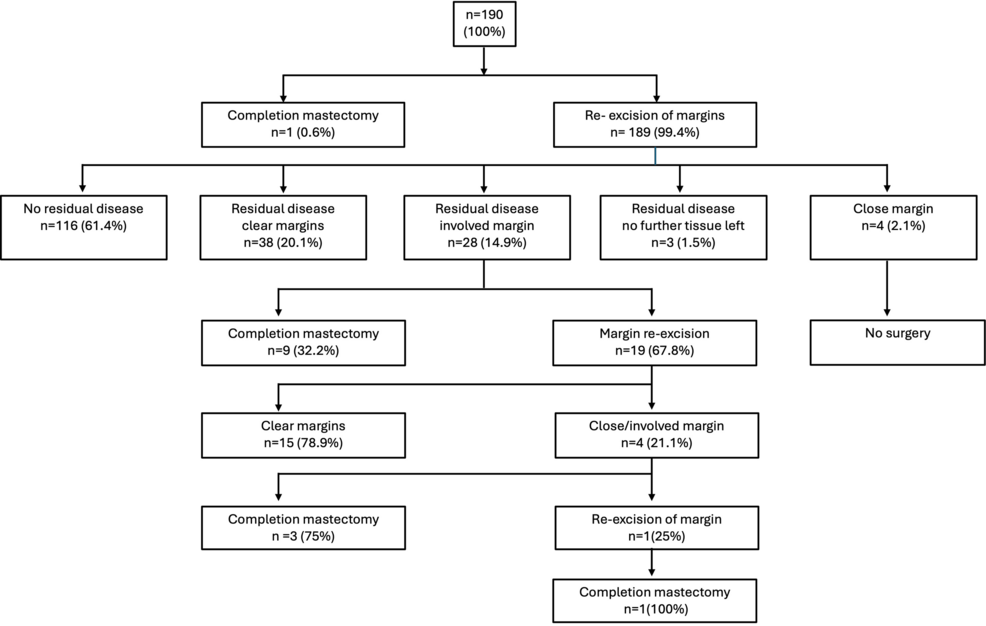
Between July 2013 and November 2018, researchers at a university teaching hospital tracked consecutive patients who underwent breast-conserving surgery and subsequently discovered involved or close margins. Out of 1,779 total patients treated during that window, 190 individuals—all women with a median age of 61—faced secondary surgery. The majority of these cases, about 58.4%, were detected through routine screening, while 37.9% presented with symptoms.
When these patients returned for margin re-excision, pathologists examined the newly removed tissue for residual disease. Across the cohort, 73 patients, or 38.6%, were found to have residual cancer in the re-excised margins. Another 116 cases showed no residual disease.
The numbers shift dramatically when breaking down the diagnosis types. For patients with pure ductal carcinoma in situ, residual disease appeared in 73.5% of re-excised specimens. For those with invasive cancer, residual disease showed up in just 26.4% of cases. That statistical gap registered as highly significant, pointing to a fundamentally different behavior pattern for non-invasive lesions left at the surgical edge.
Ductal Carcinoma In Situ Versus Invasive Disease
The Cureus study underscores why pure ductal carcinoma in situ presents unique hurdles during breast-conserving procedures. Not only is residual disease far more common in these patients, but radial margin involvement toward the nipple is also seen more frequently in ductal carcinoma in situ than in invasive cancers.
Following the initial procedures, local recurrence rates tracked during a median follow-up of 47 months laid bare these underlying biological differences. Overall, the study observed seven local recurrences, one regional recurrence, and five distant recurrences. Yet local recurrence climbed significantly higher among patients with pure ductal carcinoma in situ who had positive margins, hitting 10.2%.
| Tumor/Condition Type | Total Patients in Subgroup | Residual Disease in Re-Excised Specimen (%) | Local Recurrence Rate (%) |
|---|---|---|---|
| Ductal Carcinoma in Situ (DCIS) | 49 | 36 (73.5%) | 10.2% |
| Invasive Cancer | 140 | 37 (26.4%) | Not separately isolated as high-risk primary |
These secondary procedures carry real friction. The median time to re-operation stood at 33 days. While only one patient opted for a completion mastectomy right away, the rest underwent margin re-excision, with 17% ultimately needing a second re-excision for persistent positive margins.
The Clinical Dilemma of Margin Management
Surgeons walk a tightrope during primary breast-conserving surgery. Pursuing excessively wide margins at the initial operation can severely damage the cosmetic outcome of the breast, a problem that is often compounded later by radiotherapy and secondary shaping procedures. Yet missing the mark risks leaving cancer cells behind, which drives up local recurrence and drags patients back into the operating room for general anesthesia, extra recovery time, and added emotional strain.
The authors of the study argue that these findings point to a clear clinical need. Patients diagnosed with ductal carcinoma in situ should be counselled pre-operatively regarding the elevated risks of margin positivity, residual disease, and local recurrence so they can weigh the trade-offs of breast-conserving procedures against alternative surgical paths.
As treatment protocols evolve, the question remains how multidisciplinary teams will adjust localization techniques to catch these margins the first time around, sparing patients the physical and psychological toll of a second trip to the surgical suite.

Review: Call of Duty: Modern Warfare 4 (PS5) – Same Old Multiplayer Drags Down Stellar Package
Call of Duty: Modern Warfare 4 arrives across major consoles and PC for $69.99, pairing Infinity Ward's strongest...

Ilocos police chief checks Undas security in San Carlos – Daily Tribune
Seaport Traffic Surges Past 114,000 as Undas Travel Rush Intensifies Nationwide As millions of Filipinos travel across the...

Cork Remembers Victims and Survivors of 1956 Polio Epidemic
Seventy years after an outbreak of poliomyelitis brought terror to Cork, a group of survivors gathered to mark...

Wikimedia Indonesia and English Club Project Host WikiLatih Workshop
WikiLatih brings Wikipedia training to the English Club Project in South Jakarta On August 9, 2026, a collaborative...