
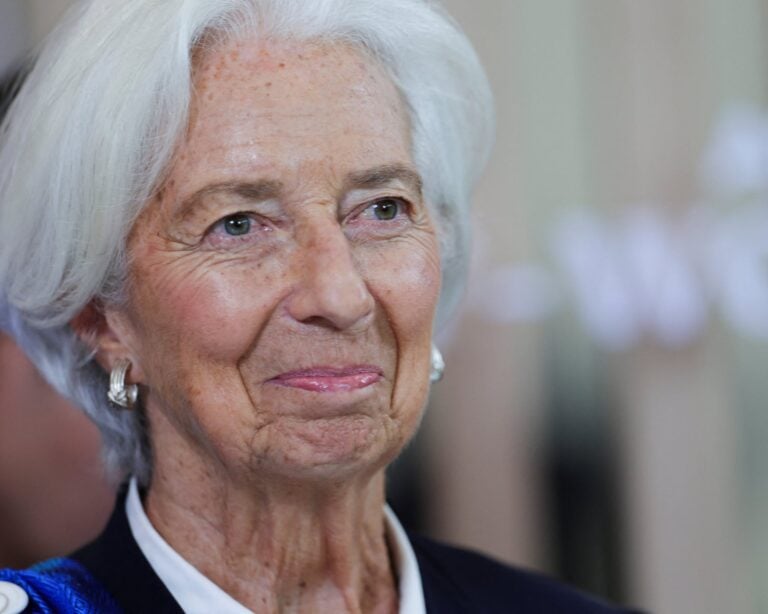
Christine Lagarde will step down as European Central Bank president in February 2026 after more than seven years of leading the institution through overlapping global crises. National leaders have already begun the succession process to find a successor who combines economic expertise and political acumen.
When Christine Lagarde took the helm of the European Central Bank in late 2019, Europe faced sluggish growth, low inflation, and negative interest rates. As Dnyuz reported, the Covid-19 pandemic arrived just three months later, succeeded by an energy crisis following Russia’s 2022 invasion of Ukraine, market disruption from President Trump’s global tariffs last year, and a fresh energy shock stemming from the Middle East conflict.
After more than seven years of managing these disruptions, Ms. Lagarde announced this week that she will hand over the reins in February. Economists note that future policymakers will face continued acute shocks alongside climate change and artificial intelligence. The primary mandate for the head of the central bank remains stable prices, which generally means keeping inflation around 2 percent. Fulfilling this task is uniquely challenging at the European Central Bank because it targets average inflation across 21 countries rather than individual home nations.
Succession Candidates and Political Pressures
Ms. Lagarde’s successor will need to be a bit of everything
by combining deep economic knowledge with political acumen, according to Frederik Ducrozet, head of strategy and macro research at Pictet Wealth Management. Among the front-runners to succeed her are Klaas Knot, formerly heading the Dutch central bank, alongside Pablo Hernández de Cos, who previously led Spain’s central bank and currently serves as general manager for the Bank for International Settlements. Both men bring traditional central banking backgrounds to the table.
The timing of Ms. Lagarde’s early departure has drawn criticism for coinciding with the French presidential elections scheduled for next spring. By stepping down in February, the French-born president allows her successor to be chosen while President Emmanuel Macron remains in office, avoiding a transition under potential far-right leadership hostile to European institutions.
French Debt Turmoil and Market Volatility
Political uncertainty in France has already triggered broader market turbulence. Investors have recently shunned French debt, causing the government’s borrowing costs to surge as markets lack confidence in debt-reduction plans from the current government or potential presidential front-runners. While the rapid sell-off in French bonds has prompted questions regarding whether the central bank will intervene, the institution typically avoids stepping into market disruptions generated by domestic politics.
However, the central bank retains the authority to intervene if market volatility threatens broader financial functioning. Gita Gopinath, a Harvard professor and former International Monetary Fund deputy managing director, noted that the incoming president must be prepared to make tough, independent choices regarding market intervention.
It’s important to have a person at the helm who is able to take, along with their committee, these very independent decisions.
Related reading
Christine Lagarde to Step Down as ECB President Nine Months Early
European Central Bank President Christine Lagarde announced she will step down next February, cutting her term short by...
G20 Ministers Scrap Family Photo Over Sergey Lavrov Presence in Atlanta
Foreign ministers from G20 nations concluded two days of talks in Atlanta on Saturday without a joint communique,...

Joseph Kabila Leads New Rebel Alliance Against President Tshisekedi
Former Democratic Republic of Congo President Joseph Kabila has emerged as the leader of the Front for the...

Ukraine Drones Strike Novokuybyshevsk Refinery, Ending Attack Pause
Ukrainian drones struck the Novokuybyshevsk oil refinery in Russia’s Samara region on October 30, marking the end of...