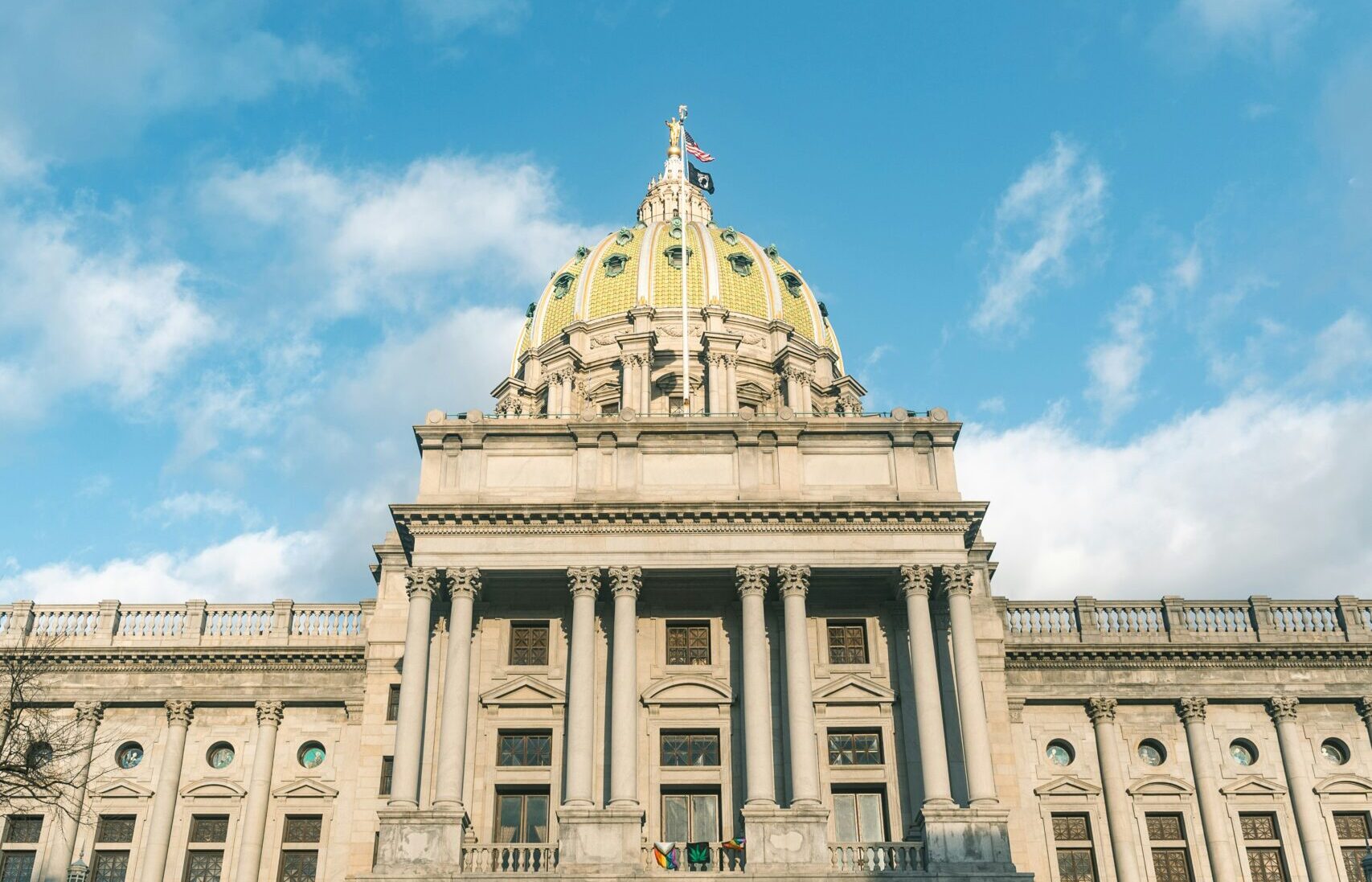
Pennsylvania could lose roughly 80,000 jobs if the state enacts a $15 minimum wage next year, according to a projection released this week by the Employment Policies Institute.
Governor Josh Shapiro stated on Tuesday on a social media post that a $15 minimum wage will become a reality in Pennsylvania. Democrats won full control of the Pennsylvania Legislature this month by flipping the state Senate for the first time since 1993, teeing up the legislation for the upcoming legislative session in January.
The Keystone Research Center estimates that the wage proposal would affect 1.34 million workers in Pennsylvania, or more than 21% of the state workforce. That total includes nearly 776,000 people currently earning under $15 an hour and another 568,000 workers affected through upward pay-scale adjustments.
Applying the analytical approach of the Congressional Budget Office, the Employment Policies Institute estimated that abolishing the tipped minimum wage and jumping straight from the $7.25 federal baseline to $15 an hour without any phase-in period would result in 78,345 lost jobs across the state, with restaurants and food service accounting for 53% of those reductions.
Those projected losses would drop to 55,174 jobs if lawmakers preserve the tipped wage, which sits at $2.83 an hour with a maximum tip credit of $4.42 an hour.
“A $15 minimum wage would put tens of thousands of Pennsylvanians out of work,” said Rebekah Paxton, research director at the Employment Policies Institute.
The institute pointed to a survey of 166 economists conducted in March and April, in which 73% agreed that raising the federal minimum wage from $7.25 to $15 would eliminate jobs. Peter C. Earle, senior research director at the American Institute for Economic Research, said the 80,000 figure might be conservative. The actual total could run much higher depending on labor demand, employer adjustments, and implementation timing.
Competing Economic Forecasts and Debates
Minimum wage advocates pushed back against the projection from the opposite side. Citing studies indicating that neighboring New York avoided significant employment cutbacks while lifting its minimum wage to $16 in 2026, Business for a Fair Minimum Wage CEO Holly Sklar voiced her perspective.
“Raising the minimum wage will help Pennsylvania, not hurt it,” Sklar said.
Michael Reich, a labor economist and chairman of the Center on Wage and Employment Dynamics at the University of California at Berkeley, criticized the Employment Policies Institute for including a disproportionate number of negative studies. Reich called the report an example of garbage in, garbage out, stating it purports to be objective but is not.
Other analysts defended the job loss estimates. Sean Higgins, an analyst at the Competitive Enterprise Institute, said a loss of 80,000 jobs is entirely plausible given that pending legislation would raise the tipped minimum wage to $9 an hour. Allen Mendenhall, an economist at the Heritage Foundation, added that lawmakers cannot simply pass a law declaring people are worth more to employers without changing the underlying economics.
Teenagers ages 16 to 19 would account for 52% of the projected job losses under the proposal, according to the Employment Policies Institute. Meanwhile, Angelica Gianchandani, a marketing instructor at New York University who supports the wage increase, said that Pennsylvania’s Independent Fiscal Office estimated only about 15,600 jobs would be lost if the legislation passes.
The Employment Policies Institute, a fiscally conservative think tank established in 1991, focuses its research on the economic effects of entry-level labor policies. Rather than maintaining its own independent staff or office, the organization operates through a public affairs firm.
It is known for its long-standing advocacy against minimum wage increases, having once launched a high-profile campaign using billboards to suggest that workers demanding higher pay would be replaced by automated technology like iPads.
“When working people earn more, that money is spent locally, often at the same businesses, weighing the cost,” Gianchandani said.
Gilmer County Sheriff’s Office Confirmed Camper Fire 100% Contained
The Gilmer County Sheriff's Office confirmed the fast-moving camper fire that burned over 10 acres in a North...

Local Hydrologists Warn Oʻahu Geology Could Fast-Track Fuel to Ocean
A massive, months-long fuel leak at the H-Power waste-to-energy facility in Kapolei has ignited a sharp debate over...

Protect Cook Inlet Gas Before Committing to Alaska LNG Project
In a column for Homer News published on Friday Frank Murkowski argues that state leaders must protect existing...

Wisconsin lost 70-53 to Murray State in Baha Mar Championship
Wisconsin went 0–2 in the Baha Mar Championship after a 70–53 loss to Murray State on Friday, the...