
Protesters in Dublin called for an end to military spending and a push for peace in Ukraine on Wednesday as European leaders gathered for a high-level summit.
The demonstrations occurred alongside the European Political Community (EPC) meeting at the Convention Centre Dublin, where heads of state from approximately 45 countries were attending a formal dinner. While EU leaders met at the National Gallery, thousands of demonstrators marched through the city center to voice opposition to NATO, military expenditure, and the conflict in Gaza.
“A neutral country like Ireland should be proposing peace and not escalating expenditure on war,” Richard Boyd-Barrett, a People Before Profit TD, said during a rally at Molesworth Street, according to The Irish Times.
The protest, organized by the Irish Anti-War Movement in collaboration with the Ireland Palestine Solidarity Campaign, saw a significant police presence. The Irish Examiner reported that approximately 5,000 gardaí were on duty in Dublin for the day, utilizing public order vans, patrol jeeps, and even a helicopter to monitor the crowds.
Demands for neutrality and peace
The march began at the Spire on O’Connell Street and moved toward Molesworth Street, where demonstrators were stopped by garda barriers near the National Gallery. The Journal reported that the crowd also targeted the presence of US special envoys Steve Witkoff and Jared Kushner, whom protesters identified as “war criminals” during their chants.
Speakers at the rally addressed the human cost of the ongoing war in Ukraine. Boyd-Barrett argued that the conflict was “going nowhere” and noted that young people on both sides were being conscripted into a “hopeless war.” He compared the potential for territorial concessions to Ireland’s own history, stating: “When this country signed a peace agreement with Britain, we didn’t give up our aspiration to unite this country.”

The mobilization drew large crowds, though different outlets provided varying estimates of the size:
| Source | Reported Crowd/Presence Details |
|---|---|
| The Irish Examiner | Roughly 1,000 to 1,300 protesters; 5,000 gardaí on duty. |
| The Irish Times | Approximately 1,000 people took part in the rally. |
| RTE.ie | Around 50 to 60 people at a separate Gaza protest. |
While the anti-war sentiment was broad, The Irish Examiner noted that the specific plight of Palestine dominated the speeches and banners at the Kildare Street barriers, with many protesters calling for EU sanctions on trade with Israel.
Two people arrested during Mothers Against Genocide protest
The heavy security presence resulted in several confrontations. RTE.ie reported that two people were arrested following scuffles at a “Mothers Against Genocide” protest at the old Central Bank plaza. These protesters moved through Westmoreland Street, D’Olier Street, and Grafton Street before being prevented from reaching the quays by gardaí.
According to RTE.ie, the two men were arrested for public order offences; one was released following an adult caution, while the second remained in detention. The Journal added that the marchers also chanted slogans directed at Taoiseach Micheál Martin, including “blood on your hands.”
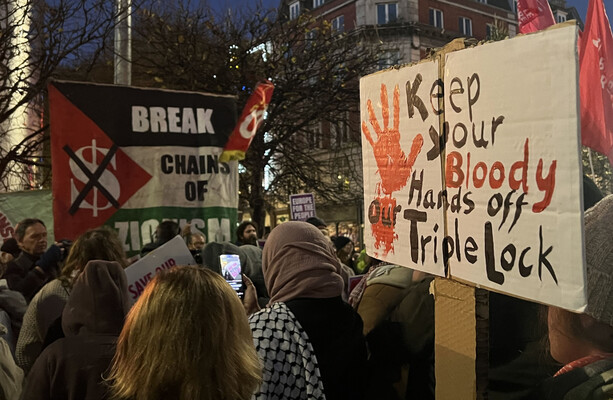
The security operation was extensive, with The Irish Examiner describing a “dizzying number” of public order units and surveillance aircraft patrolling the skies above the city.
The debate over Irish neutrality
The protests highlighted a growing tension regarding Ireland’s traditional stance on neutrality. Many demonstrators advocated for the protection of the “Triple Lock” mechanism, a legislative requirement that prevents Irish troops from being deployed abroad without a UN mandate, government approval, and Dáil authorization.
The core of the disagreement lies in how a neutral nation should interact with escalating regional tensions. Protesters argued that increased military spending and closer ties to NATO-aligned interests undermine Ireland’s sovereign position. Conversely, proponents of closer European integration often argue that security cooperation is essential as geopolitics change.
The political stakes were underscored by the presence of high-profile figures at the summit, including Ukrainian President Volodymyr Zelenskiy. While The Irish Examiner noted that Zelenskiy was not expected to attend the formal dinner, his presence in Dublin served as a focal point for the demonstrators’ grievances regarding the war in Ukraine.
“They don’t want to fight in a war where they get slaughtered … that was done to tens of thousands of Irish people in the first World War,” Boyd-Barrett said, referencing the impact of conscription, The Irish Times reported.
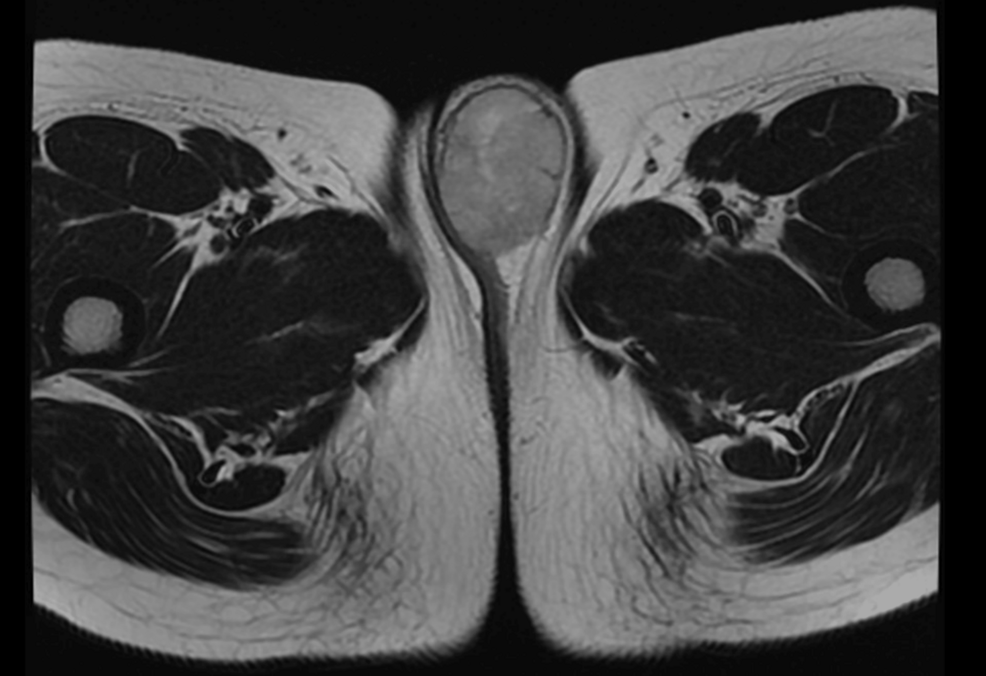
Pregnancy Outcomes Following Adolescent Treatment for Undifferentiated Vulvar Sarcoma: A Case Report
A woman who survived undifferentiated vulvar sarcoma as a teenager has had four successful pregnancies despite undergoing intensive...
ACC Launches ADVANCE-ASCVD to Improve Cardiovascular Prevention
The American College of Cardiology (ACC) has launched a new initiative called ADVANCE-ASCVD to reduce atherosclerotic cardiovascular disease...

Delhi Govt Inaugurates 11-km Chhath Ghat at Munak Canal
Delhi officials inaugurated an 11-km-long Chhath ghat along the Munak Canal on Thursday to accommodate thousands of devotees...
Study Shows Stable Motor Function for 13 Weeks in ALS Cell Therapy Trial
Motor function scores remained stable for 13 weeks in a small group of patients receiving bone marrow-derived cell...