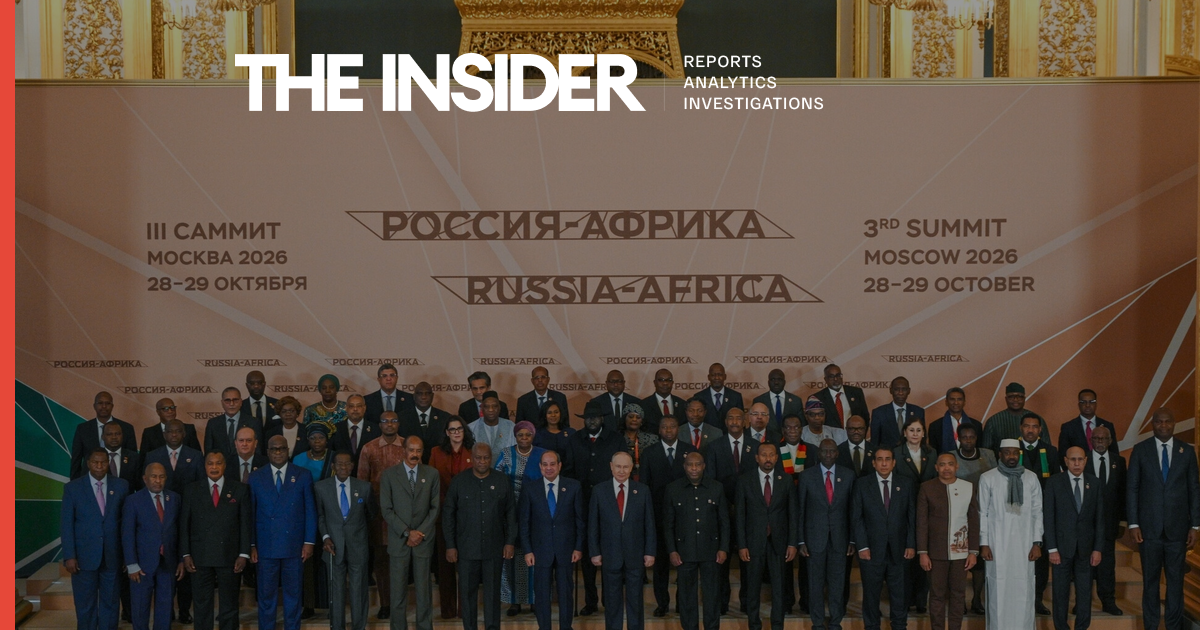
The third Russia-Africa summit convened in Moscow on October 28-29 with 48 African country representatives, 22 of whom were heads of state.
Discussions at the gathering centered on trade, energy, military cooperation, and technology, while the Kremlin announced a declaration calling for a more multipolar world order and expanded cooperation in security and trade calling for a more multipolar world order.
The summit’s declaration emphasizes respect for the UN Charter, non-interference in internal affairs, and national sovereignty. It calls for reforms to international institutions, specifically advocating for increased African representation on the UN Security Council. The document opposes the unlawful seizure of sovereign assets and unilateral coercive measures. Regarding economic ties, the declaration seeks to boost industrialization and investment in Africa, reduce trade barriers, and diversify trade.
Cooperation in energy, such as natural gas and nuclear power, was highlighted alongside agriculture, fertilizer supplies, transport infrastructure, and the processing of critical minerals. The declaration also calls for closer security cooperation to combat maritime piracy, terrorism, and violent extremism, proposing a permanent high-level Russia-Africa dialogue focused on food security, information security, and counterterrorism.
Other priorities include healthcare, science, education, cultural exchanges, digital technologies, and artificial intelligence. The document calls for promoting historical justice, recognizing the lasting effects of colonialism, and the return of cultural property.
Trade figures contrast stated goals
Trade with Africa has reached only $27.1 billion, which falls short of the $40 billion that Putin originally promised at the first summit in 2019 far short of the $40 billion.
Russia’s foreign trade with Africa represents just 3.9% of its total foreign trade, concentrated among Egypt, Algeria, Morocco, and South Africa.
Much of this trade has benefited Russia, which imported only 11.8% of goods from its African partners, leaving Africa with a trade deficit rather than a major advantage. Russia’s ability to provide economic support is also constrained by the war, which has left it with few ways to strengthen or stabilize its own economy due to a combination of war-based losses and sanctions.
Security Setbacks in Mali
The Africa Corps faced a setback in April 2026, when Tuareg rebels and jihadist fighters recaptured Kidal, forcing hundreds of Russian personnel to withdraw.
While Russian-backed forces reportedly regained control of Kidal in October, the episode highlighted military vulnerabilities. Throughout 2025, jihadist attacks increased, leading to a fuel blockade that disrupted economic activity in Bamako. The actual effectiveness of the Corps on the continent has been minimal, particularly regarding violent extremism, as deaths related to violent extremism on the continent have surged by more than 1000% since 2019.
Media discussions at summit sidelines
Stakeholders at a dialogue on the sidelines of the summit discussed maintaining standards amid the spread of fakes and infotainment high-level dialogue held on the sidelines. The session, themed Rethinking the Challenges Facing Modern Media, was held between October 28 and October 29. Stakeholders also provided insights through separate interviews with the News Agency of Nigeria (NAN).
Participants observed that the media must manage the rapid growth of infotainment and the widespread distribution of fakes by developing crisis response strategies and maintaining responsibility to audiences. Stakeholders defined modern media as internet-based and digital technologies used for consuming information and entertainment, such as blogs, podcasts, streaming services, and social media.

Prof. Abdullahi Musa, Vice-Chancellor of Kaduna State University (KASU), urged media professionals to adopt strategic information management adopt strategic information management strategy.
Malam Ali, the Managing-Director of the News Agency of Nigeria (NAN), advocated for global collaboration among media entities to protect the credibility of mainstream news in the face of challenges from digital technology and AI. He suggested that media should rely more on cross-referencing and fact-checking tools to verify content before it is shared.
East African Development Opportunities
The Director of the East African Freedom Council said that participation in the Russia-Africa engagements offered a chance to discuss economic transformation and historical injustices discuss economic transformation and historical injustices.
The engagement also explored practical cooperation, covering areas like technical education and artificial intelligence.
Other areas of potential cooperation discussed included agro-industrialisation, waste management and recycling, small-scale industries, skills development, and technology transfer. These discussions aimed to find partnerships to create jobs, attract investment, and strengthen local industries to aid the development of Kampala.
The Director also highlighted the vision of M7 to champion the East African Federation, describing it as a project to strengthen regional integration, overcome neocolonialism, and improve Africa’s position in the global order.
Keep reading

Greece Faces ‘Most Difficult’ 48 Hours for Migrant Arrivals in 2026, Minister Says
Greece recorded its hardest two days for migrant arrivals this year as more than 1,000 people were rescued...

About 2,000 Migrants Arrive in Crete by Boat Since Friday, Greek Officials Say
More than 2,000 migrants reached Crete by boat from eastern Libya in the 24 hours to Sunday, the...


Glampsite Owner Loses Court of Appeal Bid Over Neighbours’ Driveway Right
A Welsh glampsite owner lost her Court of Appeal bid to stop neighbours driving to their parking space,...