Moscow Pursues Floating Nuclear Plants as Russia-Africa Summit Closes
Russia is positioning itself to become the world’s first commercial exporter of floating nuclear power plants, pitching the technology directly to African delegations during a high-stakes diplomatic push in Moscow. “Russia is definitely ahead of the other nuclear countries in terms of developing next generation reactors and providing state-backed finance,” Todd Moss, executive director of the US-based power think tank Energy for Growth Hub, told Semafor.
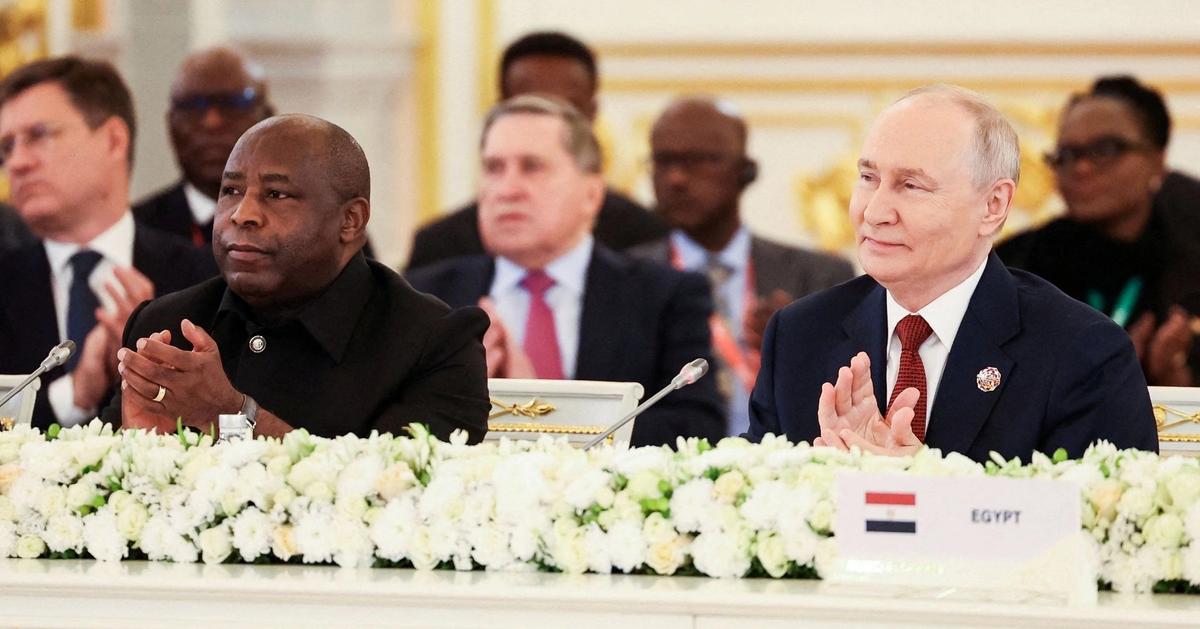
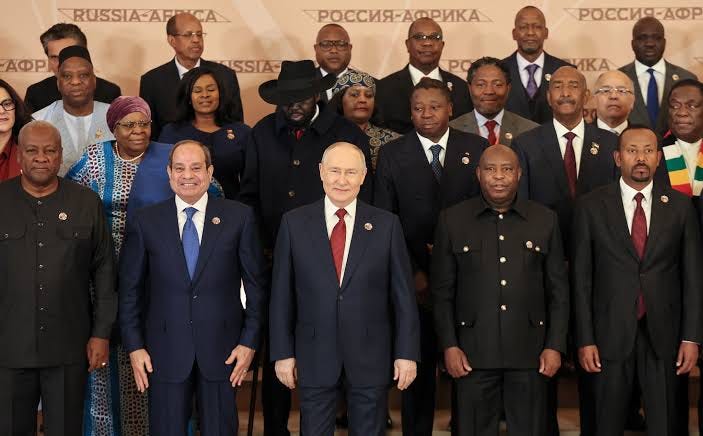
The third Russia-Africa Summit brought 48 country delegations and 22 heads of state to the Grand Kremlin Palace on October 28 and 29, 2026. Co-chaired by Vladimir Putin and Burundi’s president, Évariste Ndayishimiye—who currently chairs the African Union—the gathering served as a stage for Moscow to deepen its economic footprint across a continent grappling with severe electricity access gaps.
Nuclear Announcements and Rosatom’s Expanding Footprint
The summit yielded a wave of energy agreements involving at least six nations. State-owned energy corporation Rosatom entered advanced talks with Egypt, Togo, Namibia, and Tanzania regarding floating nuclear power plants. Rwanda, building on an eight-year partnership that includes plans for small reactors and a research center, agreed with Rosatom at the summit to assess and develop its nuclear infrastructure, complementing a civil nuclear cooperation agreement signed with the United States in May. Meanwhile, Ghana announced talks with the Russian company to construct its first nuclear power plant.
These developments underscore a stark disparity in global nuclear financing capacities. According to figures cited in July by former US deputy energy secretary Daniel Poneman and reported by Semafor, Russia commands roughly $200 billion in nuclear project orders worldwide, while the United States sits at $7.7 billion.
Geopolitical Friction Over Debt, Trade, and Protests
Addressing the summit on October 28, Putin framed Russia as Africa’s premier partner, launching sharp critiques at Western nations. Putin accused the “colonial West” of attempting to exploit African resources and utilizing debt to hinder development. He maintained that Russia does not engage in “neo-colonial exploitation.”
Putin also noted that Russia supplied 13 million tonnes of agricultural products to Africa in the first nine months of 2026 and highlighted that approximately 40,000 Africans study at Russian universities. On the financial front, the ruble accounts for up to 85 percent of commercial payments between Russia and Africa, even as the US Treasury designated the promoted payment network, A7, as a transnational criminal organization on October 1.
Diplomatic pageantry inside the Kremlin contrasted sharply with public dissent elsewhere. On October 28 in Yaoundé, Cameroon’s capital, families marched to the Russian embassy demanding the return of their sons and brothers from the war in Ukraine.
While leaders inked the Moscow Declaration, a 2027–2029 action plan, and a declaration on cooperation in civilian artificial intelligence, not all arrangements carried binding construction commitments. Rosatom’s memorandum with Togo’s energy ministry establishes working groups without a construction commitment.
Related reading
DUP’s Emma Little-Pengelly halts joint work with Michelle O’Neill
The DUP’s Tactical Withdrawal from Stormont Joint Engagements The delicate architecture of Northern Ireland’s power-sharing government faces a...

Subsea Cable Vulnerability: Geopolitical Threats and the Cost of Regulatory Bifurcation
The Deep-Sea Chokepoint Threatening Trans-Pacific Data Networks Trans-Pacific undersea cables have rapidly evolved from background utility infrastructure into...

Ireland Must Prepare Pathway for Britain to Rejoin European Union
The Republic of Ireland Must Pave Britain’s Road Back to the European Union, Says Minister The Republic of...

Rare public sighting of A-listers’ 31yo son
Tom Cruise and Nicole Kidman’s son Connor, 31, made a rare public appearance at the 2026 World Series,...