
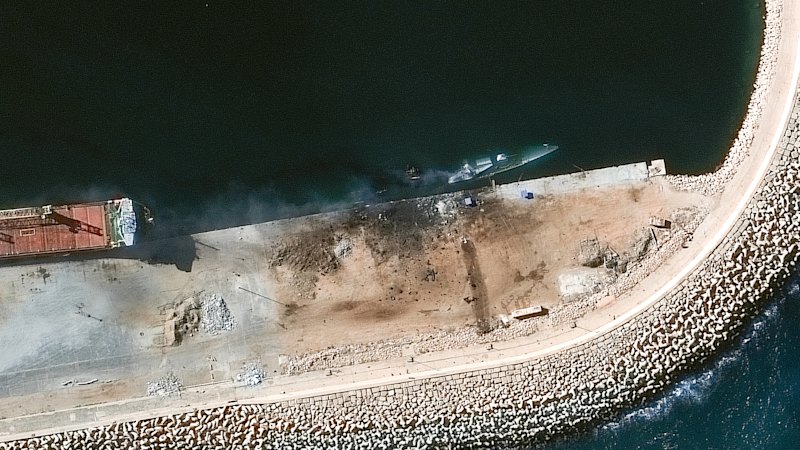
A Russian navy corvette erupted in flames at Benghazi naval base on Sunday after what Libyan officials and military sources describe as a Ukrainian sea‑drone strike, the most distant confirmed hit on a Russian warship since the 2022 invasion.
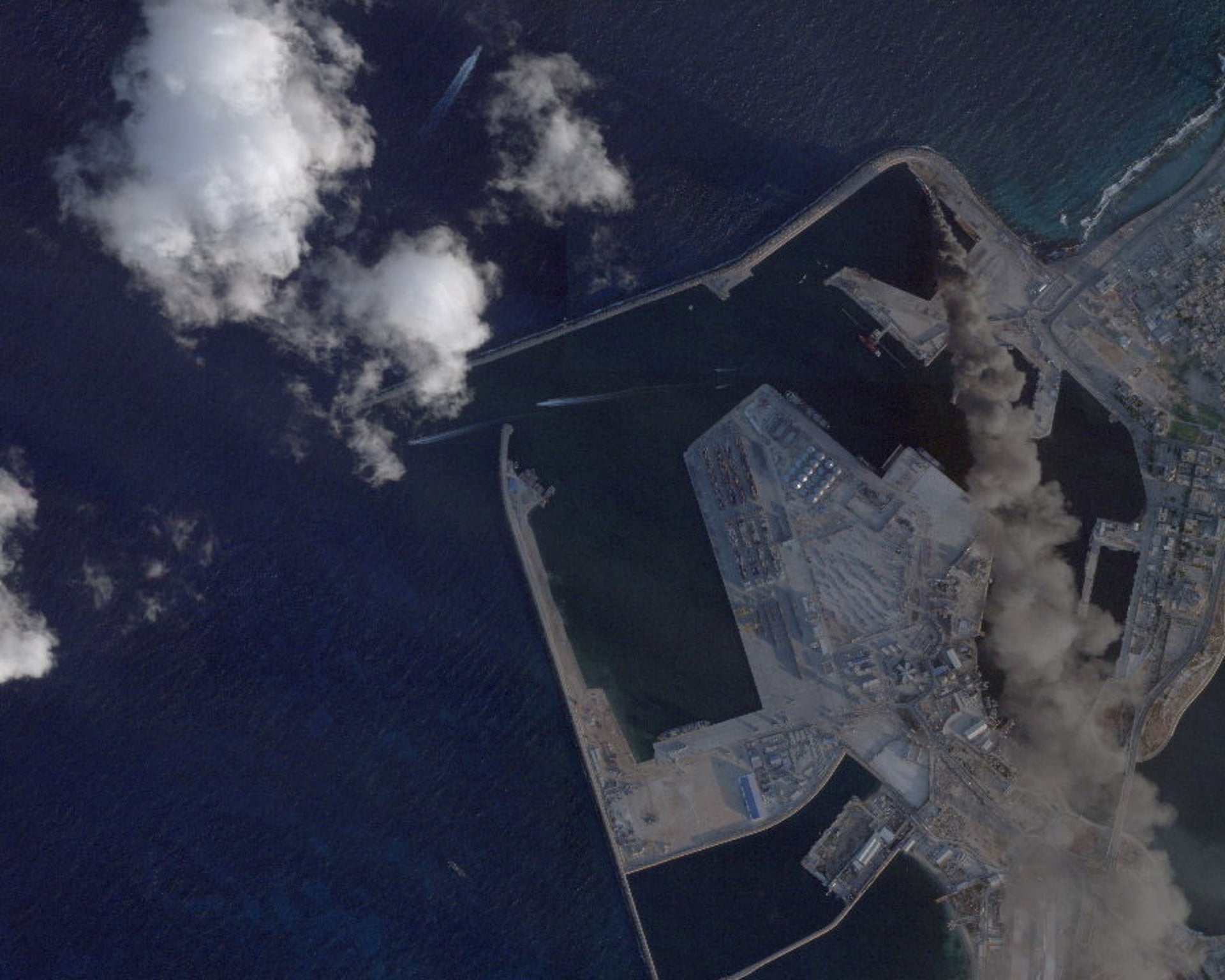
Satellite imagery from Planet Labs shows a heavy smoke plume over the port. Video obtained by Reuters captures the vessel burning at its berth. Two Libyan military officials told the Associated Press the ship was the Merkury, a Project 20380 Steregushchiy‑class corvette commissioned in 2023.
They said at least four drones were intercepted while two struck the warship. The eastern administration said the corvette had docked to refuel and resupply under a maritime cooperation agreement with Russia before heading back to the Arctic, where the Black Sea Fleet has been operating since losing its Crimean bases.
Kyiv Reaches the Mediterranean
The strike, if confirmed as Ukrainian, would mark a dramatic expansion of the SBU’s naval drone campaign. A Russian Navy corvette was severely damaged in a suspected drone strike at Benghazi port, Libya, on November 22, 2026. A source in Ukraine’s Security Service told The Kyiv Independent the operation was launched from a base in western Libya.
🚨 BREAKING: Massive explosion rocks Libya's Benghazi port. Another Russian warship appears to be on fire According to Naval News, the vessel is believed to be the Russian missile corvette Merkury, a Project 20380 Steregushchiy-class warship. After examining satellite imagery… pic.twitter.com/x42ftUV8G4
Radio France Internationale later reported the launch point as Misrata, a city held by the UN‑recognised Government of National Unity in Tripoli. Kyiv and Tripoli reportedly signed a covert deal in 2025 granting Ukrainian forces access to drone launch sites there.
Vladyslav Vlasiuk, sanctions adviser to President Volodymyr Zelensky, did not claim responsibility but told The Kyiv Independent: “It seems that vessels sanctioned by Ukraine for systematically supporting Russia’s military-industrial complex have a rather unfortunate tendency to catch fire. And I suspect this may be neither the only nor the last such incident.”
Second Hull Hit the Same Day
Hours after the Merkury explosion, Libyan naval forces reported a separate sea‑drone attack on a Malta‑flagged commercial vessel off Benghazi. Eastern Libyan authorities said they intercepted more than a dozen drones that evening. The Health Ministry confirmed injuries among the merchant ship’s crew. A Maltese-flagged commercial vessel was also struck by a drone off the Benghazi coast on the same day.
Libya’s Fractured Sovereignty on Display
Libya has been split since the 2011 NATO‑backed uprising that toppled Muammar Gaddafi. The internationally recognised Government of National Unity sits in Tripoli. A rival Government of National Stability, backed by Khalifa Haftar’s Libyan National Army, controls the east including Benghazi.
The eastern administration condemned the attack as a violation of sovereignty and vowed legal and diplomatic measures, insisting it is not a party to the Russia‑Ukraine war. Yet it maintains a military cooperation agreement with Moscow that allows Russian warships to use Benghazi as a Mediterranean hub.
Analysts said the legal status of Libya’s eastern administration complicates attribution, as the authorities controlling the port may be treated as the relevant sovereign for neutrality purposes. A joint Libyan‑Russian investigation has been announced, but no conclusions have been released.
Just look at this! The moment a Ukrainian sea drone attacked a Russian cargo ship off the coast of Benghazi, Libya, was caught on camera The video was posted by OSINTdefender. pic.twitter.com/A3ov9u4P5F
Baltic Echo the Day Before
The Benghazi blast followed a Saturday drone attack on the Russian‑flagged cargo ship Sparta II in the Gulf of Finland. Finnish authorities said the 121‑metre vessel, owned by Oboronlogistika — a logistics contractor for the Russian Defence Ministry and under US Treasury sanctions — was likely struck by Ukrainian drones.
Its 16 crew members were evacuated. A multinational firefighting effort involving Finnish, Russian and Estonian vessels continued through Sunday. Zelensky called the delays in delivering promised air‑defence interceptors to Ukraine “particularly difficult to understand” against the backdrop of such long‑range strikes.
“Smoke is still coming from the vessel, and there is clearly still heat on board,” Jukka-Pekka Lumilahti, sea safety officer and commander of the maritime sub-center Helsinki for the Finnish Border Guard, said.
Russian Military Footprint Expands in Libya
According to Middle East Online, Russia has cultivated a growing foothold in the Libyan file, using its ties with the General Command of the Armed Forces headed by Khalifa Haftar and the strategic weight of eastern Libya in its Mediterranean and African Sahel calculations.
The Guardian observes that the Merkury relies on the port, whose importance has risen since Russia lost bases in Syria, to supply Russian mercenary forces in Africa and to serve as a Mediterranean base.
The Kyiv Independent says Russian‑controlled African Corps troops reportedly operate in southern and eastern Libya in cooperation with Haftar’s regime. CNN adds that a Ukrainian naval drone operator deployed in Libya told the network earlier this year his unit was using a military base in Misrata as a launchpad to attack Russia’s shadow fleet in exchange for training local forces.
Denmark Links Russian Intelligence to Criminal Plot
The Boston Globe reports that Danish authorities said a foiled plot was “planned and initiated by Russian intelligence services” and that the suspects were linked to Loyal to Familia, a banned gang known for “extensive, serious and violent criminal activity.” Russia dismissed the allegations through its embassy in Copenhagen, calling the accusations unsubstantiated. The Danish prime minister’s office said the plot was thwarted.
What the Wreckage Shows
Naval News, citing satellite images and multiple sources, assessed the Merkury as “almost certainly destroyed”. The corvette is a sister ship to the Boikiy, which Ukrainian aerial drones heavily damaged in a St. Petersburg drydock in June 2026. Its loss would cost Russia an estimated $250–350 million and further shrink the Black Sea Fleet’s modern surface combatants. Moscow has not commented on either the Benghazi or Baltic incidents.

Benghazi’s value to Moscow stems from its geography and the political fracture that followed the 2011 uprising. The city sits on the Gulf of Sidra with a major Mediterranean seaport, giving Russian warships a forward logistics hub after the Black Sea Fleet lost its Crimean bases.
The article notes the Merkury docked there to refuel and resupply under a maritime cooperation agreement with the eastern Government of National Stability — the authority controlling Benghazi since the 2014 split with Tripoli — before heading back to the Arctic.
That same 2014 division created the opening Kyiv exploited.
The eastern Libyan government said port facilities were secure and normal operations would resume once the fire was fully extinguished and the site secured.
Related reading
- Iran Dismisses Trump Yalta Comparison as Delusion, Yemen Strikes Saudi Targets
- UN Talks Agree Two-Year Process to Negotiate Autonomous Weapons Rules
- Finland: Ukrainian Drone Hit Russian Ship; Military Cargo Not Ruled Out (archyde.com)
- Sparta II burns in Finnish waters after drone strike on Russian supply ship (newsarchyuk.com)

Iran Dismisses Trump Yalta Comparison as Delusion, Yemen Strikes Saudi Targets
Iran's top security official dismissed President Trump's historical comparison as delusion on Sunday, declaring the United States a...

UN Talks Agree Two-Year Process to Negotiate Autonomous Weapons Rules
United Nations talks in Geneva ended Saturday with 128 countries agreeing to spend two more years discussing rules...

Taiwanese Comedian Huang Yi-hao Draws Sellout Crowds in Taipei
Taiwanese comedian Huang Yi-hao is playing to full houses at Taipei's Two Three Comedy Club weeks after prosecutors...

NYT: American Mahjong Eclipses Chinese Origins, Sparking Cultural Friction
The rising popularity of American mahjong has sparked cultural friction as the game—which features distinct rules and tiles—increasingly...