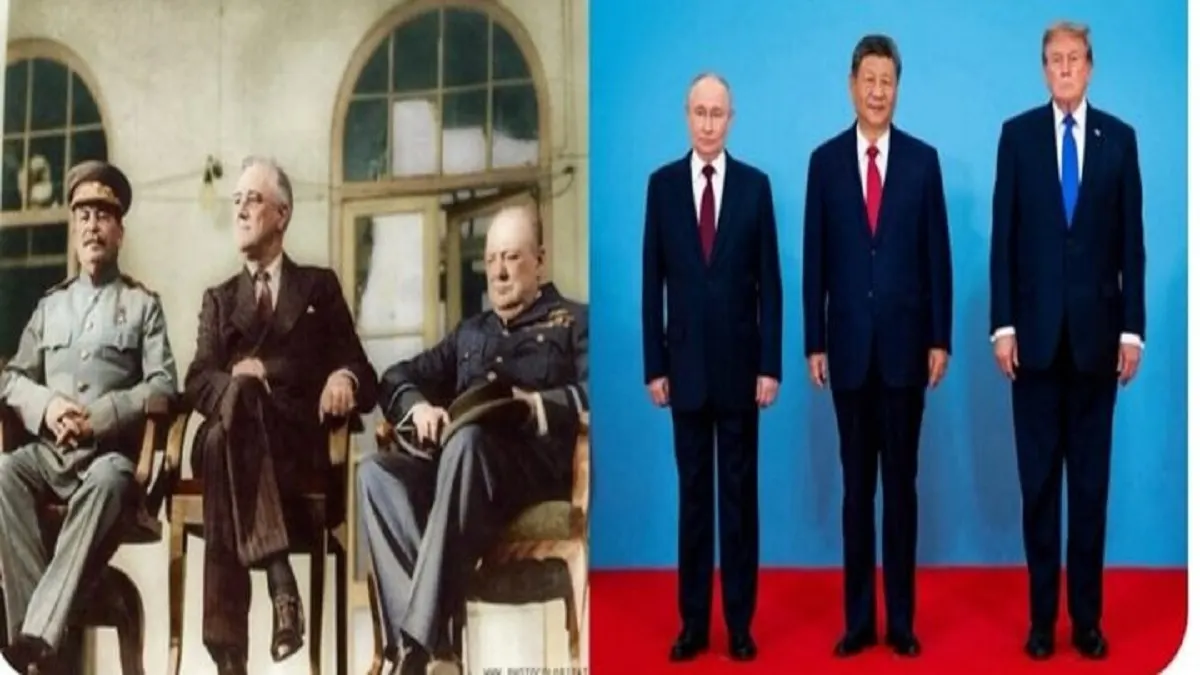
Iran’s top security official dismissed President Trump’s historical comparison as delusion on Sunday, declaring the United States a defeated power that cannot revive a world order it once dominated.
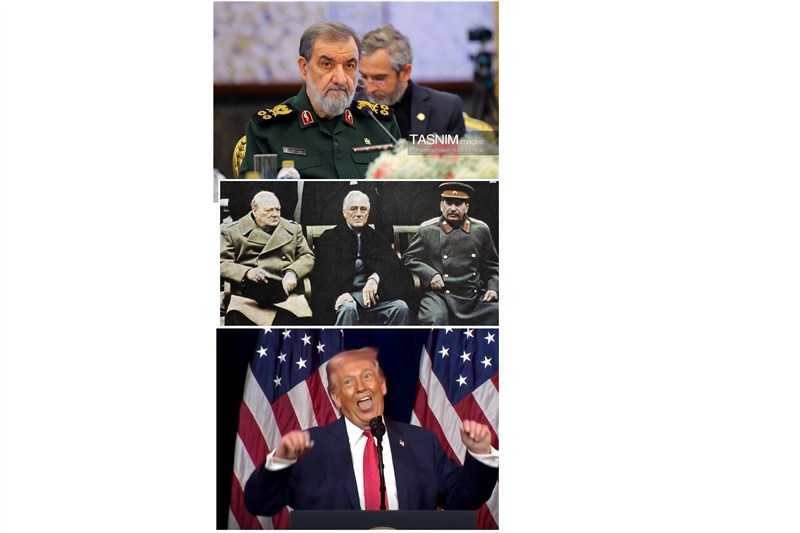
Secretary of the Supreme National Security Council Mohsen Rezaei posted on X after Trump shared a graphic on Truth Social juxtaposing the 1945 Yalta Conference leaders — Roosevelt, Churchill, Stalin — with a photo of Trump, Xi Jinping and Vladimir Putin from their recent summit in Shenzhen. Trump captioned the image “The Great Powers 1945, 2026” and described the meeting as “bigger than Yalta.”
Iran in 2026 is not the Iran of the 1943 Tehran Conference or the 1945 Yalta Conference. Likewise, America in 2026 is not the America of that era and has become a defeated country rather than a victorious one in the war!
Mohsen Rezaei, Secretary of Iran’s Supreme National Security Council
Rezaei added that ““the world has changed; the current world order cannot be restored to the past with old photographs!”” The Yemeni News Agency Saba reported he concluded the post with the hashtag #TheWorldAfterAmerica.
Yemeni Forces Strike Saudi Infrastructure
Hours earlier, Yemeni Armed Forces spokesperson Brigadier General Yahya Saree announced retaliatory strikes on Saudi Arabia’s Shuqaiq power plant and Jizan Port on the Red Sea coast. In a televised statement on al-Masirah TV, Saree said the operations responded to Saudi airstrikes on civilian infrastructure in Yemen, including attacks on power plants in Sa’ada and Mokha and a strike on a pier at Hudaydah port.
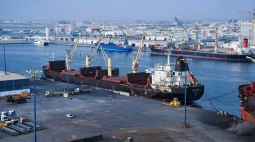
Saree emphasized that further Saudi attacks on Yemeni civilian sites would be met with strikes on ports and power plants inside the kingdom. He also said Yemeni air defense units intercepted a Saudi F-15SA fighter jet with a homegrown surface-to-air missile, forcing it to leave Yemeni airspace.
The escalation traces to July, when Saudi Arabia bombed Sana’a International Airport, prompting Houthi attacks on Saudi airports, oil installations and Red Sea tankers alongside a “blockade for blockade” strategy.
On Sunday, the Houthis also claimed a drone attack on Saudi Arabia’s Rabigh oil refinery, a major petrochemical complex operated by Petro Rabigh about 165 kilometers north of Jeddah. The group said it achieved a direct hit; Saudi authorities did not immediately comment. The Saudi-led coalition said it intercepted a Houthi drone fired at the Riyadh region and destroyed a ballistic missile launched toward the kingdom’s western region.
A War Entering Its Second Decade
The conflict began in March 2015 when Saudi Arabia launched a bombing campaign to restore a Riyadh-aligned government in Sana’a and imposed a blockade that created one of the world’s worst humanitarian crises. Hundreds of thousands have died and Saudi Arabia has not achieved its stated goals.
The renewed fighting since July has unfolded amid the wider U.S.-Israeli war with Iran, with the Houthis seizing territory from Yemen’s internationally recognized government and escalating missile and drone attacks on Saudi energy infrastructure.
Saudi Arabia has intensified airstrikes against Houthi positions in support of its Yemeni allies, and reports indicate the kingdom is preparing for the war to last into 2027 despite battlefield setbacks.
Tehran’s Message: The Order Has Shifted
Rezaei’s rhetoric frames the regional escalation as evidence of a broader geopolitical realignment. Iranian media outlets described his remarks as reflecting Tehran’s view that the international balance of power is shifting, with Washington’s ability to impose its influence in decline amid intensifying competition among the United States, China and Russia.
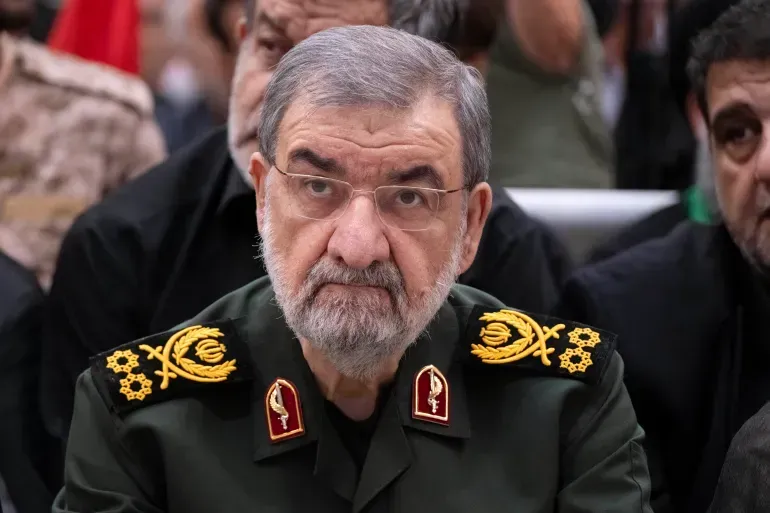
Mohsen Rezaei, appointed Secretary of the Supreme National Security Council in August 2026, anchors his dismissal of Washington’s Yalta analogy in a career spanning the Islamic Revolutionary Guard Corps and Iran’s highest advisory bodies. He served as IRGC commander-in-chief from 1981 to 1997, directing strategy during the Iran–Iraq War and earning a seat on the Supreme Defense Council in 1986.
His current post places him at the nexus of military, intelligence and foreign-policy coordination under the Supreme Leader, giving his public statements the weight of institutional consensus rather than personal opinion.
The Yalta Conference in February 1945 brought together the leaders of the United States, Britain and the Soviet Union to shape the post-World War II order. Trump’s attempt to cast his Shenzhen summit in that mold met an immediate Iranian rejection: the analogy, Rezaei said, belongs to a world that no longer exists.
Related reading

UN Talks Agree Two-Year Process to Negotiate Autonomous Weapons Rules
United Nations talks in Geneva ended Saturday with 128 countries agreeing to spend two more years discussing rules...

Taiwanese Comedian Huang Yi-hao Draws Sellout Crowds in Taipei
Taiwanese comedian Huang Yi-hao is playing to full houses at Taipei's Two Three Comedy Club weeks after prosecutors...
NYT: American Mahjong Eclipses Chinese Origins, Sparking Cultural Friction
The rising popularity of American mahjong has sparked cultural friction as the game—which features distinct rules and tiles—increasingly...

Trump, Xi, and Putin Held Trilateral Talks in Shenzhen on Thursday
Donald Trump, Xi Jinping, and Vladimir Putin held historic trilateral talks in Shenzhen, China, on the sidelines of...