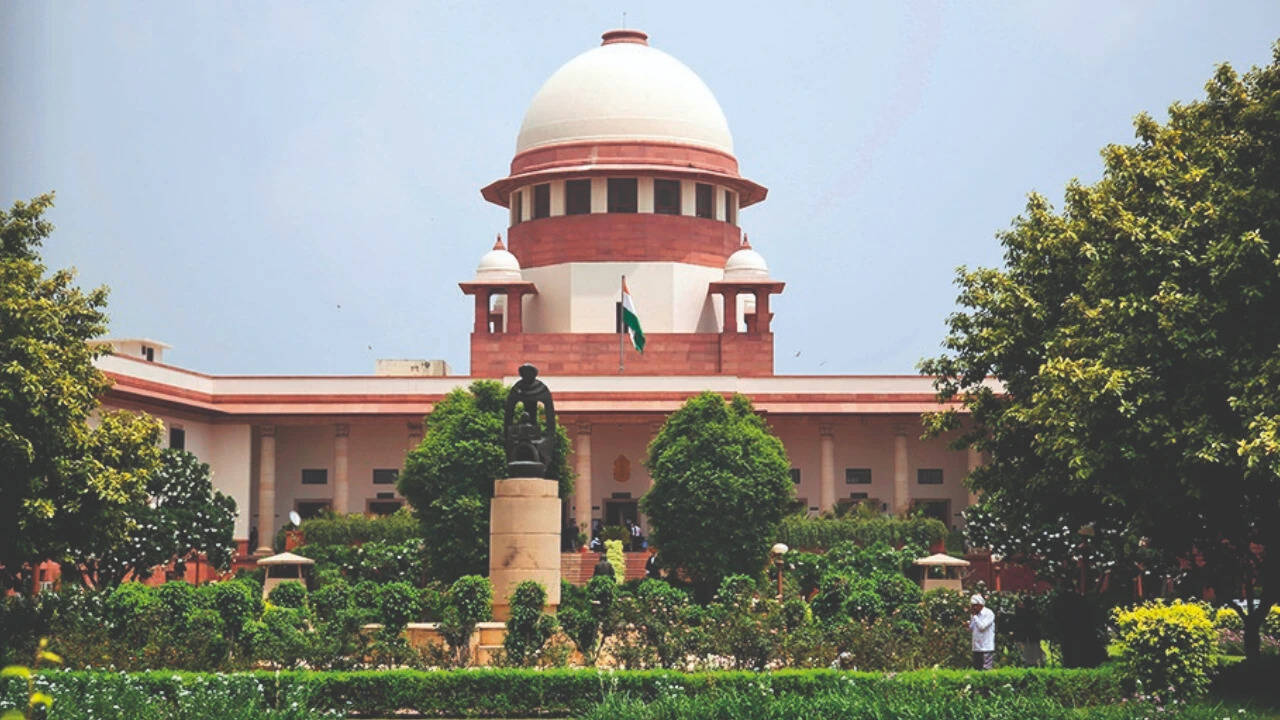
On Wednesday, November 4, 2026, the Supreme Court of India issued notice to the Union government and the Election Commission of India on petitions challenging a law that grants the Chief Election Commissioner and Election Commissioners blanket, lifelong immunity from civil and criminal proceedings, The Times of India reported. A bench headed by Chief Justice of India Surya Kant, along with Justices Joymalya Bagchi and V Mohanna, sought responses from both the Centre and the poll body, giving the government four weeks to reply and listing the matter for hearing on December 18.
The case strikes at the heart of how much protection unelected constitutional functionaries should enjoy from legal accountability. The Chief Election Commissioner and Other Election Commissioners (Appointment, Conditions of Service and Term of Office) Act, 2023, through its Section 16, prevents every court in the country from taking up or continuing any proceeding against a CEC or EC for anything done, or purporting to be done, while performing official duties. The provision extends that shield for life, with no exception for corruption, forgery, mala fide acts, or actions taken outside lawful authority.
A Shield Wider Than the President’s
The petitioners, activist and lawyer Arun Kumar Agarwal and RJD MP Manoj Jha, argue that Section 16 hands the CEC and ECs a protection broader than the Constitution grants to anyone else in public life. According to ThePrint, the plea points out that Article 361 gives the President and state Governors immunity only during their term of office, and even then permits civil proceedings after notice. Members of Parliament enjoy privileges under Articles 105 and 194, and judges of constitutional courts do not possess absolute immunity from civil or criminal proceedings either. Article 324, which governs the Election Commission, contains no such immunity clause at all.
“Despite the absence of such blanket immunity, the Election Commission of India has successfully conducted elections over several decades,” the plea states, as reported by Bar and Bench. “This shows that the Commission can function effectively without granting its members blanket immunity from legal proceedings.” According to the petitioners, shielding Election Commissioners from vexatious proceedings does not require such a broad bar, since narrower options like safeguards against frivolous complaints and prior judicial scrutiny could accomplish the same goal.
The 2023 Law That Changed the Rules
Parliament enacted the 2023 Act to overhaul how the CEC and ECs are appointed, their conditions of service, and their terms of office. Before that law, Election Commissioners operated under a framework that gave them security of tenure, removable only in the manner of a Supreme Court judge under Article 324(5), but no immunity from prosecution. The 2023 Act inserted Section 16, which the petitioners say was introduced through a late official amendment to an ordinary bill and now blocks every civil and criminal remedy. The plea argues that those left with no recourse include a voter whose name is wrongly deleted from the electoral roll, a candidate harmed by a mala fide act, and any citizen aggrieved by corruption in the functioning of the Commission. According to The Hindu, the petitioners submitted that the section bars the jurisdiction of constitutional courts and interferes with the power of judicial review, which is held to be part of the Basic Structure of the Constitution, and violates the right to a remedy and access to justice under Articles 14 and 21.

December 18: The Date That Matters Now
The notice was issued while the same bench was hearing a separate set of petitions challenging the Election Commission’s Special Intensive Revision of electoral rolls in Delhi. During that hearing, the court questioned the poll panel about whether the SIR process was designed to harass voters and directed it to display physical lists of deleted voters in local languages at the block level. The SIR matter is scheduled for November 19. In the immunity case, the Centre and the Election Commission must file their responses within four weeks, and the Supreme Court will hear the full challenge on December 18, 2026.
What remains unanswered is whether Parliament can constitutionally grant unelected officials a lifelong shield from prosecution that the Constitution itself withholds from the President, from every member of Parliament, and from every judge of the Supreme Court and high courts.
More on Centre
SC Seeks Centre, ECI Response on Plea Challenging Immunity for CEC, Election Commissionershttps://t.co/nnFPgtq50k
SC issues notice to Centre, ECI on CEC immunity challenge under 2023 Act Supreme Court issues notice to Centre and ECI on PIL challenging blanket immunity to CEC and Election Commissioners under Section 16 of the 2023 Act. Next hearing on 2 November.https://t.co/VF119zDh9u pic.twitter.com/pkZhVLdubh
#BREAKING SC questions lifelong legal immunity for top election officials, issues notice to Centre and ECI The Court has issued notices on a petition challenging Section 16 of the 2023 law, which protects the Chief Election Commissioner and Election Commissioners from civil and… pic.twitter.com/dc6zLIcLKi
Keep reading

CSFLI Cuts Non-Motor OFF-Period Fluctuations in Advanced Parkinson’s
In a prospective, single-centre, real-world study of 40 patients with advanced Parkinson's disease in Naples, Italy, three months...
East Anglian Air Ambulance blood test confirms brain bleeds in minutes in first trial cohort
When a helicopter crew reaches someone with a suspected head injury, the clock is already running. East Anglian...

Indonesia to showcase three climate bills, energy transition plans at COP31 in Türkiye
When world leaders gather in Antalya, Türkiye, on November 9 for the 31st United Nations Climate Change Conference,...

Potassium-Enriched Salt Could Prevent 3 Million Annual Deaths
Replacing ordinary table salt with a potassium-enriched alternative could prevent nearly three million deaths globally every year, according...