
Researchers have developed new methods and vectors to profile genome-wide exon deletions, providing a system to study gene function in stem cells. By utilizing CRISPR-based technologies, including Cas9 and Cas12a variants, scientists have created experimental pipelines to target and remove specific exons for functional analysis.
CRISPR-Mediated Genomic Editing with CHyMErA Cell Lines
Experimental Framework and Vector Development
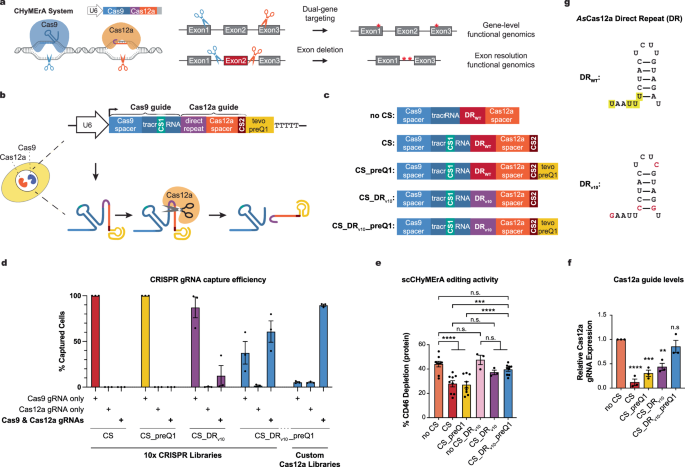
To facilitate these studies, researchers engineered various lentiviral vectors and cell lines. This includes the generation of CHyMErA cell lines, where CGR8 mouse embryonic stem cells were modified to express both Cas9 and Cas12a. These dual-nuclease systems allow for precise genomic editing, which is essential for systematic exon deletion.
pLCHKO Plasmid Series and dCasRx-RBM25 Functional Validation
The technical workflow involves:
- Vector Engineering: Scientists utilized site-directed mutagenesis and assembly methods to create specialized plasmids, such as the pLCHKO series for hybrid guide RNA (hgRNA) applications. These tools allow for the targeting of specific genomic regions, including microexons.
- Cell Line Modification: By using drug selection markers such as blasticidin and G418, researchers successfully established stable cell lines capable of controlled gene editing.
- Functional Validation: Techniques such as genomic PCR and RT-PCR are employed to confirm the successful exclusion of targeted exons. Furthermore, researchers have utilized dCasRx-RBM25 lines, which incorporate guide RNAs to modulate exon skipping or inclusion, to further investigate the consequences of these genetic changes.
Retinoic Acid Differentiation of CGR8 Mouse Embryonic Stem Cells
Applications in Stem Cell Research
The research protocols detailed in the study outline the differentiation of CGR8 mouse embryonic stem cells into neurons. This process involves the use of retinoic acid and specific media formulations to transition cells into neural progenitors. By integrating these differentiation protocols with genome-wide deletion libraries—such as the scCHyMErA-Seq library—scientists can screen for the functional impacts of specific exon deletions within a stem cell context.
scCHyMErA-Seq Library Screens for Functional Impacts of Exon Deletions
These methodologies provide a systematic approach to understanding how individual exons contribute to gene function, offering a scalable platform for future genetic investigations.
Find more reporting in our Health section.
Worth a look

PPARD Activated in Immune Cells Becomes Cancer-Fighting Tool
Researchers at Cold Spring Harbor Laboratory and the Massachusetts Institute of Technology have discovered that the lipid-sensing transcription...

Salk Institute Finds SRF3 Protein Restores Plant Iron Balance
Researchers at the Salk Institute discovered on October 14, 2026, that the plant protein SRF3 repairs cellular iron...

Vatican announces Pope Leo XIV has lung cancer after successful surgery
Pope Leo XIV underwent successful surgery at Rome’s Gemelli Hospital to remove a cancerous nodule from his right...

Max Planck Researchers Discover How Sequence Changes Prevent mRNA Errors
Researchers at the Max Planck Institute for Multidisciplinary Sciences discovered why ribosomes slip when reading modified mRNA and...