A positioning error of a couple of meters is enough to cause an autonomous car to change lanes,
said Charles Lin, an earth science professor at National Cheng Kung University.
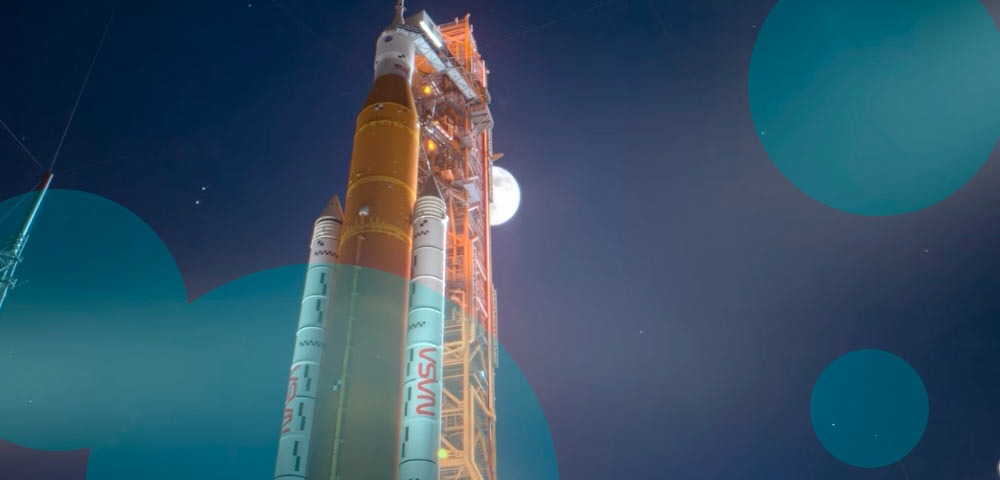
The launch of NASA’s Artemis II mission in April 2026 caused disturbances in Earth’s upper atmosphere, potentially introducing localized GPS positioning errors across North America, according to a new study. Researchers found that the Space Launch System (SLS) rocket and subsequent engine burns created significant changes in the ionosphere, the electrically charged layer of the atmosphere that satellite signals must pass through to reach Earth.
Ionospheric Holes Across the American Continent
The first occurred during the initial launch, but the most significant impacts resulted from later engine burns used to adjust the spacecraft’s orbit.
The SLS rocket used for the launch is NASA’s most powerful ever, providing 8.8 million pounds of thrust. This makes it approximately 15% more powerful than the Saturn V rocket used during the Apollo missions. The launch sent four astronauts—Reid Wiseman, Victor Glover, Christina Koch, and Canadian Space Agency’s Jeremy Hansen—on a journey around the Moon.
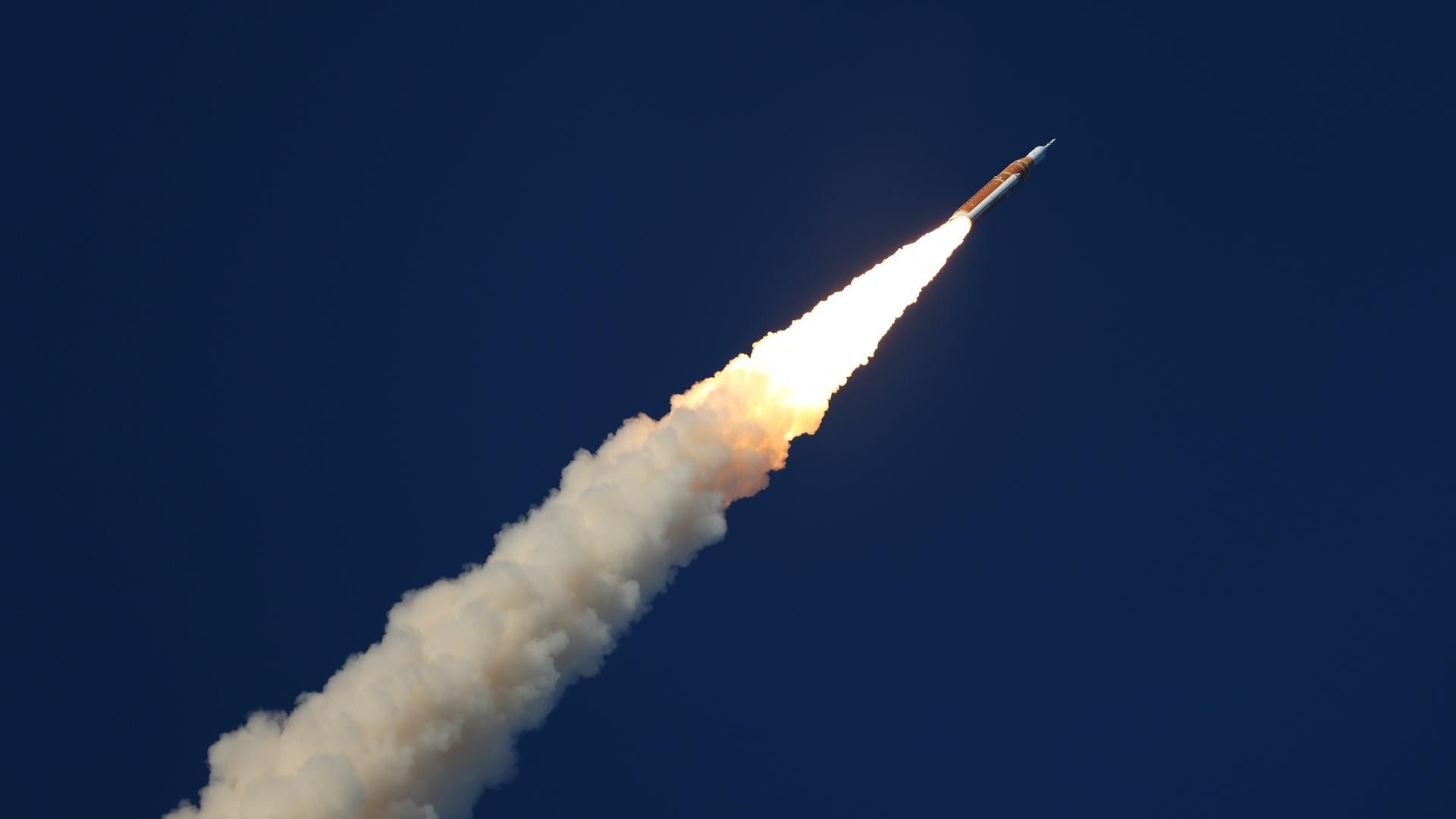
One of these disturbances, an apogee raise burn
occurring about two hours after launch, created a streak of disturbed electrons stretching roughly 3,100 miles (5,000 km) across the continent. This disturbance, which occurred at an altitude of about 115 miles (185 km), triggered shock waves and what researchers described as unprecedented large‑scale disturbances
that elongated 50 degrees of longitude across North America.
While they do not represent physical breaks in the sky, they alter how radio signals propagate, which can interfere with the distance calculations used by GPS receivers to determine a location. GPS satellites transmit timing signals that receivers use to calculate their positions by measuring their distance to four different satellites.
Potential Risks for Autonomous Tech and Drones
The study’s findings suggest these atmospheric changes could translate into positioning errors of several meters.
- Self‑driving cars: Inaccuracies could potentially influence lane choice, though the study did not find evidence that the Artemis II mission caused actual vehicle accidents or malfunctions.
- Drones: Lin stated that these disturbances could also have a strong impact on drone positioning.
Comparing Artemis II to Previous Atmospheric Events
The scale of the Artemis II disturbances is notable when compared to documented history. In 2017, Lin and his colleagues recorded a 559‑mile (900‑km) hole carved into the ionosphere when a SpaceX Falcon 9 rocket launched from Vandenberg Air Force Base in California. The Artemis II event, by contrast, produced disturbances that covered approximately 5,000 kilometres across North America.

Another recorded event involved the U.S. Space Force’s launch of the Victus Nox satellite in September 2023. Stephen Hummel, the coordinator for the University of Texas at Austin’s Dark Skies initiative, reported a red glow across the night sky following that launch, which space‑weather observers described as a sign of ionospheric disruption.
| Event | Approximate Disturbance Scale |
|---|---|
| 2017 SpaceX Falcon 9 Launch | 559 miles (900 km) |
| Artemis II Apogee Raise Burn | 3,100 miles (5,000 km) |
Artemis III Mission Tests Commercial Lunar Landers
As NASA prepares for the Artemis III mission, planned for late 2027, researchers believe these effects will become more significant. Artemis III is intended to test commercial lunar landers in Earth orbit, including Blue Origin’s Mark 2 and SpaceX’s Human Landing System (HLS), which will reach orbit via the New Glenn and Starship rockets, respectively.
The Artemis II mission included astronauts Reid Wiseman, Victor Glover, Christina Koch, and Canadian astronaut Jeremy Hansen, and it proved that powerful engine burns high above Earth can create unprecedented large‑scale disturbances
.
Lin emphasized that as humanity moves toward more frequent interplanetary missions to the Moon and Mars, these human‑generated space‑weather effects will become much more significant
. He described these impacts as a distinct and repeatable source of anthropogenic space weather, beyond the well‑established launch‑stage disturbances
.
Related reading
New Software Makes James Webb Telescope Up to 15 Times More Sensitive
Astronomers have developed a new software technique that makes the James Webb Space Telescope two to 15 times...
KM3NeT Telescope Finds No Violation of Einstein’s Relativity
Only the neutrinos can get through, says Lukas Hennig, a doctoral student at Erlangen-Nürnberg.

McGill University Researchers Build Biocomputer Using Bacteria
Researchers at McGill University have built a biocomputer that runs on living bacteria, using their ability to multiply...

HOXA10 Gene Preserves Lifelong Supply of Bone Stem Cells, Study Finds
A study published online November 4 in Science Advances identifies the gene HOXA10 as the brake that keeps...