
Federal monitors deploy to Kansas City metro counties on Election Day
The U.S. Department of Justice has deployed 1,000 election monitors across all 50 states for what officials describe as the largest election observation effort in the agency’s history, according to a report from KCTV.
In the Kansas City metropolitan area, this federal presence spans both sides of the state line. On the Missouri side, monitors are active in Jackson, Clay, and St. Louis counties. In Kansas, the Department of Justice has dispatched observers to Johnson, Wyandotte, and Sedgwick counties.
This unprecedented mobilization represents the first time federal monitoring teams have reached every state simultaneously. The personnel involved include officers from various DOJ branches, federal observers, and staff from U.S. Attorney’s Offices. While the primary mission is to ensure compliance with federal voting laws, the scale of the deployment has triggered significant debate regarding state versus federal authority.
State officials and community leaders voice concerns over deployment patterns
The concentration of federal resources in specific areas has drawn criticism from local representatives. Kcur.org reported that Kansas state Rep. Melissa Oropeza expressed concern regarding the distribution of observers in her district. She noted that when more than half of the federal observers assigned to the state are concentrated in a single county, it raises questions about the message being sent to the community and potential disparate treatment.
The specific numbers for Kansas highlight this tension. According to the Kansas secretary of state’s office, the DOJ dispatched eight observers to Wyandotte County, three to Sedgwick County, and two to Johnson County. While Oropeza noted that poll watchers had not reported any interference from the monitors as of Tuesday morning, the heavy presence in Wyandotte remains a point of contention.
The debate over why certain areas are prioritized often points to historical voting patterns. A Washington Post analysis cited by Kcur.org indicates that of the jurisdictions selected for monitoring, at least 89 have voted for the Democratic candidate in the last three presidential elections. Conversely, at least 29 jurisdictions consistently voted Republican, and five have swung between parties during those same cycles.
“I am very proud we are deploying the largest monitoring effort in DOJ history,” Assistant Attorney General Harmeet Dhillon said in a statement.
Operational boundaries and reporting procedures for voters
To mitigate friction between federal observers and local election administration, the DOJ has established specific protocols for how monitors interact with the public and polling sites. In St. Louis, the Department of Justice informed the Board of Elections that monitors will maintain a distance of at least 50 feet from polling places, as reported by St. Louis Public Radio.
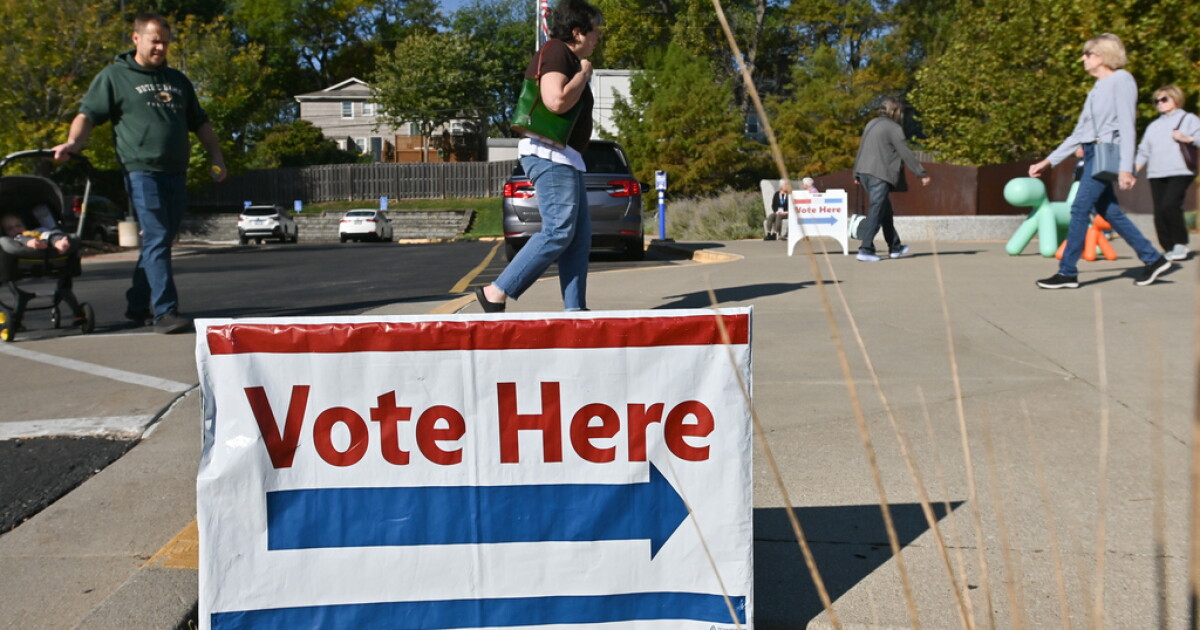
Observers are required to identify themselves as federal representatives. They are permitted to approach voters as they leave the polls to ask about their voting experiences. However, the DOJ has emphasized a clear hierarchy for handling issues that arise during the voting process.
- Routine disruptions: These should be reported directly to local election clerks.
- Violence or threats: Any incidents involving physical violence, threats, or immediate intimidation should be directed to local police.
- Civil rights concerns: The Civil Rights Division has established specific channels for voters to report voting rights issues or disability and ADA access issues.
Kansas Governor Laura Kelly indicated that her administration has been preparing for this federal involvement since last week. She stated that the secretary of state’s office worked with the DOJ to set boundaries regarding where monitors can and cannot go.
The scale of the federal oversight effort
The sheer volume of the DOJ’s current operation is a departure from standard election cycles. By sending personnel into every state, the federal government is attempting to create a uniform layer of oversight, though the logistical and political implications of such a move are still unfolding in real-time across the country.
For voters in the Kansas City metro, the presence of these monitors may be subtle, occurring mostly at the periphery of the polling locations. For local officials, the presence represents a complex intersection of federal mandate and state-managed elections. As the polls close and the initial data from these monitored counties begins to emerge, the effectiveness and impact of this massive oversight effort will likely remain a central focus of post-election analysis.
Keep reading

Hany Mukhtar Ranks Ninth in MLS 2026 Most Popular Jerseys List
Hany Mukhtar jersey ranks ninth in 2026 MLS popularity list Hany Mukhtar has secured a spot among the...

Yhonzae Pierre Addresses Alabama Defensive Front Sack Slump
“As a defense, no, we're not satisfied,” outside linebacker Yhonzae Pierre said. The Alabama defensive front, which began...
North Charleston Man Arrested for Sexual Exploitation of a Minor
North Charleston man faces felony charges in sexual exploitation investigation Connor Burslem, a 32-year-old resident of North Charleston,...
DNC Chair Ken Martin Congratulates Helena Foulkes on RI Victory
Ken Martin congratulates Helena Foulkes on Rhode Island gubernatorial victory The Democratic National Committee has officially recognized Helena...