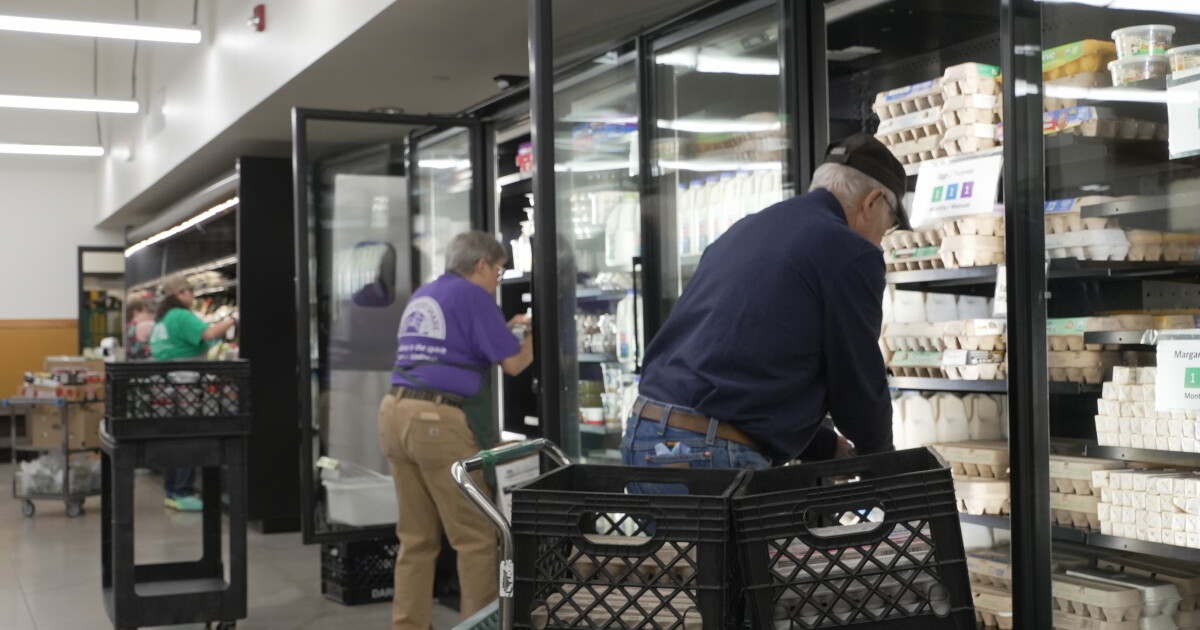
Helena Food Share is seeing a significant surge in demand from Lewis and Clark County residents as inflation and shifting federal assistance programs tighten household budgets. According to a report from KTVH, the organization is currently serving approximately 175 households every day, a figure that represents a 30% increase compared to this time last year.
The upward trend isn’t just coming from new families seeking help for the first time. Executive Director Jordan Evertz noted that many existing customers are returning more frequently because their resources are being stretched thinner. The pressure is a combination of rising costs for essentials like groceries and housing, alongside changes to the Supplemental Nutrition Assistance Program (SNAP).
For many in the community, the math simply no longer adds up. Evertz observed that some customers who previously only required food assistance once a month are now visiting the food share multiple times per month. This indicates that existing benefits are not lasting as long as they once did, forcing families to bridge the gap with local charity.
SNAP changes threaten 7,000 Montanans
A major factor driving this instability is the evolving landscape of federal food assistance. Food share officials indicate that upcoming changes to the SNAP program are expected to impact roughly 7,000 people across Montana. Because the food bank and federal assistance programs function as interconnected pieces of a single safety net, a shift in one area creates immediate ripples in the other.
Currently, about 25% of the people walking through Helena Food Share’s doors rely on SNAP benefits. Evertz warned that the organization is actively preparing for the possibility that demand will continue to climb as these program changes are fully implemented.
“Food banks and SNAP work really closely together to help put food on the table for our neighbors. When one of those pieces of the puzzle is impacted, the whole system feels it.”
This systemic strain is felt most acutely by the most vulnerable populations. Evertz reported that the organization is seeing a rise in unhoused individuals coming in for support, further complicating the mission to meet local nutritional needs.
Volunteers and new facilities buffer the impact
While the demand is growing, the organization has managed to keep pace by leveraging recent infrastructure improvements and a massive volunteer effort. A move into a new building has provided nearly twice the operational space of their previous location, allowing the facility to better accommodate the increased daily foot traffic.
Beyond physical space, the human element remains the backbone of the operation. Helena Food Share manages roughly 100 volunteer shifts every week. These individuals are responsible for everything from rescuing food from local grocery stores to stocking deli coolers and helping customers load groceries into their vehicles.
For long-time volunteer Linda Kindrick, the necessity of the work is underscored by the personal stories of those she meets. Kindrick, who has volunteered for two years, recalled an encounter with a woman who was visibly moved by the sight of a simple can of applesauce because she had not eaten in several days.

As the holiday season approaches, the organization is looking toward community-led support to sustain its momentum. This includes the “Be a Friend in Deed, Help Those in Need” campaign in partnership with Town Pump. Now in its 25th year, the campaign provides community donations and matching funds to support food banks throughout the state of Montana.
The current situation highlights a growing reliance on local solidarity to offset broader economic pressures. While the costs of living continue to climb, the stability of the community’s food security rests heavily on the ability of local organizations to expand their reach and the willingness of neighbors to step in.
Keep reading

Yhonzae Pierre Addresses Alabama Defensive Front Sack Slump
“As a defense, no, we're not satisfied,” outside linebacker Yhonzae Pierre said. The Alabama defensive front, which began...

North Charleston Man Arrested for Sexual Exploitation of a Minor
North Charleston man faces felony charges in sexual exploitation investigation Connor Burslem, a 32-year-old resident of North Charleston,...
DNC Chair Ken Martin Congratulates Helena Foulkes on RI Victory
Ken Martin congratulates Helena Foulkes on Rhode Island gubernatorial victory The Democratic National Committee has officially recognized Helena...
Two Columbus Charter Amendments Lead Early Election Results
Early votes show strong support for two competing plans to change Columbus City Council elections Early voters in...