
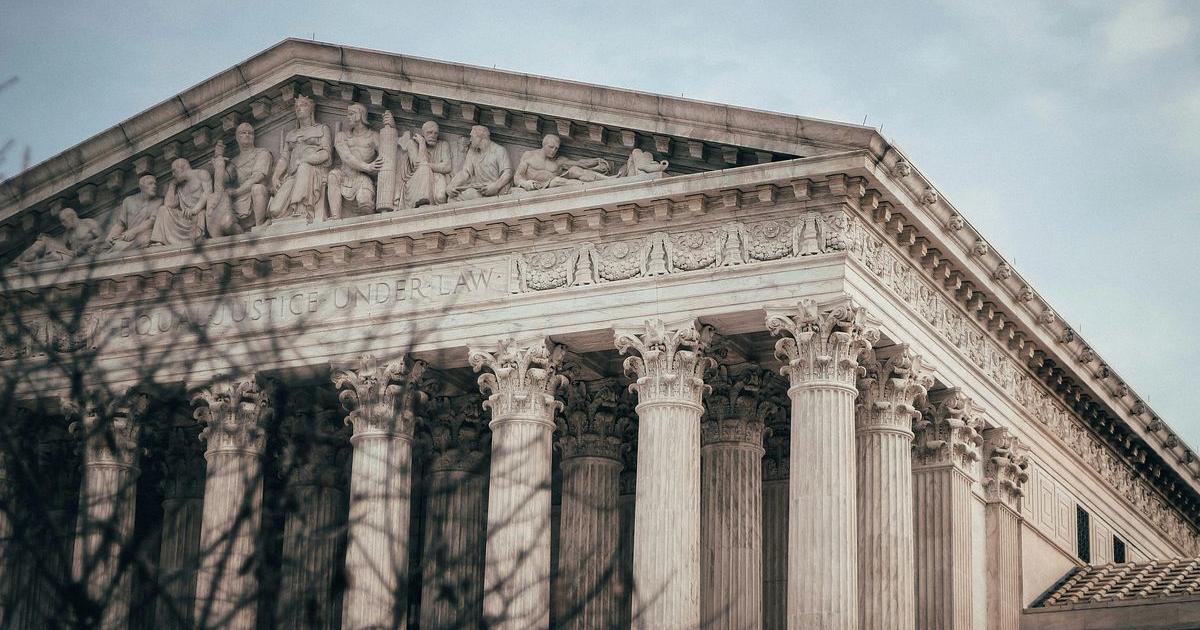
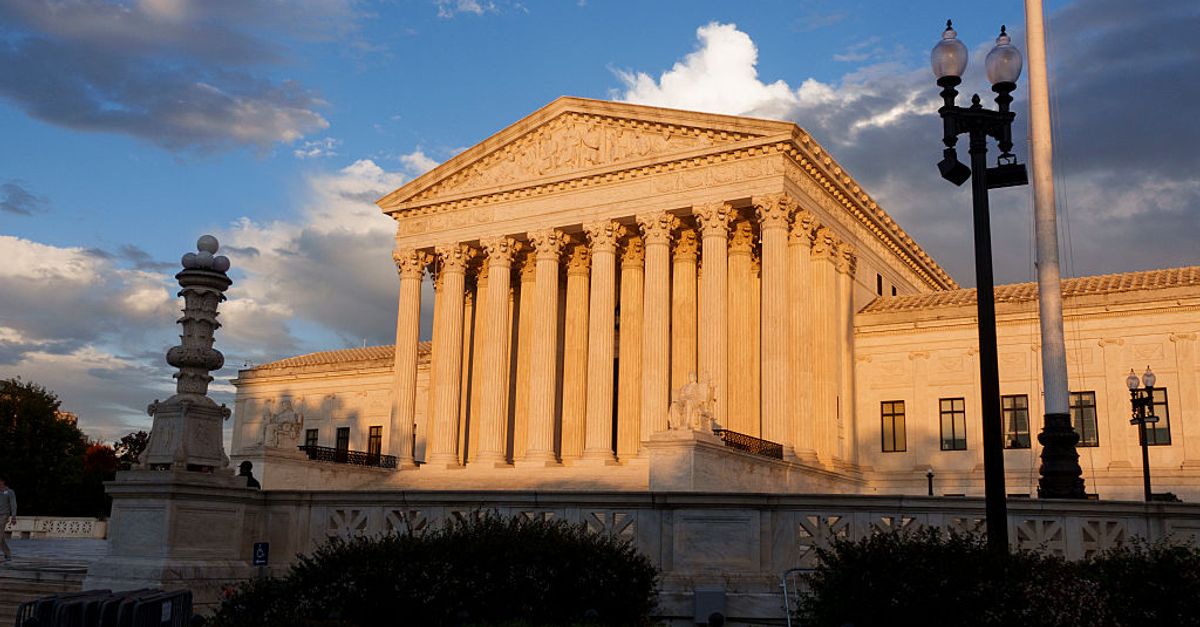
The U.S. Supreme Court hears oral argument Tuesday in Jouppi v. Alaska, a case testing whether seizing an 83-year-old bush pilot’s $95,000 airplane over a passenger’s beer violates the Eighth Amendment’s ban on excessive fines.
Ken Jouppi was preparing to fly a passenger from Fairbanks to Beaver — a village of about 50 people that bans the sale, importation and possession of alcohol — when state troopers searched his Cessna U206D in April 2012. Officers found three cases of beer, 72 cans totaling roughly nine gallons, inside the passenger’s luggage, The Independent reported. A jury convicted Jouppi of knowingly transporting alcohol into a dry community, a misdemeanor.
A judge imposed $3,000 in fines and a three-day jail sentence that was never served. Alaska then seized the plane under a statute mandating forfeiture of aircraft used for certain alcohol-related offenses. When a court looks at wrongdoing “purely in the abstract,” Jouppi tells the justices, “the societal harm of even the most minor infraction will dwarf any fine imaginable.”
The clash over quantity and intent
Jouppi, now retired and living in Idaho, maintains he never saw the beer — not the six-pack visible in a grocery bag, much less the cases tucked inside the aircraft.
“Looking through somebody’s underwear for a bottle of whiskey that’s contraband – that just did not appeal to me at all,” he said.
His lawyers argue the forfeiture is grossly disproportionate to an offense involving a single six-pack.
Alaska disputes that account. In its brief to the high court, the state wrote that “Jouppi’s crime was not flying in ‘a six-pack.'” Instead, it said, “Jouppi loaded two cases of beer and four six-packs of 16-ounce beers on his plane destined for a village of a mere 48 people with no roads in or out and no emergency medical services,” SCOTUSblog reported.
Attorney predicts favorable outcome for pilot
“I might be mistaken, but I’m feeling optimistic about this,” he said.
Lower courts split on proportionality standard
Jouppi then came to the Supreme Court last year.
The Ninth Circuit, which includes Alaska, has held that judges must “review the specific actions of the violator rather than by taking an abstract view of the violation.”
Constitutional stakes
The Alaska Supreme Court upheld the seizure in 2025, concluding the forfeiture was “not grossly disproportional to the gravity of the offense for which he has been convicted.” The state emphasizes alcohol’s toll on rural Alaska — higher mortality, fetal alcohol spectrum disorder, and crime — and argues the law targets the “grave societal harm” of bootlegging.
Jouppi’s counsel, represented by the Institute for Justice, invokes the Court’s 1998 decision in United States v. Bajakajian, which held a $357,144 forfeiture for a currency-reporting violation unconstitutionally excessive.
“The Excessive Fines Clause was built for cases like this,” Jouppi’s brief states.
His lawyers contend Alaska’s high court evaluated the offense “at a stratospheric level of abstraction” rather than examining his specific conduct, Limapagi reported.
“As government agencies increasingly exploit fines and forfeitures to pad their budgets, it’s vital that the Supreme Court make clear that the Excessive Fines Clause is a meaningful check on government overreach,” Institute for Justice senior attorney Sam Gedge told Heartlander News.
The Alaska Supreme Court concluded that the forfeiture of Jouppi’s airplane is not grossly disproportional to the gravity of the offense for which he was convicted and therefore does not violate the Excessive Fines Clause of the Eighth Amendment; Jouppi then appealed to the U.S. Supreme Court last year, where his lawyer said that none of Jouppi’s supposed mitigating circumstances alters the constitutional analysis, and Jouppi said that if they win, it would be tremendous and good for the whole country.
Related reading

Psychiatric Times Publishes Azetukalner Timeline for Major Depressive Disorder
Xenon Pharmaceuticals moved its X-NOVA2 depression readout to December 2026, months ahead of an earlier first-half 2027 target,...

DA Says It Was ‘Maliciously Locked Out’ of Gauteng Metros After Winning Most Seats
The Democratic Alliance won the most seats in Gauteng's three metros but was excluded from power in all...

Alexandria Study: Metastatic Site Predicts CDK4/6 Inhibitor Outcomes; PPIs Shorten PFS on Palbociclib
Second-line CDK4/6 inhibitors showed 18-month progression-free survival of 39.4% and overall survival of 71.6% in hormone-receptor positive, HER2-negative...

Death Toll Reaches 16 in Karachi Building Collapse as Rescue Enters Fifth Day
The death toll from a collapsed six-story building in Karachi reached 16 on Sunday, five days after the...