
In a first-person account, longtime community activist Anna Schlecht recalled the historic June evening in 1986 when the city considered a gay rights ordinance.
Back then, Olympia lacked the reputation it holds today. While small, protective pockets existed where gay residents found safe housing and employment, legal protections against discrimination were entirely absent. Schlecht, who began working in the city’s carpenters’ shop in 1982, shared how she spent four years in the closet at work out of necessity, acting as the breadwinner for her household while keeping her personal and professional lives strictly partitioned.
Building a Coalition for Local Civil Rights
The push to change the status quo came from a small group of determined organizers. Among them was Abby Haight, then a reporter for The Olympian newspaper who had co-authored a series titled “Gays in Olympia.” Haight held strategic discussions with Mayor Bill Daley and former state legislator and council member Mary Stuart Lux to gauge community readiness. While Mayor Daley embraced the idea of a small town taking a stand for equality akin to San Francisco or Seattle, Lux warned that many local residents were not yet prepared for the shift.
Another key organizer was the late Tom Howdeshell, who had previously faced direct harassment from local police. When a formal group formed to draft the ordinance, Howdeshell stepped forward. Mayor Daley consulted with fellow city council members to secure their backing before bringing the measure to a public hearing.

Holly Gadbaw, serving on the Olympia City Council at the time, initially advocated for a comprehensive citywide ordinance rather than a scaled-down version covering strictly municipal services.
“At first we considered passing a city-wide law,” Gadbaw recalled. “Then (Mayor) Bill (Daley) encouraged us to scale it down to cover only city services. I felt it should be citywide because I really did not think that giving people rights would be that controversial. Turns out I was wrong.”

The Public Hearing and Unanimous Vote
On the night of the public hearing, tension filled the room as a church bus pulled up to the parking lot and citizens packed the chambers to standing-room-only capacity. Public testimony ran for hours. Supporters argued that equality was the future and discrimination was inherently wrong, while opponents characterized homosexuality as an abomination, with some attributing the emerging AIDS crisis to divine retribution.
Despite the vitriol, the political tide turned when the public session closed and the council began deliberations. On June 17, 1986, the Olympia City Council voted unanimously to pass the ordinance. Supporters erupted into celebration before Mayor Daley gaveled the meeting back to order.
The victory made Olympia the first small town in Washington to pass a gay rights law, 13 years after Seattle passed its 1973 law.

Whatcom County Businesses Hit by $64M Loss as Canadian Shoppers Stay Away
Border Towns Count the Cost as Cross-Border Shopping Plummets Whatcom County businesses along the U.S.–Canada border lost an...

Wyoming Area visits Pittston Area in week 10 rivalry football game
Wyoming Area Visits Pittston Area in Week 10 Rivalry Clash Some rivalries need no introduction, and Friday night...

Milwaukee Gears Up for Brewers World Series Championship Parade
Downtown Milwaukee Prepares for the Brewers World Series Parade The Milwaukee Brewers secured their World Series victory against...
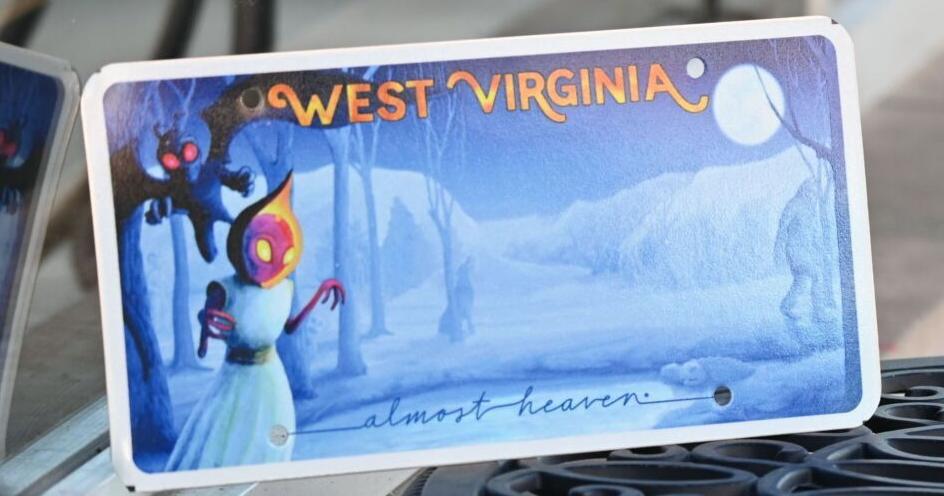
West Virginia Unveils New License Plate Featuring State Cryptids
“Now, contrary to popular belief, the DMV does have a sense of humor!” West Virginia Division of Motor...