An Undergraduate Student’s Unexpected Discovery on Virginia’s Eastern Shore
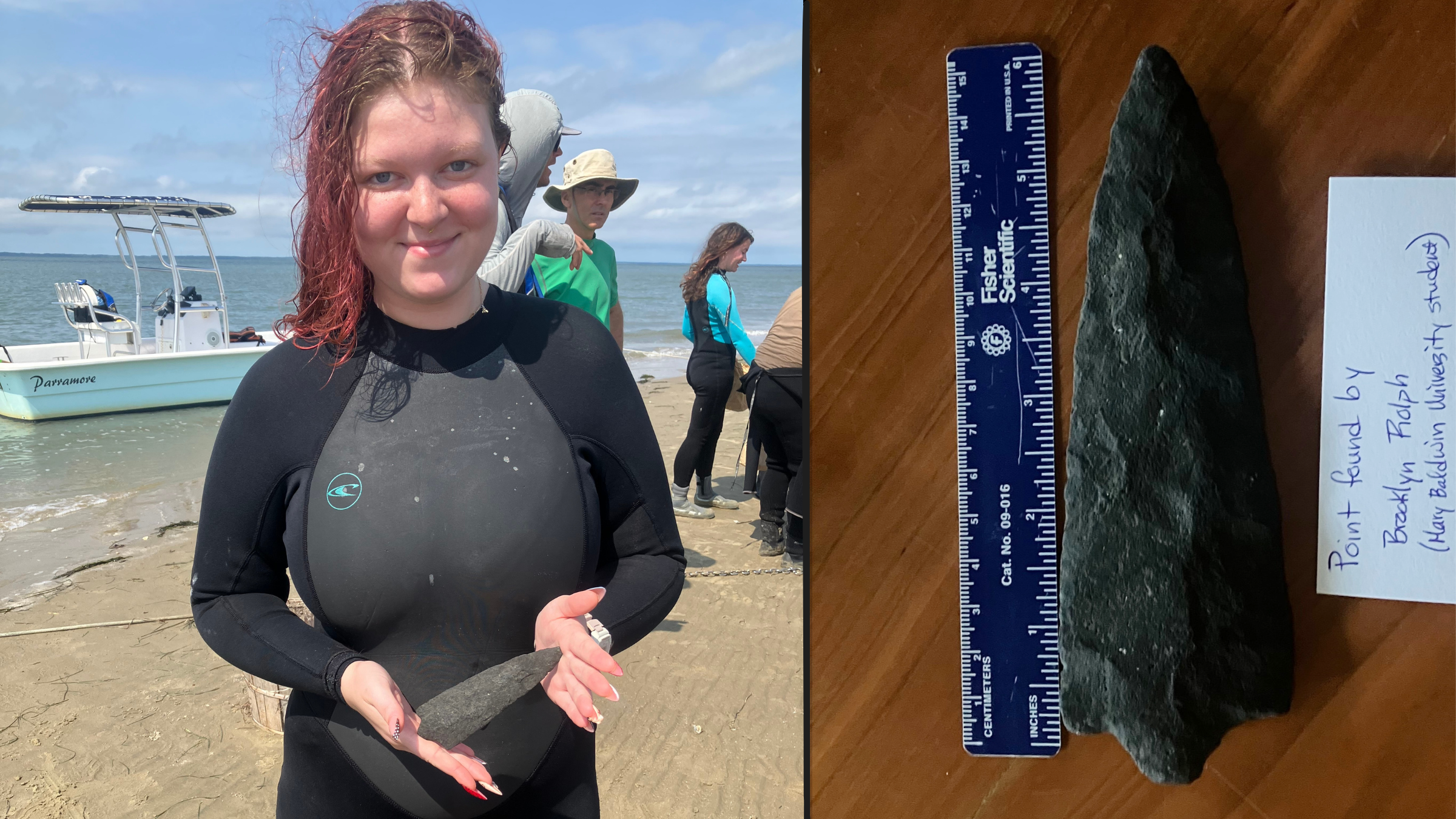
“Wow, this is so crazy,” Brooklyn Rolph said after pulling a piece of prehistoric history from the sand.
On the final afternoon of a coastal ecology field trip to Virginia’s Eastern Shore, the Mary Baldwin University biology undergraduate was scanning an inlet for shark teeth when she spotted an unusual artifact. Instead of fossilized marine life, Rolph uncovered a stone spearpoint estimated to be roughly 4,500 years old, livescience.com reported.
The field trip, led by faculty members from the Virginia university, had secured a state permit allowing students to explore the barrier islands off the southern portion of the Delmarva Peninsula. The excursion’s primary aim was observing plants and animals in the dynamic coastal ecosystem. That academic focus shifted dramatically just after a lunch break on September 21, when Rolph walked over to investigate a mound of shells.
What the Artifact Reveals About the Late Archaic Period
Local archaeologists inspecting the find identified the object as a Lehigh/Koens-Crispin point, a style of stone tool crafted by Indigenous peoples across the East Coast of the United States roughly between 4,500 and 3,000 years ago. Measuring about 6 inches, or 15 centimeters, in length, these artifacts are frequently called broadspears and may have served multiple functions, including use as a heavy-duty knife by prehistoric hunter-gatherers operating during the Late Archaic period.

The timing of the discovery proved exceptionally fortunate. Paul Callo, a biology professor co-leading the Mary Baldwin University excursion, noted that the incoming tide meant the ancient tool was moments away from being buried beneath the sand again. When Rolph brought the artifact to him, Callo admitted he was truly at a loss for words, describing the experience as awe-inspiring.
Because the barrier island where the spearpoint was found sits inside a natural area managed by the Virginia Department of Conservation and Recreation, the artifact legally belongs to the Commonwealth of Virginia. Following standard protocols, archaeologists retrieved the spearpoint from the university group and transferred it to the Virginia Department of Historic Resources for formal documentation and analysis.
As for leaving the ancient weapon behind, Rolph expressed no regret about parting with the piece. “That’s how you get cursed!” she joked.
Keep reading

Cheyenne South won’t play varsity football in 2027 – Wyoming Tribune Eagle
Cheyenne South High School will bench its varsity football program for the entire 2027 season, dropping down to...

John W. Robinson Obituary (2026) – Warren, OH – Behm Family Funeral Homes – Legacy
John W. Robinson, an 83-year-old resident of Warren, Ohio, whose life spanned three decades of highway patrol service...

Step Back in Time in West Virginia’s Best-Preserved Victorian Town
Tucked Along the Bluestone River, a West Virginia Mountain Town Preserves Its Gilded Age Architecture When travelers picture...

Washington’s 11 Most Laid-Back Towns – World Atlas
Trading Packed Itineraries for Penn Cove Mussels and Mountain Air Visitors can easily spend a whole afternoon in...