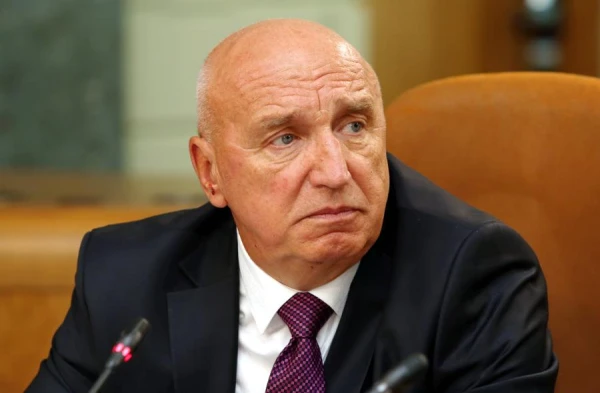
Latvia has spent two decades applying a system to manage European Union funding that prioritizes controlling the use of funds and meeting formal requirements over assessing the quality of results. Former Prime Minister and financier Ivars Godmanis argues that the nation’s current approach to EU investments focuses on accounting checks and formal requirements rather than assessing the broader impact of projects on the national economy.
The Two-Decade Compliance Trap
For twenty years, the mechanism for distributing EU funds in Latvia has remained fundamentally unchanged. The primary focus for administrators is ensuring that funds are not misappropriated and that projects meet basic accounting standards. Godmanis, speaking on the TV24 program “The Price of Money,” characterized this as a cycle of formal verification that ignores the broader health of the national economy.
The current system operates on a pass-fail basis for technical requirements. CEFL, the agency responsible for oversight, conducts audits to confirm that books are balanced and physical projects—such as road repairs—are completed to a baseline standard. However, Godmanis contends that this is merely a defensive strategy to prevent theft rather than a proactive strategy for growth.
“When approving the winners of the competition, who win in the next announced project competition by the fund, they look to ensure that you do not steal the money—point one. And Europe also looks at this. CEFL checks if everything is in order with the accounting, and at the end, they come to see if the road you repaired is not bad,” Godmanis stated.
Measuring Economic Impact Versus Formal Output
The disconnect lies in the definition of success. Current project metrics frequently count the number of roads repaired or the number of new businesses registered. While these figures are easily tracked, they fail to answer the fundamental question of whether these investments actually contribute to long-term economic development.
Godmanis argues that without a qualitative leap in how these projects are evaluated, the seven-year funding cycles provided by the European Union will continue to underperform. The missing link, according to the former Prime Minister, is the presence of individuals with both the “economic will” and the technical qualifications to assess the downstream effects of government spending.
The Challenge of Expert Oversight
The critique highlights a systemic lack of institutional capacity. It is not enough to simply have auditors; the country requires analysts capable of verifying the economic contribution of complex projects. This represents a shift from “controlling the use of funds” to “evaluating the quality of results.”
Whether the administration can pivot toward this “qualitative leap” remains the central question for the country’s economic strategy.
Related reading

Swift justice’: Student List supporters focus on cleaning up Serbia’s rotten institutions – The Guardian
The Student List, a decentralized movement born from public outrage over a fatal infrastructure disaster, has secured a...

Russia pitches floating nuclear plants to African nations at summit
Moscow Pursues Floating Nuclear Plants as Russia-Africa Summit Closes Russia is positioning itself to become the world's first...

DUP’s Emma Little-Pengelly halts joint work with Michelle O’Neill
The DUP’s Tactical Withdrawal from Stormont Joint Engagements The delicate architecture of Northern Ireland’s power-sharing government faces a...

Subsea Cable Vulnerability: Geopolitical Threats and the Cost of Regulatory Bifurcation
The Deep-Sea Chokepoint Threatening Trans-Pacific Data Networks Trans-Pacific undersea cables have rapidly evolved from background utility infrastructure into...