
President Bola Tinubu has directed the Independent Corrupt Practices and Other Related Offences Commission (ICPC) to conduct a thorough investigation into the activities of the fictitious Presidential Foreign Intervention Promotion Council (PFIPC). The 30-day inquiry follows the discovery that the agency, which was never established by the Federal Government, secured office space, Central Bank accounts, and budget allocations.
The Emergence of the Fictitious PFIPC
The controversy centers on the Presidential Foreign Intervention Promotion Council, a body that operated within the Federal Secretariat in Abuja despite having no basis in law, executive approval, or presidential instrument. According to the BBC, the agency’s reach extended into the 2026 Appropriation Act, where it was listed with an allocation of 1.3 billion naira—approximately $950,000 or £700,000.

One Adeniyi Adeyemi Matthew, who presented himself as the Director-General of the council, claimed to be a presidential appointee. However, the Presidency has explicitly disowned the organization. In a statement released Tuesday, July 7, 2026, Special Adviser to the President on Information and Strategy Bayo Onanuga confirmed the directive for an ICPC investigation, noting that the government had no knowledge of the council’s establishment.
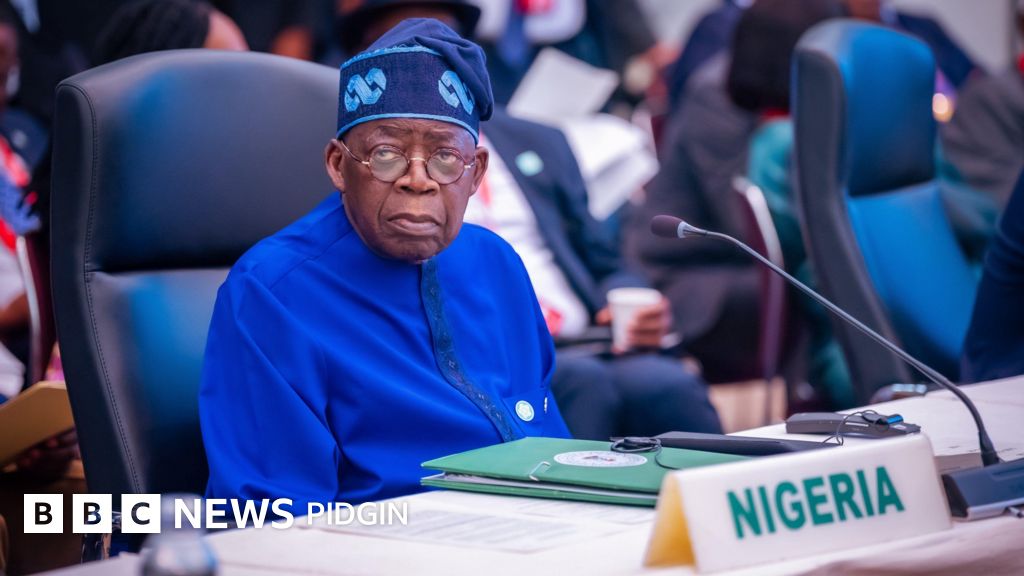
The existence of a “ghost agency” within the heart of the Nigerian federal bureaucracy has raised urgent questions regarding the protocols governing the creation of government parastatals. Under standard Nigerian administrative procedure, the establishment of any new government agency requires an act of the National Assembly or an explicit Executive Order signed by the President and gazetted for public record. The PFIPC lacked these legal foundations, yet somehow navigated the complex inter-agency communications required to secure physical infrastructure and fiscal recognition.
Forensic Evidence and Legal Status
The Presidency’s exoneration of Chief of Staff Femi Gbajabiamila arrived following public speculation regarding the authenticity of appointment documents. Onanuga stated that the Nigeria Police Force conducted a forensic analysis of the Chief of Staff’s signature on the disputed appointment letter and confirmed it was forged.
“The police has investigated this man. They have done forensic analysis of the Chief of Staff’s signature. The case has been filed at the Federal Court already. And I am telling you that before the police filed the case, they had already done their own forensic analysis and found that the signature was forged. They found out that all the documents he was parading were fake,” Bayo Onanuga, Special Adviser to the President on Information and Strategy, via Punch Newspapers.
Despite these findings, Adeyemi Matthew has maintained his innocence. In comments reported by BBC Pidgin, the embattled individual described the government’s actions as a “defence mechanism” intended to silence him, claiming his life was in danger and that he had gone into hiding.
The legal proceedings currently unfolding at the Federal High Court involve an eight-count charge. The prosecution alleges that the defendants utilized the forged documents to deceive various government entities, effectively “capturing” a portion of the legislative process to insert the PFIPC into the 2026 budget. This process, often referred to in oversight circles as “budget padding” or “insertion,” typically requires collaboration or significant oversight lapses within the legislative budget committees, a point of contention that the Senate has publicly addressed by rejecting any suggestion of institutional complicity.
Scope of the 30-Day ICPC Investigation
President Tinubu has mandated that the ICPC submit a comprehensive report within 30 days. The investigation is tasked with exploring more than just the actions of the principal suspect. The President’s directive requires the commission to examine “the wider circumstances that may have enabled a fictitious body and a false claim of presidential appointment to acquire an appearance of official legitimacy.”

The investigation will specifically scrutinize:
- The provenance and use of forged appointment letters and official government documents.
- The process through which the agency obtained diplomatic support and visa facilitation.
- The opening and operation of multiple bank accounts held at the Central Bank of Nigeria.
- The role of any public officers, financial institutions, or intermediaries who facilitated the scheme.
The inclusion of the Central Bank of Nigeria (CBN) in the scope of the investigation is particularly significant. Financial regulations in Nigeria mandate stringent “Know Your Customer” (KYC) and Anti-Money Laundering (AML) checks for any entity seeking to open a government-linked account. The ICPC is expected to determine how the PFIPC bypassed these regulatory checkpoints, which are designed to ensure that only legally constituted agencies can access public funds.
Furthermore, all ministries, departments, and agencies of the Federal Government have been ordered to provide the ICPC with all relevant records. The President emphasized that the integrity of public service must be protected against the “exploitation of weaknesses” that allowed this fictitious body to function.
As of July 8, 2026, the case remains before the Federal High Court, where Adeyemi and two others face an eight-count charge. The outcome of the ICPC report is expected to determine whether additional institutional failures allowed a non-existent agency to be included in the national budget and operate from a high-security government complex. The findings will likely result in a broader audit of how government agencies are verified before receiving fiscal allocations, a move aimed at restoring public trust in the budgetary process and the security of state-controlled assets.
Find more reporting in our News section.

COSATU Launches Nationwide Strikes Amid 43.8% Unemployment Rate
While foreign exchange markets showed little change early in the week—with the rand trading at 16.6325 against the...

UK Police Arrest Seventh Suspect in Investigation Near RAF Fairford
Following a suspected plot near RAF Fairford, British police have arrested a suspect on suspicion of preparing terrorist...
S. Jaishankar Visits Ghana to Advance India-Ghana Comprehensive Partnership
External Affairs Minister S.
Omaheke Governor Pijoo Nganate Urges Sustainable Livelihoods for Returnees
"A commemoration must also challenge us to ask: What are we doing for the living? What are we...