UAlbany Launches $250,000 Research Accelerator to Harden Puerto Rico’s Power Grid
The path toward a more resilient power grid in Puerto Rico—and a deeper understanding of the climate challenges facing the island—just received a significant infusion of resources. On November 6, 2026, Governor Kathy Hochul announced the creation of the UAlbany Puerto Rico Public Impact Accelerator Fund, a $250,000 investment designed to bridge the gap between academic research and tangible infrastructure solutions. The initiative, unveiled during the annual Somos Inc. Puerto Rico Conference in San Juan, marks a strategic deepening of the ties between the University at Albany and the University of Puerto Rico system.
Puerto Rico #51 ⭐️🇺🇸
This funding is not merely a grant for abstract study; it is a targeted effort to apply UAlbany’s technical expertise in atmospheric science, artificial intelligence, and emergency management to the specific, high-stakes realities of the island. For residents and business owners in Puerto Rico, the stakes are immediate. The island’s energy infrastructure remains a focal point of public safety concerns, particularly as climate-driven weather extremes continue to test the limits of aging equipment. By pairing UAlbany’s specialized research centers with their counterparts in the University of Puerto Rico system, the project aims to move from theoretical modeling to real-world deployment.
Connecting Research to Infrastructure Survival
The initiative functions under UAlbany’s broader Catalyst 2030 framework, which seeks to incentivize research that provides direct, measurable benefits to the public. The collaboration is intentionally multidisciplinary, focusing on five key pillars that directly influence the quality of life on the island. Among the most critical is the development of AI-driven tools aimed at protecting energy infrastructure. With principals like Eric Stern of the AI & Society Research Center and Chris Thorncroft of the Atmospheric Sciences Research Center leading the charge, the program is essentially looking for ways to predict and mitigate the impact of severe weather on the electrical grid before outages occur.


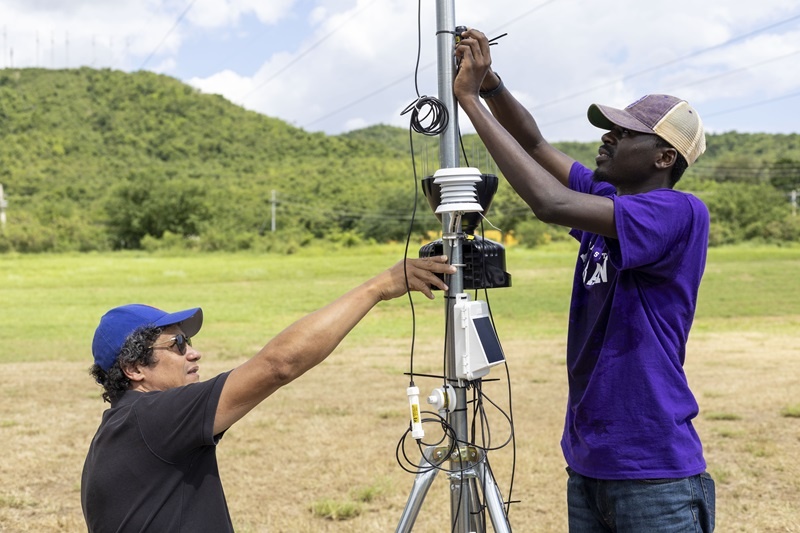
The practical application of this research is wide-reaching. For example, the project to design an advanced mesonet weather observation system involves experts like June Wang, Chris Thorncroft, and Jorge Gonzalez-Cruz. By increasing the density and accuracy of weather data collection, the team hopes to provide grid operators with the granular information necessary to make split-second decisions during storm events. This shift toward data-informed infrastructure management is a necessary evolution for a region that has spent the last decade navigating the aftermath of catastrophic weather events.
This accelerator fund is a powerful example of how we can put our scholarship and science into action to deliver positive impact for the communities we serve. — Havidán Rodríguez, UAlbany President
A Decade of Institutional Partnership
The relationship between the two university systems is not new, but this funding represents a shift toward more formalized, project-based collaboration. UAlbany President Havidán Rodríguez, who spent over a decade on the faculty at the University of Puerto Rico Mayagüez, has positioned this initiative as a natural evolution of the support provided by his campus following Hurricane Maria ten years ago. That event served as a stark reminder of the vulnerability of the island’s power and health systems, and the current research agenda reflects those hard-learned lessons.
The scope of the work extends beyond the electrical grid. Researchers are also turning their attention to the health and mental health impacts of climate change, with teams led by Amy Nitza of the Global Center for AI in Mental Health and Elizabeth Vásquez of the Center for Elimination of Health Disparities. By studying the intersection of environmental stressors and public health, the university aims to identify how climate-resilient infrastructure can also serve as a foundation for better community health outcomes.
The Economic and Political Calculus
While the investment is intended to solve technical problems, it also carries political and economic weight. Governor Hochul’s announcement at the Somos Inc. conference underscores the importance of the Puerto Rican diaspora in New York and the state’s commitment to maintaining a robust, collaborative relationship with the island. Critics of such university-led initiatives often point to the slow pace of academic research compared to the urgent needs of infrastructure repair, questioning whether a $250,000 investment can truly move the needle on a grid that requires billions in capital improvements. However, supporters argue that without the foundational science provided by these collaborations, the larger, multi-billion dollar infrastructure projects risk being built on outdated models that fail to account for the accelerating intensity of modern climate patterns.

As the projects begin to take shape, the success of the accelerator will be measured not by the number of papers published, but by the integration of these AI tools and weather systems into the actual operation of the Puerto Rican grid. The transition to clean power and a more stable economy is a long-term endeavor, and this funding represents a specific, scientific down payment on that future.
Keep reading

New Hampshire warehouse strike could leave New England shelves bare
Warehouse Strike Strains New England Grocery Supply Hundreds of union members have walked off the job at an...

Lincoln National Forest Announces Planned Prescribed Burns for November 2026
Fire Management Resumes in Lincoln National Forest The Lincoln National Forest is shifting its focus back to active...

World Atlas identifies eight Montana towns for 2026 housing
Montana’s Real Estate Shift: The 2026 Housing Landscape For those looking to trade the high-density stress of urban...

MSU to Honor Veterans at Annual Recognition Ceremony
Mississippi State University to Host Veterans Day Ceremony on November 11 Mississippi State University will hold its annual...