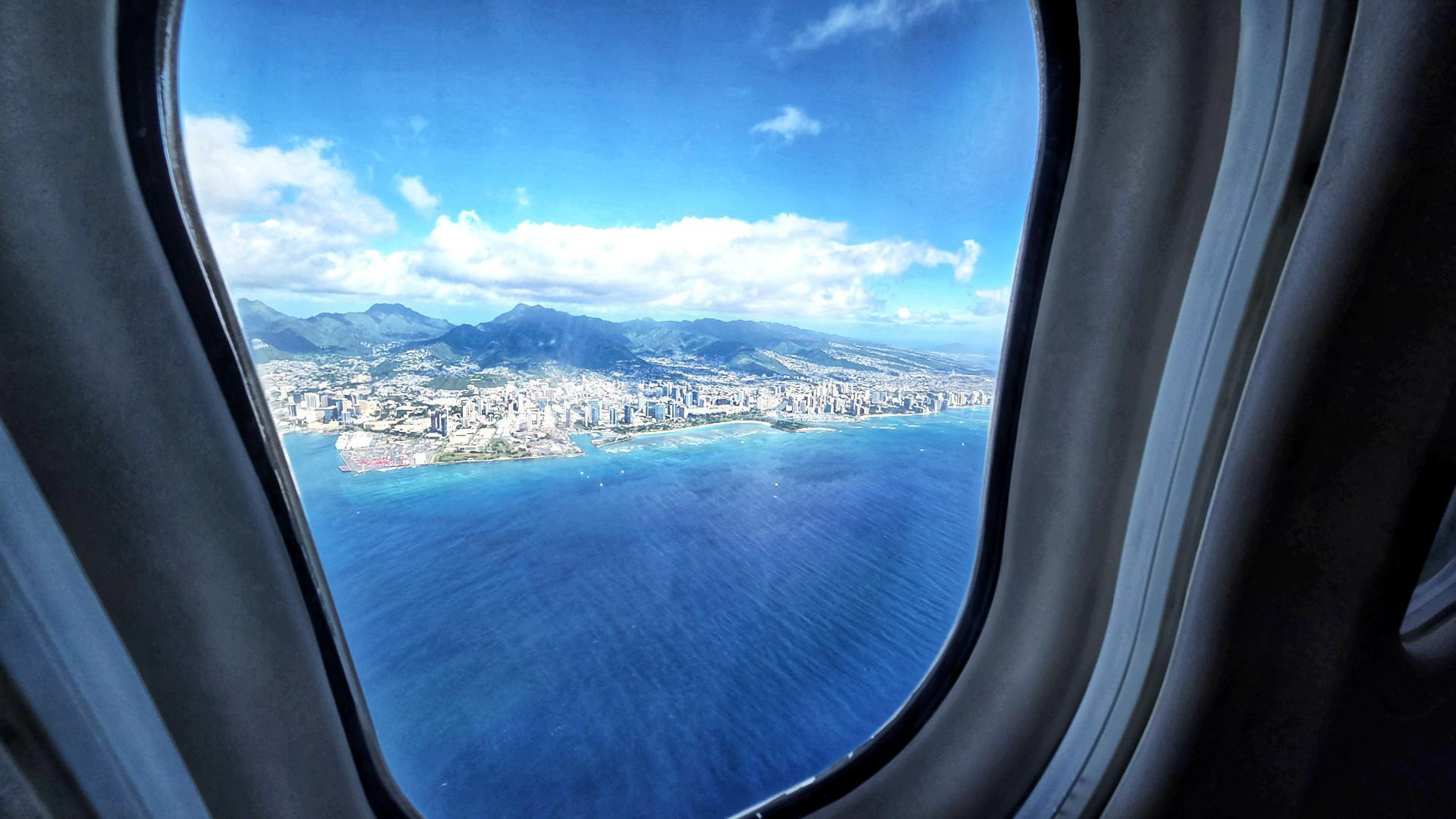
United Airlines Flight 219, a Boeing 787-10 Dreamliner headed from Chicago to Honolulu, was forced to return to O’Hare International Airport on Wednesday, November 4, following a reported crack in the cockpit windshield. The aircraft, identified as N12003, had reached an altitude of 36,000 feet and was roughly 360 nautical miles west of Chicago when the flight crew initiated a descent and reversed course.
According to reporting by Beat of Hawaii, the flight landed safely back in Chicago approximately two hours and ten minutes after its initial departure. The crew descended to 19,000 feet during the return, a standard procedure to manage the pressure differential between the cabin and the outside atmosphere while dealing with a compromised windshield.
The Impact of the 12-Hour Delay
The incident significantly disrupted travel plans for those aboard. While a replacement Boeing 787-9 Dreamliner eventually departed Chicago at 10:51 p.m. on November 4, the arrival in Honolulu did not occur until 2:53 a.m. local time on November 5. This resulted in a delay of approximately 12 and a half hours, shifting an afternoon arrival into the middle of the night.
Sweet dreams are made of this. Introducing the Dreamliner to our Chicago hub. pic.twitter.com/x8ejD4KBHm
Modern commercial aviation windshields are engineered with multiple structural layers specifically designed to maintain cabin integrity even when external damage occurs. A crack in one layer does not necessarily indicate a total failure or a loss of cabin pressure, yet the decision to turn back is a mandatory safety protocol to avoid the risks associated with a lengthy flight—particularly one involving a remote Pacific crossing—with known structural damage.
Historical Context and Ongoing Questions
This event mirrors previous incidents in the region, including a May 2023 flight operated by Southwest Airlines that returned to Honolulu after sustaining similar windshield damage. Unlike the Southwest incident, where the aircraft was already over the Pacific, the United flight remained over the mainland, allowing for a more immediate return to its departure point.
As of November 6, United Airlines has not released a public statement confirming the specific cause or extent of the damage to the windshield of the eight-year-old aircraft. The Federal Aviation Administration’s public incident reports have yet to provide detailed documentation on the event, leaving several questions unanswered regarding passenger accommodations and the logistics of the replacement flight.
The travel community remains interested in the firsthand experience of those aboard UA219. The operational decision to prioritize a safe landing over a trans-Pacific crossing underscores the stringent safety margins required for long-haul operations. For the passengers, the shift from a scheduled afternoon arrival to a middle-of-the-night landing highlights the practical, often exhausting realities of mid-flight mechanical diversions.
Keep reading

Daphna Collier sentenced to 10 years for killing YMCA worker in DUI crash
The Cost of a Reckless Moment on I-520 The tragedy that unfolded on Interstate 520 in Augusta on...
National WWII Museum Mourns Naval Historian Craig L. Symonds
A Scholar of the Sea: Remembering Craig L. Symonds The National WWII Museum in New Orleans is mourning...

Gabriel Lekron recovers after being shot in the face in west Wichita
The Morning Gabriel Lekron Was Struck in His Own Home On the morning of October 31, 36-year-old Gabriel...

Democrat Eric Armstrong Wins Iowa House Seat After Suspending Campaign
The Legislative Seat Won by a Candidate Who Left the Race In a result that highlights both the...