The University of Alaska Board of Regents voted unanimously on Nov. 6 to replace its decades-old tuition model with a single, program-based rate that will take effect in fall 2027.
The shift folds course surcharges into base tuition so grants and scholarships can cover the full cost of attendance, and it finalizes the board’s August decision to charge every student — resident, out-of-state, or international — the same price per credit. For the 85 percent of the system’s nearly 20,000 students who are Alaskans, the immediate effect is mixed: some program rates rise while the step-up between lower- and upper-division courses disappears.
“The goal is a program-based tuition model that allows students to predict and pre-plan costs as they move into each semester, and improves the student experience by increasing transparency around their bill,” Chief Financial Officer Luke Fulp told the regents ahead of the vote.
At the University of Alaska Anchorage, resident tuition for business, public policy, and engineering bachelor’s programs will be $303 per credit, and at the University of Alaska Fairbanks, bachelor’s students in business and security management or engineering and mines will pay $358 per credit, reflecting the higher cost of labs, equipment, and specialized faculty.
Jonathon Taylor, UA director of public affairs, said the elimination of separate surcharges means the total price of a degree should stay roughly flat — within 2 percent of today’s cost over four years.

The University of Alaska Southeast takes a different path. Its board-approved schedule sets a single undergraduate rate of $271 per credit, replacing the current $251 for introductory classes and $302 for advanced ones. A Juneau student taking 12 lower-division credits will pay $240 more per semester, while a peer in 12 upper-division credits saves $372. Chancellor Aparna Palmer estimates the net effect across a four-year degree is a 2 percent savings for Alaskans.
“Over the term of a four-year degree, students actually should be saving money relative to the previous tuition structure.”
Palmer said in an interview Wednesday.
Graduate tuition holds at $549 per credit at UAA and UAS and $577 at UAF, while specialized programs carry their own premiums: UAA graduate business and engineering hit $659, UAF graduate business and engineering $677, and UAS maritime — still under review — was proposed at $340.
The regents last raised tuition 4 percent in 2025, following a 3 percent resident and 5 percent non-resident increase the year before. Systemwide financial aid reached $124 million last year, covering 62 percent of students. While federal aid and waivers fell, UA scholarship awards rose 12 percent ($6.7 million), grants 7.5 percent ($2.2 million), and private scholarships 14.8 percent ($1.3 million).

Abigail Schiffmiller, a doctoral student at UAF and spokesperson for the Alaska Graduate Workers Association, said the union will watch whether graduate tuition waivers — part of many workers’ compensation — keep pace. “In general, we’re concerned about any situations where costs are getting passed on to students,” she told News From The States.
“If this changes the cost structure in a way that a greater proportion of the costs can be covered by various scholarships or grants or fellowships… that sounds like it would be helpful. It’s just very difficult to know how that will actually be implemented.”
The Faculty Alliance, representing senate leaders across the three universities, has not taken a formal position but flagged questions about the cost of general-education courses, fairness across departments, and the impact on departmental budgets.
Created in 1917, the University of Alaska system comprises three separately accredited universities on 19 campuses and serves nearly 30,000 students, though the article notes the system currently reports nearly 20,000.
The University of Alaska Anchorage is the largest by enrollment and administers the state’s only medical program through WWAMI, while the University of Alaska Southeast in Juneau was designated the system’s center for the College of Education in 2017. The system is formally established under Article VII of the Alaska State Constitution and governed by a board of regents appointed by the governor.
President Matt Cooper, who began his term in August, pledged close monitoring. “I set an expectation with my team that if we’re going to do this, we have to do this right, and that we have to be on top of it,” he told the regents. The administration will report back on student feedback and revenue effects throughout the 2027-28 academic year.

Santa Fe Balances Ancient Roots With Modern Economic Pressure at 7,199 Feet
Santa Fe sits at 7,199 feet in the Sangre de Cristo Mountains, the oldest state capital in the...
ADOT, Phoenix, MAG Plan $240M Elevated Intersection at 35th, Indian School, Grand
Arizona transportation agencies are planning a $240 million elevated intersection at 35th Avenue, Indian School Road and Grand...
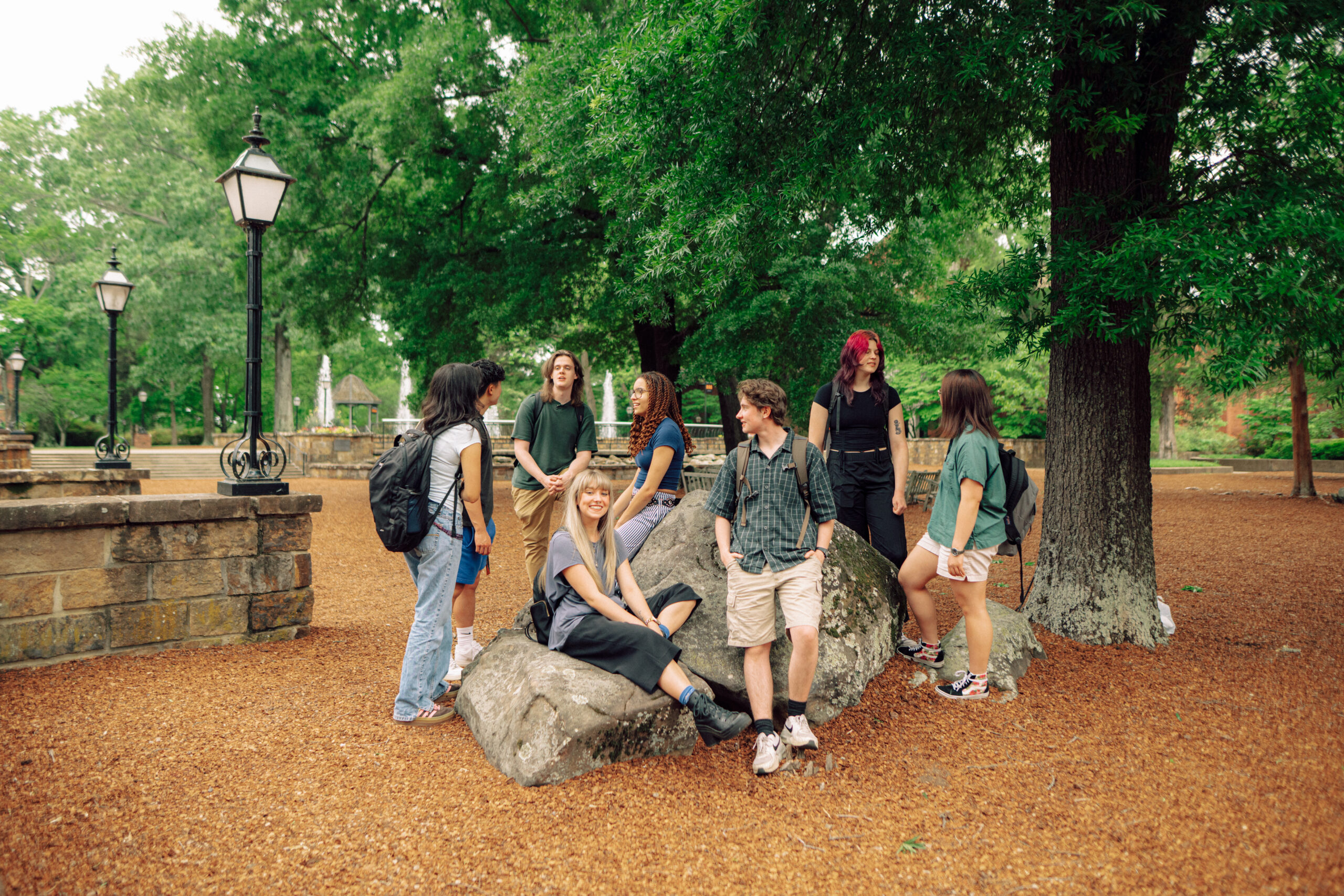
Hendrix Mock Trial Opens Season With Awards in Houston and Record Finish in Atlanta
Hendrix College Mock Trial Association began its 2026–2027 campaign by sweeping individual honors and a team sportsmanship award...

Wyoming County commissioners approved technology and infrastructure upgrades Tuesday
Wyoming County commissioners approved technology and infrastructure upgrades Tuesday, targeting aging 911 systems and county networks that officials...