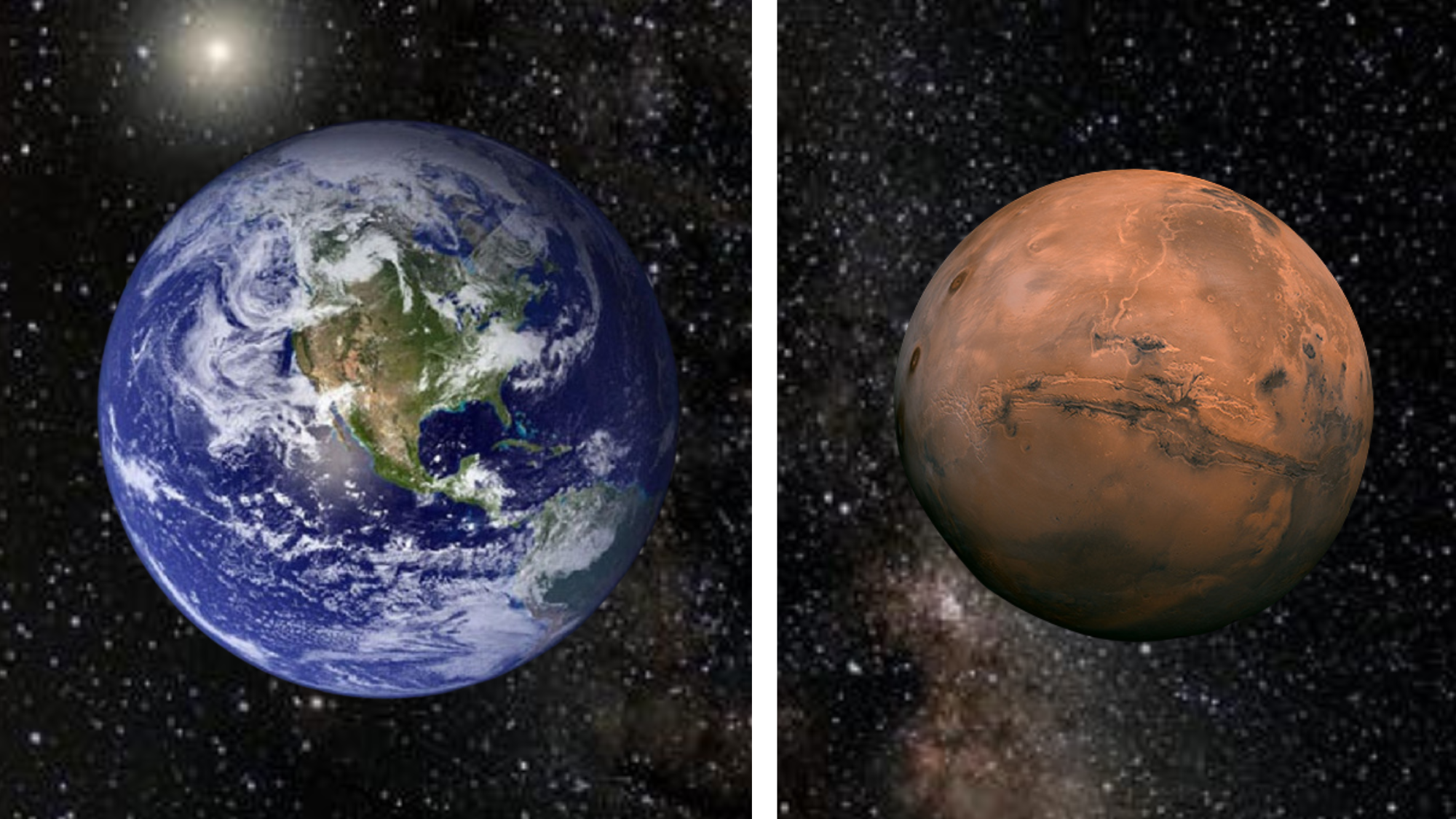
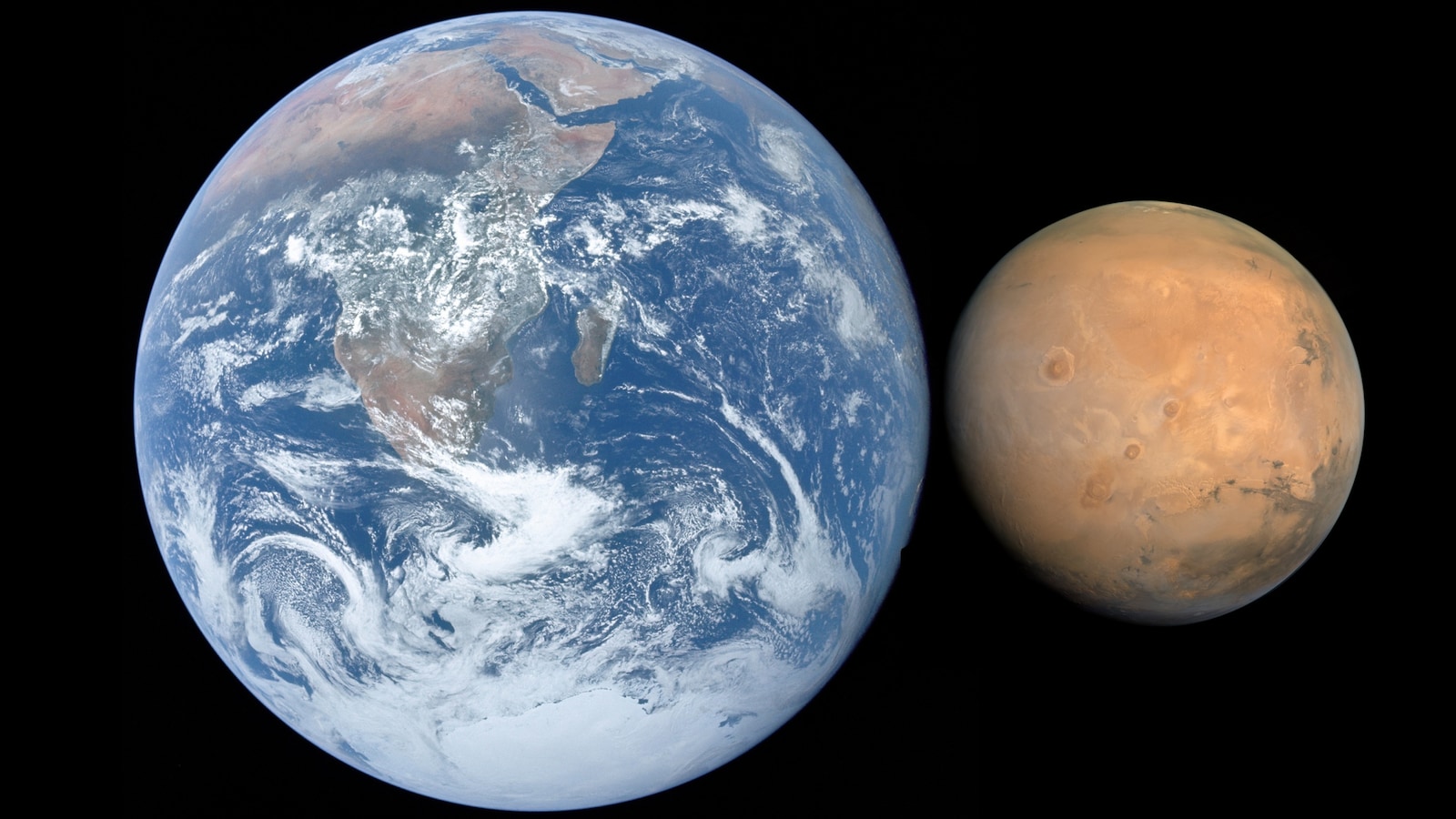
Earth and Mars formed side by side from the same cosmic cloud roughly 4.5 billion years ago, yet new computer modeling reveals the neighboring rocky planets were built through fundamentally different chemical recipes and growth proportions.
For decades, scientists debated how rocky planets come together in a young solar system. Some models pointed to a gentle process of sweeping up drifting cosmic dust and pebbles, while others favored violent collisions between larger space rocks known as planetesimals. A study published on September 25, 2026, in Nature Astronomy suggests both mechanisms played a role, but in different balances for Earth and Mars.
University of Copenhagen Researchers Trace Volatile Chemical Fingerprints
To uncover the hidden history of these planetary interiors, researchers at the Globe Institute focused on volatile elements including sodium, zinc, and potassium. Because these substances evaporate easily at high temperatures, their presence or absence acts as a thermal fingerprint of the violence a planet endured during its accretion. The team analyzed these chemical reservoirs within the crusts and mantles of both worlds, bypassing the metallic cores. The mantle compositions of both planets have remained stable over billions of years, serving as enduring imprints of their earliest epochs.
Co-lead researcher Anders Johansen described the investigation to figure out what happened back then when most direct evidence vanished long ago. The study was conducted by Wang and Anders Johansen of the Center for Star and Planet Formation, Globe Institute, University of Copenhagen, alongside co-authors Ziyan Xu, Marie-Luise Steinmeyer, Michiel Lambrechts, Elishevah van Kooten, Chao-Chin Yang, Zhaohuan Zhu, Dante S. Lauretta, and Martin Bizzarro.
“The most surprising result was that Earth and Mars appear to have formed in different ways. You might have expected that two planets formed side by side in the same solar system would share a more similar formation history.”
Anders Johansen, professor of planetary sciences at the University of Copenhagen
Simulations Reveal Contrasting Growth Rates
At least 75 percent of Earth’s rocky bulk originated from protoplanets that grew large by sweeping up tiny space pebbles, with planetesimals supplying up to 25 percent. Mars followed an almost inverted path when the team fed the chemical data into advanced computer simulations.
Co-lead researcher Haiyang Wang noted that their method provides a more precise and direct way of understanding planetary origins than traditional isotope-based approaches, which often yield ambiguous interpretations.
Evaluating Habitable Exoplanets
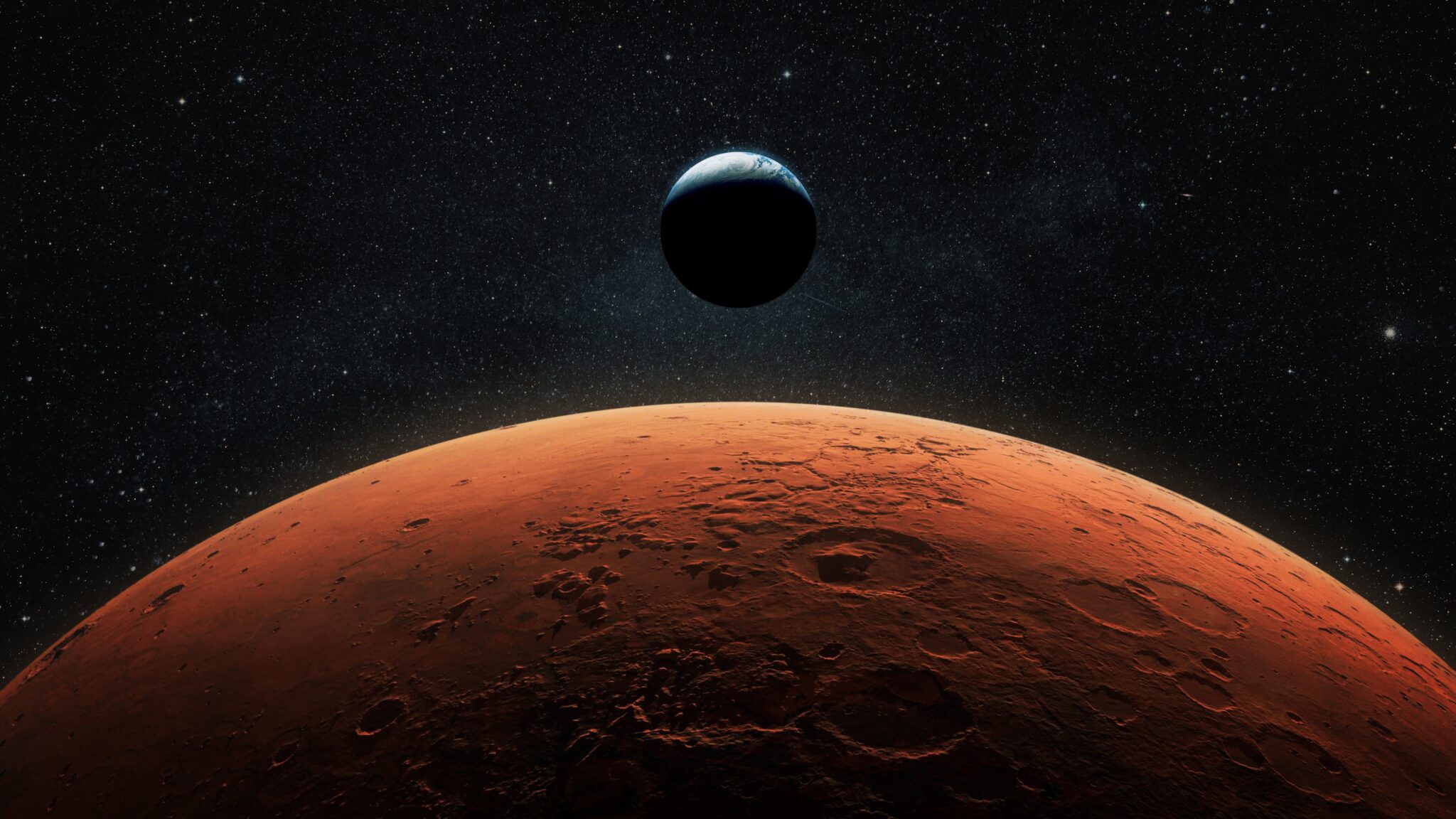
As future missions discover rocky exoplanets orbiting other stars, knowing their building blocks will help scientists gauge whether those worlds retained enough water and essential substances to support life.
“If we understand how planets lose volatile elements during their formation, we can also become better at predicting how much water and other life-supporting substances they ultimately retain.”
Anders Johansen, study co-leader at the University of Copenhagen
Adjustments to the study’s underlying assumptions did not alter the fundamental contrast between the two planets published on September 25, 2026.
Related reading

Moon to Occult Jupiter Over Eastern North America on October 6
Skywatchers across much of eastern North America can watch a rare lunar occultation early Tuesday morning as a...

Saturn Reaches Closest Approach to Earth for the Year
Saturn stands roughly 784 million miles from Earth as opposition positions the ringed giant at its closest annual...

Researchers Identify Candidate Second-Generation Planet Orbiting White Dwarf
Circling its parent dead star every 4.4 days, a Jupiter-sized gas giant orbits the white dwarf HS 0209+0832...

UK Proposes Norfolk Housing Levy to Unlock Stalled Homes
Environment Secretary Angela Eagle launched a public consultation on 17 September for a Norfolk pilot scheme requiring housing...