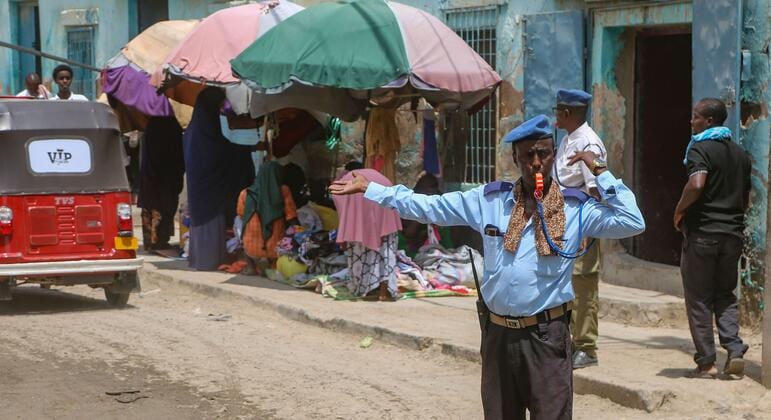
The United Nations political mission in Somalia officially concluded its operations on October 31, 2026, wrapping up a two-year transition process that ends more than three decades of continuous UN peacebuilding and political engagement in the East African nation.
The Two-Year Transition and Closure of UNTMIS
The closure of the United Nations Transitional Assistance Mission in Somalia, known as UNTMIS, marks the end of an era that began in 1995 with the establishment of the UN Political Office for Somalia. Over the decades, successive missions evolved to support the country’s recovery following the 1991 collapse of central state institutions and the outbreak of civil war. In 1992, the United States launched Operation Restore Hope to protect humanitarian relief deliveries during a famine, before the following year’s Battle of Mogadishu resulted in the deaths of 18 American soldiers.
Somalia turns a page as UN political mission concludes after two decades of partnership Mogadishu, 31 October 2026 – The two-year transition of the United Nations political mission in Somalia was completed today, in line with the request of the Federal Government of Somalia,… pic.twitter.com/N4LEBkiS0R
The drawdown followed a direct request from Somali President Hassan Sheikh Mohamud, who initially asked the UN to end the mission ahead of its mandate’s expiration in October 2024 before proposing a two-year transition period. The UN Security Council endorsed this shift through Resolution 2753 in November 2024, creating the framework for the mission to progressively transfer its responsibilities to national institutions and the UN country team. Resolution 2809 (2025) also formed part of the framework guiding the transition.
Today is not an end to the partnership between the United Nations and Somalia—rather, it marks the conclusion of one chapter and the beginning of another.
Raisedon Zenenga, UNTMIS officer-in-charge and UN secretary-general’s deputy special representative for Somalia
Transfer of Responsibilities to Somali Institutions
With the departure of UNTMIS, local authorities assume full responsibility for state recovery, governance, constitutional review, reconciliation, electoral support, human rights, and the rule of law. Raisedon Zenenga noted that the country has undergone a profound transformation since the early 1990s.

Somalia today possesses national and federal institutions that did not exist when the UN’s political engagement began. Progress has been made in State formation, political inclusion, constitutional processes, human rights frameworks and the development of governance structures that enable Somali-led decision-making,
Raisedon Zenenga, UNTMIS officer-in-charge and UN secretary-general’s deputy special representative for Somalia
Resident UN development agencies, funds, and humanitarian programs will maintain their presence under the coordination of UN Resident Coordinator George Conway. These entities continue supporting various local initiatives across the country, with some 25 UN entities still working across Somalia on humanitarian and development support. In regional projects, the International Organization for Migration established 50 sturdy market stalls equipped with running water and solar lighting, distributing about 70 percent of them to women-headed households and small enterprises. Meanwhile, the Food and Agriculture Organization backs a school meals program in Puntland linking 1,330 local farmers and fisherfolk to schools serving 18,700 children. UNMAS mine action specialists collaborated with Somali officials in Baidoa to instruct numerous teachers and students on identifying explosive hazards. Working alongside civil society, international partners, the Federal Government, and Federal Member States, the UN spent years advancing governance institutions, electoral processes, constitutional reforms, and reconciliation efforts.
Security Pressures and Regional Governance Challenges
Despite institutional milestones, the transition occurs amid severe security and humanitarian tests. The United Nations Office for the Coordination of Humanitarian Affairs classifies Somalia as one of the world’s most complex crises, noting that 4.8 million people out of a population under 20 million require humanitarian help this year. Aid organizations are seeking $852 million to assist 2.4 million people—representing only half of the population in need—yet by mid-October, funding receipts had reached merely 35 percent of that goal. The country imports more than 90 percent of its essential goods while relying heavily on subsistence farming, livestock, pastoralism, and remittances from abroad.
In #Somalia, SEMA Southwest State recently conducted vital Explosive Ordnance Risk Education to students in Baidoa using leaflets & risk education talking devices 📚. 💬“By providing children with the right knowledge, we can help them make safer choices & protect their lives.” pic.twitter.com/uMrkvLYE8D
On the security front, Al-Shabaab continues to control large swathes of central Somalia despite a two-decade military campaign against the group. Financial limitations persist, yet the African Union Support and Stabilization Mission in Somalia (AUSSOM) maintains its backing for the deployed military units. The broader security framework faces financial strain following US funding adjustments for logistical support missions, alongside ongoing regional political friction. Federal plans to hold direct parliamentary and presidential elections next May have alienated certain regional administrations, prompting Puntland and Jubaland to suspend formal ties with Mogadishu.
More on Raisedon Zenenga
On 31 October 2026, the United Nations Transitional Assistance Mission in Somalia (UNTMIS) completed its two-year transition and ceased operations, pursuant to Security Council resolutions 2753 (2024) and 2809 (2025) and in line with the request of the Federal Government of… pic.twitter.com/ikf9QquIcO
Statement attributable to the Spokesperson for the Secretary-General on the conclusion of the mandate of the United Nations Transitional Assistance Mission in Somalia (UNTMIS) On 31 October, the United Nations Transitional Assistance Mission in Somalia (UNTMIS) will complete its… pic.twitter.com/a7qFSIWJkG
Worth a look
Russia Suffers Record Monthly Casualties and Net Territorial Losses
Russian forces suffered their highest monthly battle casualties of the full-scale invasion in October 2026, losing 54,400 troops...
Haze Disrupts Southeast Asian Marathons During Peak Race Season
Southeast Asia's record-breaking marathon season is being rewritten by haze, with at least nine half-marathons and marathons in...

Timi Frank has accused President Bola Tinubu’s administration of allegedly using the judiciary and
Timi Frank has accused President Bola Tinubu’s administration of allegedly using the judiciary and intimidation tactics to undermine...

France Braces for Nationwide General Strike and Mass Protests
France is bracing for a nationwide general strike and mass protests on Thursday, November 5, 2026, with unions...