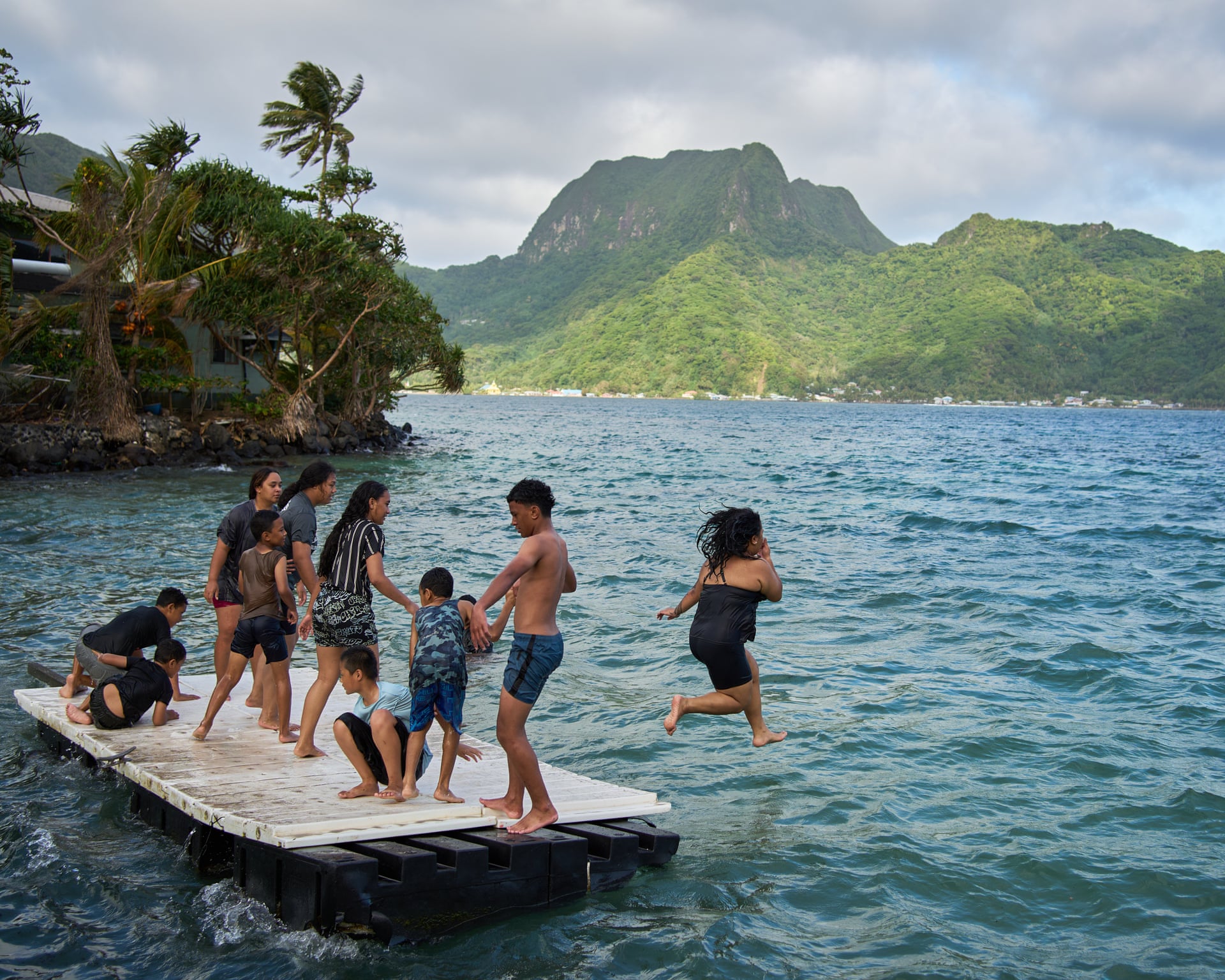
Two tracts of Pacific seabed totaling 12.7m hectares went to a single bidder for $3 million each on Thursday, the first U.S. deep-sea mining lease sale in the region, the Guardian reported.
The live-streamed auction, run by the Marine Minerals Administration in California, covered 31.5m acres off American Samoa. Wetstone US Ventures was the only company to bid, securing rights to conduct bathymetric and geophysical mapping for the metallic nodules that contain rare earths used in electric-vehicle batteries and defense systems.
Interior Secretary Doug Burgum called the sale “a historic step for America’s energy and mineral security.” Mike Olsen, director of the MMA, said the action aligns with the Trump administration’s agenda “to advance the responsible development of America’s offshore critical mineral resources.”
“As we look to America’s next 250 years, we want future generations to inherit a nation that can build and innovate here at home, on the lands and in the waters that we’ve stewarded,” Olsen said.
“You don’t get to sell off our ocean first and ask whether it’s legal later. Washington needs to understand that the Pacific is not for sale.”
Guam Senator William Parkinson told the Guardian.
The auction proceeded three days after U.S. District Judge Jill Otake in Hawaii voided the environmental clearance, ruling that the National Marine Fisheries Service “failed to even attempt to consider the potential effects on ESA-listed species” under the Endangered Species Act.
Earthjustice attorney Chris Eaton said the ruling made Thursday’s sale unlawful and vowed to “use the full extent of the law to vigorously push for the leases to be voided.”
On the eve of the auction, Finafinau, an American Samoan youth and environment nonprofit, filed a last-minute injunction petition in the same Hawaii court. The motion was denied. Founder Sabrina Suluai-Mahuka said the government ignored more than 76,000 public comments and repeated calls for meaningful consultation.
“Yet here we are, watching our ocean being auctioned to the highest bidder,” she said. The lawsuit slammed the Trump administration for barrelling toward the sale “without sufficient information to comprehensively evaluate the impacts of issuing the first-ever commercial deep-sea mining leases.”
Taryn Kiekow Heimer, director of Ocean Energy at the Natural Resources Defense Council, warned the American Samoa sale will become the template for subsequent applications. “These leases last at least 20 years. The Commonwealth of the Northern Mariana Islands and Guam are next in line,” Heimer said.
“If this goes through, the administration will have shown it can open the deep sea over the objections of the people who live closest to it.”
A second lease sale covering 27.9m hectares (69m acres) between the Northern Mariana Islands and Guam is tentatively scheduled for Dec. 16. That auction faces a similar lawsuit pending in Hawaii federal court.
American Samoa Governor Pulaali’i Nikolao Pula has said the auctions could “unlock scientific knowledge” and “create economic opportunities” for the territory. John Wasko, executive director of the American Samoa Development Council, argued the industry supports the electric-vehicle sector and answers climate change. “Everybody wants unlimited renewable energy. Nobody wants to admit their part in planet Earth’s atmospheric destruction,” Wasko said.
American Samoa is the southernmost U.S. territory and one of only two south of the Equator, lying 2,200 miles southwest of Hawaii. Its total land area is 77 square miles, slightly larger than Washington, D.C., while its surrounding territorial waters span 117,500 square miles, an expanse about the size of New Zealand. The population of roughly 47,400 is concentrated on the main island of Tutuila.
Since the Deeds of Cession in 1900 and 1904, Samoans have resisted full integration into the U.S. legal system to protect indigenous governance and communal land ownership. In 1949, Congress halted an Organic Act after matai warned it would undermine traditional authority. American Samoa remains the only permanently inhabited U.S. territory where people born there are non‑citizen nationals, and the Fono unanimously opposed birthright citizenship in 2021.
Finafinau’s court filing accused the MMA of recklessly accelerating environmental review despite “limited understanding of the significant environmental consequences.” The legal battle over whether the leases stand continues in Hawaii.
Worth a look

Milwaukee Man Sentenced to Three Consecutive Life Sentences With No Chance of Release
Milwaukee County Judge David Borowski sentenced Thomas Seville Zollicoffer to three consecutive life sentences with "no chance whatsoever"...

Huntsville Police Chief Kirk Giles to Retire in Early 2027 After 50-Year Career
"Kirk is one of the finest men I have ever known," Mayor Tommy Battle said Friday, calling Police...

Michigan Regents OK $785M Los Alamos Center Over Opposition
The University of Michigan Board of Regents voted 7-1 Thursday to move forward with a computing center developed...

Three Emergency Vehicles Struck by Three Different Drivers at Burleigh County Crash Scene
Three emergency vehicles were struck by three different drivers at a single crash scene on U.S. Highway 83...