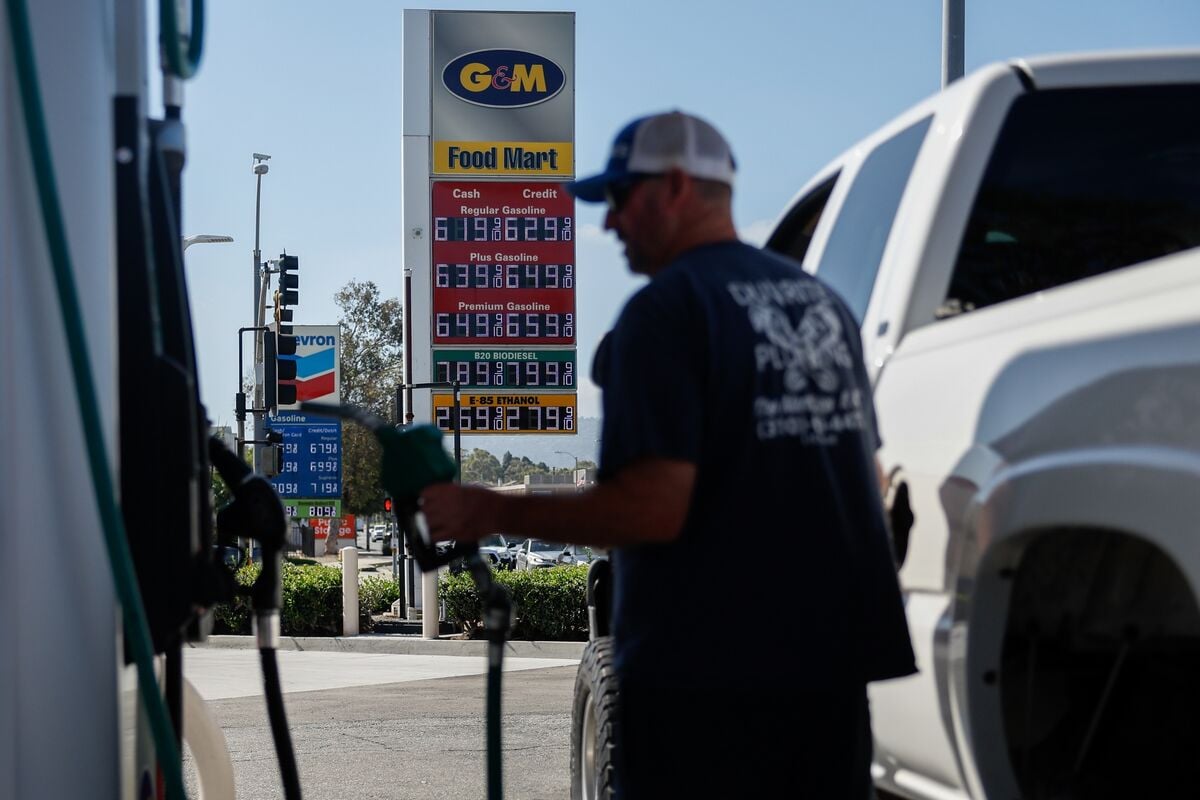
Higher gasoline prices pushed overall US inflation up 0.6% in September, while core price pressures continue a gradual normalization process that could keep the Federal Reserve on hold this month.
US inflation picked up speed in September, driven largely by climbing energy costs even as underlying price pressures moderated, according to a Bloomberg survey of economists ahead of the Bureau of Labor Statistics release. The closely watched consumer price index is expected to advance 0.6% following a 0.4% increase a month earlier, marking the largest monthly advance in five months.
Natixis economists Christopher Hodge and Selin Aker noted in their October CPI Preview that the prior month’s hotter readings were an outlier. August CPI came in above consensus expectations due to a rise in components that we don’t think will be repeated,
Hodge and Aker wrote.
Natixis Forecasts Stable Core Inflation
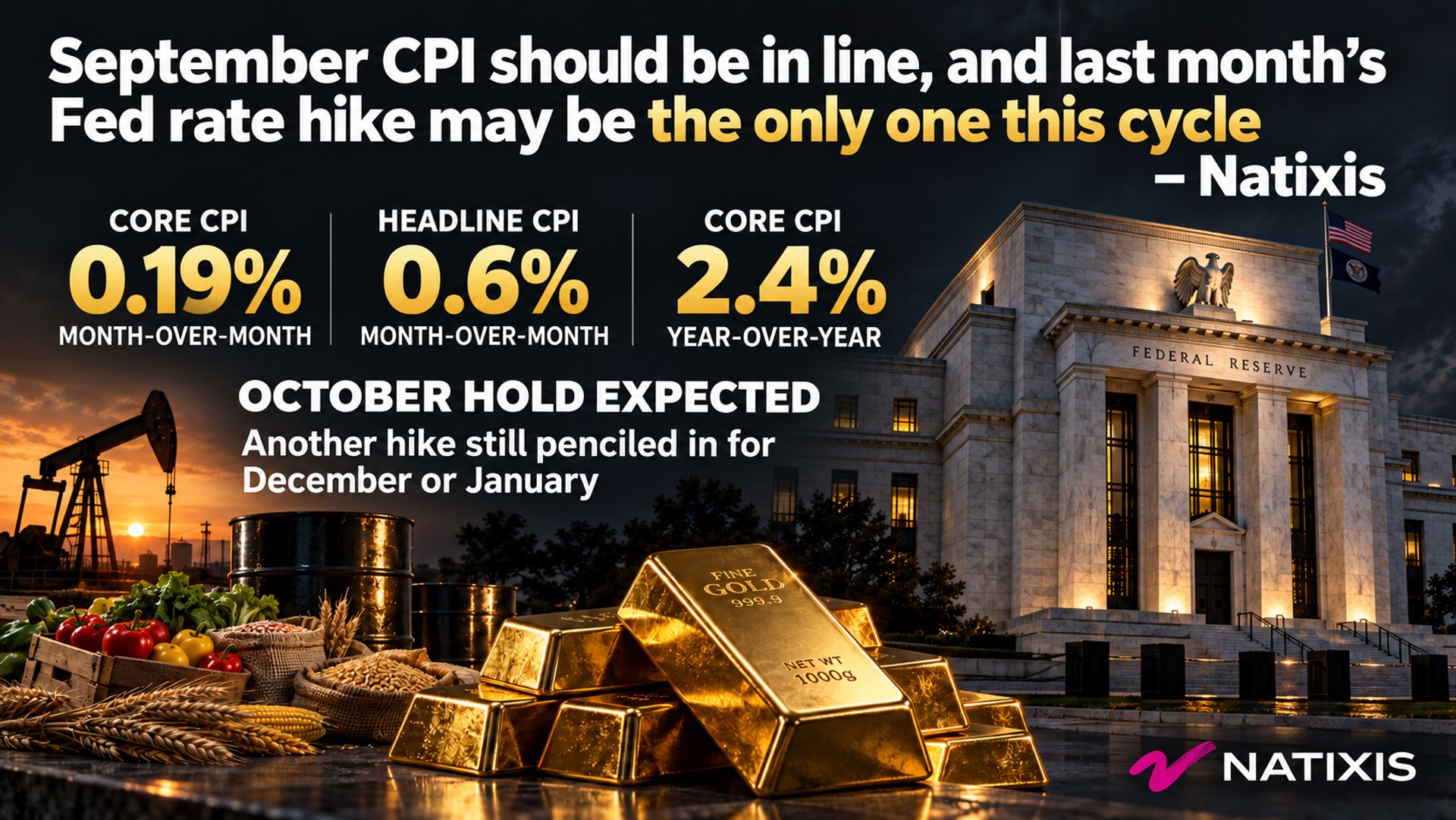
Natixis expects the core consumer price index to post a modest 0.19% increase for September, with the headline print landing at 0.6%.
“If our forecast is accurate, core inflation on the year should remain stable at 2.4%, while the 3m annualized rate would increase to 2.8% (as the negative print from July would drop out of the equation), and the 6m annualized rate would fall a hair to 2.55%,”
Christopher Hodge and Selin Aker, Natixis
The firm argues that supply shocks from energy markets and the effects of previous tariff policies are not bleeding permanently into the economy. We continue to think that inflation breadth is improving, albeit in fits and starts, and that supply shocks are not bleeding through more broadly to core prices,
the economists stated.
Fed Focuses on Alternative Metrics
Federal Reserve Chair Kevin Warsh has frequently pointed to alternative gauges such as trimmed mean and median inflation.
Regional bank data compiled for these alternative metrics indicate steady improvement, although price trends remain short of the central bank’s explicit 2% target. Analysts anticipate that the Fed’s inflation task force will lean more heavily on these alternative calculations moving forward. Measuring price breadth by tracking how many subcomponents run above 3% gives policymakers a clearer window into whether price pressures remain concentrated or widespread.
Economists expect officials to keep rates unchanged at their late October meeting to allow time for additional economic data before the December gathering, while also side-stepping political crosswinds ahead of early November mid-term elections.
Related reading

UK Pensions Face Inheritance Tax Overhaul From April 2027
Millions of UK families face a tax policy change as unused pensions and death benefits enter the inheritance...

Indonesia’s House of Representatives (Commission VIII DPR RI) and government ministers finalized
Indonesia’s House of Representatives (Commission VIII DPR RI) and government ministers finalized the Hajj Organising Costs, known as...

Poonawalla Fincorp Posts Fivefold Net Profit Jump in Q2
Poonawalla Fincorp reported a significant increase in net profit to ₹375 crore for the second quarter of financial...

LTA Proposes Merging COE Categories A and B Into Single Tier
Singapore motorists face a unified vehicle certificate system as authorities propose merging Categories A and B into a...