
Two House Races Flip Back as Utah Republicans Try to Hold Ground
The political math in Utah is shifting as election workers continue processing ballots from Tuesday’s general election. Two House legislative races have flipped away from Democratic contenders, offering a modest buffer for Republicans working to protect their majority.
Republicans have held a commanding two-thirds supermajority in the Utah House of Representatives for 26 years, controlling 61 of the chamber’s 75 seats at the start of the year. That structural advantage is now under severe strain. Early returns on election night pointed toward a staggering wave of Democratic momentum that threatened to strip the GOP of 17 seats. As additional votes trickle in from county clerks across the state, that projected loss has narrowed to 15 seats.
Inside the Flipped Districts
The margins in these crucial races tell the story of a legislature on a knife-edge. In the contest for Summit and Wasatch counties’ House District 59, Republican Luke Searle mounted a comeback against Democrat Celeste Johnson. Johnson held the lead on election night for the open seat vacated by retiring Republican Rep. Mike Kohler. Searle has since pulled ahead with nearly 51.5% of the vote, holding a 465-vote advantage over Johnson.
A similar reversal played out in House District 4, covering Morgan, Rich, and parts of Summit county. Republican incumbent Tiara Auxier overtook Democrat Zane Woolstenhulme. Auxier sits at 50.55% of the vote compared to Woolstenhulme’s 49.45%, a razor-thin separation of just 141 votes. Up in the Utah Senate, a parallel battleground contest for the seat held by the Forward Party’s sole state lawmaker, Sen. Emily Buss, has also swung toward Republican challenger Brooks Benson by 169 votes, according to Thursday morning tallies.
The Stakes Behind a Broken Supermajority
Even with these recovered leads slowing the hemorrhage, the political balance of power in the Utah Legislature has fundamentally altered. House Republicans could finish with as few as 44 seats when the Legislature convenes in January if current trajectories hold. While the party would retain a numerical majority, losing the two-thirds threshold strips Republicans of their unilateral power to override gubernatorial vetoes or push through constitutional amendments without crossing the aisle.
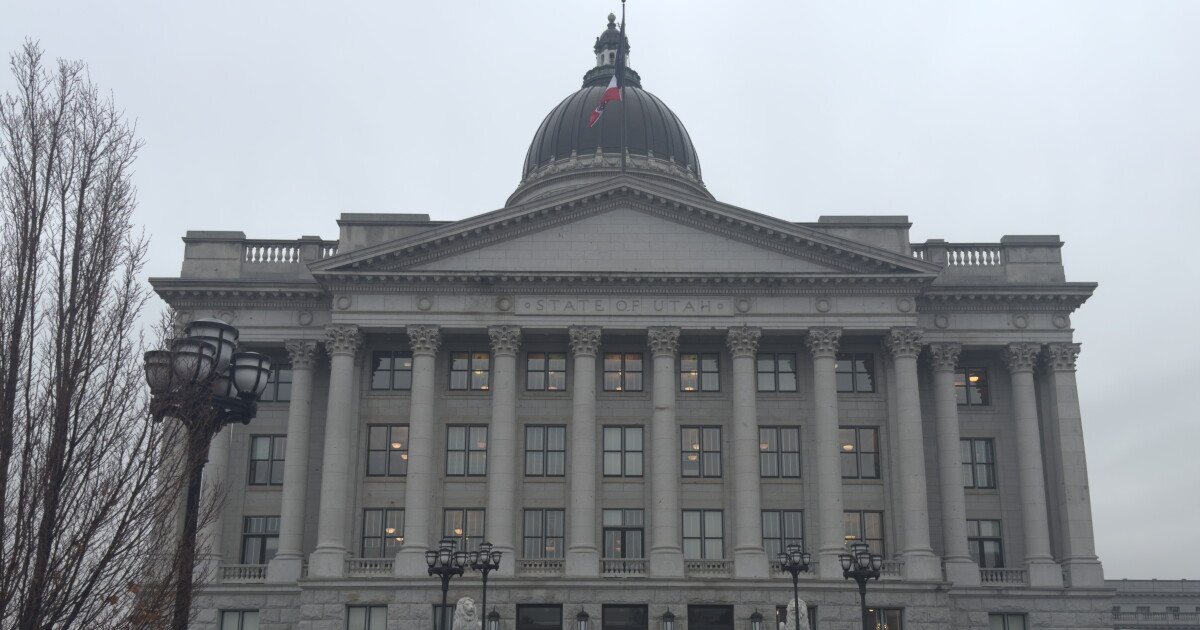
The fallout extends directly into the internal hierarchy of the State Capitol. Among the incumbent Republicans trailing their challengers is Rep. Jordan Teuscher, who wields considerable influence as the chair of the House Rules Committee, the gatekeeper body that decides which bills make it to the floor for a hearing. In the Senate, Majority Leader Kirk Cullimore faces a deficit of more than 13 percentage points against Democrat Shana Anderson in Senate District 11, though Senate Republicans as a whole are still projected to maintain their chamber supermajority.
Thousands of uncounted ballots remain across the state, keeping multiple contests officially too close to call while county election divisions work toward the final canvass two weeks post-election. The final composition of the Utah Legislature hangs entirely on those remaining envelopes.
GOP GAINS: Two Utah House seats that once flipped Democrat on Election night are now back in GOP control after more results. • House 4: Rep. Tara Auxier now leads by 141. • House 59: Luke Searle now leads by 465. On the Senate side: • Senate 11: GOP’s…
More on House District
Related reading
Japan to set up cyber rescue team after wave of system breaches
Japan is moving to establish a specialized cyber rescue team on Nov. 6 following a sudden wave of...

How Hilldale Shopping Center Thrives With New Retail and Dining
While traditional shopping malls across the country fight empty storefronts, Hilldale Shopping Center in Madison reports it is...

Wyoming high school football playoff semifinals set for this weekend
Wyoming High School Football Playoff Semifinals Set the Stage for Laramie Showdowns Ten games across five classifications will...

John Braun Concedes Washington’s 3rd District Race to Marie Gluesenkamp Perez
Republican John Braun concedes to Marie Gluesenkamp Perez in Washington's 3rd District The race for Washington’s 3rd Congressional...