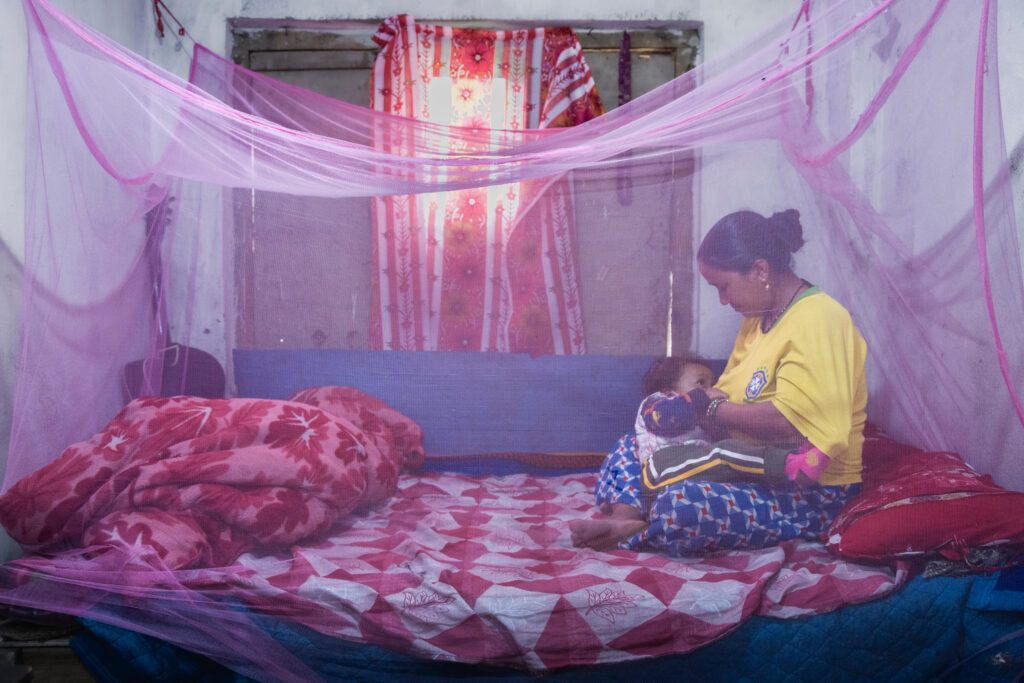
Climbing to the Roof of the World
For generations, the high Himalayas of Nepal stood as a cold, forbidding sanctuary against the tropical diseases of the lowlands. Today, melting glaciers and rising alpine temperatures are rewriting that geography, bringing disease-bearing mosquitoes up steep mountain slopes and into communities that have no clinical memory of them.
The numbers from the country’s public health records tell a stark story of geographic creep. Researchers tracking the spread have documented Aedes aegypti—the primary vector for the dengue virus—at elevations up to 2,500 meters, or roughly 8,200 feet above sea level. What was once strictly a lowland threat of the Terai region along the Indian border has steadily climbed into the mid-hills and the densely populated Kathmandu Valley.
Consider the trajectory. First detected in Nepal in 2004, the virus sparked severe public health crises in 2019, 2022, and 2023. By 2025, health data showed the virus had reached 76 out of the country’s 77 districts, leaving roughly 9,000 recorded infections and at least six deaths that year alone. Across the broader surge recorded by the Epidemiology and Disease Control Division between January 2024 and December 2025, at least 42,647 people were infected and 19 died.
Warming Temperatures and Monsoons Drive Insect Population Expansion
The sudden expansion of these insect populations is driven by a convergence of warming temperatures, human mobility, and unplanned urban growth. Higher average minimum temperatures allow the vectors to survive and reproduce at high altitudes that once acted as natural thermal barriers.
At the same time, unusually strong monsoons trigger flash floods that overwhelm municipal drainage systems, creating ideal standing water for both Aedes aegypti and Aedes albopictus.
The biology of the vector accelerates the crisis. According to Ishan Gautam, an associate professor at Tribhuvan University in Kathmandu, infected mosquitoes frequently bite seven to eight individuals before reaching repletion.
“Climate change has a huge impact on geographical distribution and establishment of these vectors in a new area.”
explained Ishan Gautam. A literature review published in January in the journal Clinical Infection in Practice notes that transmission has escalated from localized flare-ups to major nationwide epidemics over the past two decades.
Mountain Residents Face Severe Risks from Multiple Virus Strains
In remote mountain districts, residents face a steep learning curve. Dipsikha Baraili, a 14-year-old living in Paplu, Solukhumbu District, at 2,413 meters above sea level, had no travel history outside the area when she was hospitalized with a severe fever and body pain two years ago. Her diagnosis of locally acquired dengue highlights how far the footprint has stretched.
Compounding the risk, multiple distinct strains of the virus circulate concurrently in Nepal. A secondary infection with a different serotype significantly increases the likelihood of severe dengue, which can cause plasma leakage, severe bleeding, and organ impairment. Established populations of these mosquitoes create a serious risk for local transmission of other pathogens, including Chikungunya and the Zika virus.
In many Himalayan communities, the first point of contact during an illness is an amchi—a traditional healer practicing Sowa Rigpa, a centuries-old Tibetan medical tradition. While deeply trusted, these practitioners operate outside formal disease-surveillance systems, meaning new vector-borne infections can circulate unacknowledged until hospital admissions spike.
Erin Mordecai, an infectious disease ecologist at Stanford University, points out that rising global temperatures have already increased the dengue burden by roughly 18 percent over historical baselines. For Nepal, a carbon-negative nation that sequesters more carbon than it emits, bearing the brunt of these climate-driven health shifts highlights an urgent equity gap in global environmental impacts.
Mitigating future epidemics will require systematic community campaigns to eliminate standing water, structural upgrades to municipal water systems, and expanded public education. Without a widely available vaccine in the country, public health officials warn that timely surveillance and local preparedness remain the only shields against a shifting climate.

Lemhannas Governor Urges Leaders to Study Vietnam’s Economic Growth
Lemhannas Looks to Hanoi as Indonesia Refines Economic and Energy Strategy For the senior leaders currently enrolled in...

Christopher Sepúlveda Overcomes Rare Childhood Epilepsy Diagnosis
When Christopher Sepúlveda was two years old, his parents noticed involuntary movements in his mouth and eyes, alongside...

Public Sector Strike Planned for Nov 12 Amid Pay Talks
Stakes Rise as Talks Resume in Public Sector Pay Dispute Government officials and trade union delegates are maintaining...

Study Finds OAB Drugs May Not Increase Dementia Risk
New research finds that anticholinergic medications commonly prescribed for overactive bladder may not increase dementia risk compared to...