West African energy regulators are advancing plans for a regional fuel pricing benchmark and trading hub in Abuja, aiming to reduce dependence on European and Mediterranean price signals as output from Nigeria’s Dangote refinery reshapes regional supply.
Abuja Conference Focuses on Regional Price Independence
Regulators, refiners, traders, and financiers gathered in Punch Newspapers on Tuesday for the second West Africa Refined Fuel Market Conference. Jointly hosted by the Nigerian Midstream and Downstream Petroleum Regulatory Authority, S&P Global Commodity Insights, and the West Africa Regulator Forum, the gathering centered on establishing an independent pricing framework for petroleum products across the region.
Opening the discussions, the Authority Chief Executive and WARF Chairman Punch Newspapers argued that regional fuel costs should not remain vulnerable to crises originating in Western Europe or the Mediterranean. He emphasized that local pricing must instead reflect internal supply, demand, and inventory conditions.
“If we look at the refining capacity on the continent and how it has been increasing, it simply doesn’t make sense that if there is a problem in Western Europe or in the Mediterranean, it is going to affect our pricing in Africa.”
Rabiu Umar, Authority Chief Executive and WARF Chairman
Umar added that while the objective is not to isolate the region from international trade, regional prices should be determined on the basis of geopolitical issues, demand and supply, and complexities within the market.
How Dangote Alters Trade Patterns Across West Africa
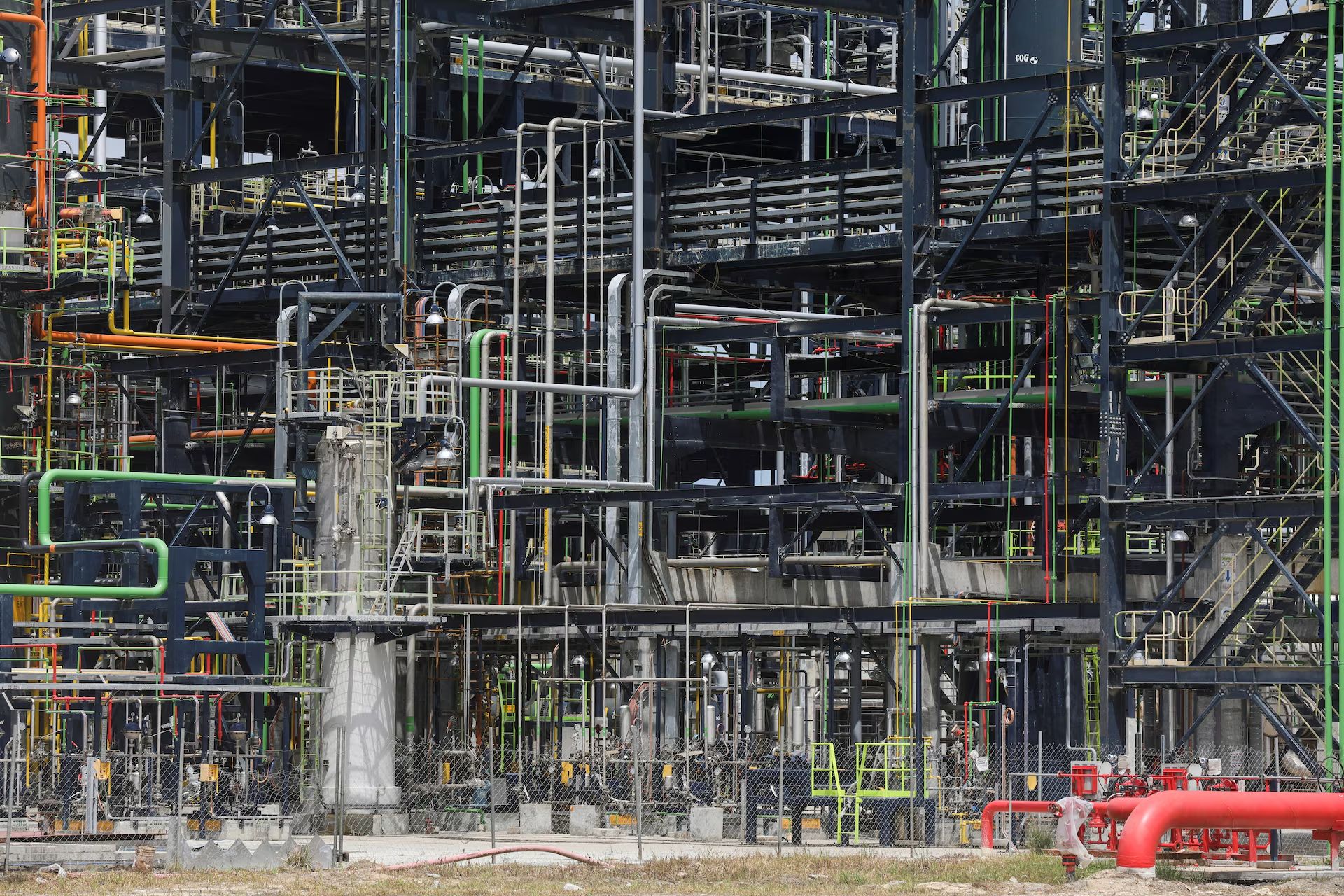
For decades, West Africa’s limited domestic refining capacity forced the region to export crude oil while importing substantial volumes of refined fuel, leaving local pricing at the mercy of established trading hubs abroad. The physical landscape of this trade shifted with the advent of the 650,000-barrel-per-day Dangote refinery in Ibeju-Lekki, Lagos.
Data from S&P Global Commodities at Sea indicates that West Africa’s clean petroleum product imports fell from approximately 997,000 barrels per day in April to roughly 765,000 barrels per day in May—a decline of about 23%. Analysts trace this changing trade pattern directly to increased output from the Dangote refinery, which has supplied neighboring West African markets while also exporting shipments to Europe and other international destinations.
This rising output provides the essential physical volume required for any credible regional pricing mechanism.
Infrastructure Deficits and the Roadmap for Execution
Despite expanded refining capacity, policymakers acknowledge that a pricing benchmark cannot be established by regulatory decree alone. In its roadmap presented at the conference, the NMDPRA emphasized that a reference price is not by itself a trading hub, and a conference is not a market.
The region continues to face severe infrastructure bottlenecks that impede the seamless movement of petroleum products across borders.
- Pipelines and storage terminals
- Jetties, ports, and marine logistics
- Rail networks and road transport corridors
- Harmonized product regulations and uniform quality specifications
Umar noted that differing product specifications between neighboring countries present a significant hurdle to cross-border commerce. We cannot have from here to Nigeria, to Ghana, to the United Republic, even our right-next-door neighbors having different products and specifications, he observed, explaining that such discrepancies complicate regional trade.
Establishing Market Liquidity and Pricing Architecture
Pricing architecture is already taking shape alongside these physical developments. S&P Global Platts has begun publishing gasoline and refined product assessments designed to capture regional market fundamentals.
Vera Blei, Head of Platts at S&P Global Energy, noted that while transparent benchmarks have been established for Nigeria and Punch Newspapers, their long-term viability depends on active participation from commercial traders.
Blei challenged regional stakeholders to take ownership of the framework, noting that we can give the foundations, we can make the reference prices available, but it’s down to everybody in this room to take bold steps to really bring them alive.
With the foundational phase largely addressed last year, officials stressed that current efforts must focus on execution, financing, and building sufficient commercial liquidity so that the market itself will produce the benchmark.
Related reading

Alison Mau Reflects On Early Career Harassment And Launches Tika
Journalist Alison Mau reflects on a career spanning major media milestones, including an incident of workplace harassment at...
Banco BPM Shares Rise on UniCredit and Credit Agricole Breakup Talks
UniCredit and Credit Agricole have discussed a potential joint breakup of Banco BPM, sparking a rise in bank...
High Street Savers Lose Over £300 a Year on £10,000 Deposits
Britons holding £10,000 in major high street banks are earning as little as £116 a year in interest,...