
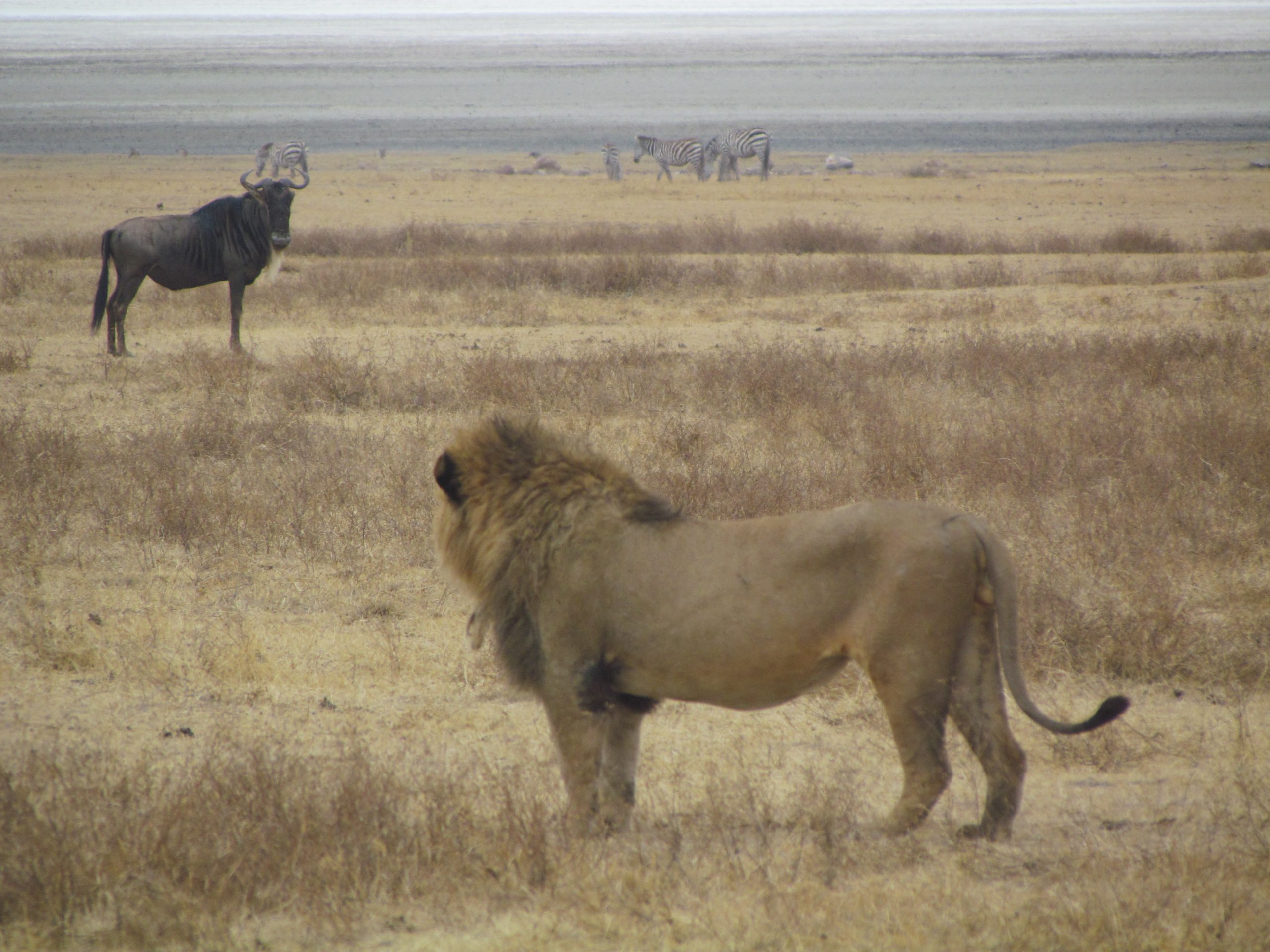
The hunter & hunted locking eyes in Ngorongoro All Around the World with the Most Travelled Indian By Nitin Gairola There is nothing that stirs both fear and awe in us quite like the thought of coming face to face with the king of the jungle – the African Lion.
The ghost – Camouflaged But what most of us don’t know is that this king of beasts now comes under the ‘vulnerable species’ category, due to habitat loss, trophy hunting, illegal wildlife trade, and human-wildlife conflict.
Confirmed details from the source coverage
Now there are just over 20,000 of them left in the wild in Africa and you can add another 1000 odd to this count in western India (Gir National Park in Gujarat) which is the home of the smaller Asiatic lion sub-species.
With ace safari traveller – David Amery Some of the best African national parks to go to and see the Lion King are the Masai Mara & Tsavo in Kenya, Serengeti & Ngorongoro in Tanzania, Queen Elizabeth in Uganda, South Luangwa in Zambia, Hwange in Zimbabwe, Okavango Delta in Botswana, Etosha in Namibia and Kruger in South Africa.
Today only about 20,000 to 25,000 remain, a collapse of roughly three-quarters in half a century, and the species now survives on a small fraction of the land it once roamed, by some measures less than 8 per cent of its historic range.
The International Union for Conservation of Nature lists the lion as Vulnerable, and by most reckonings the majority of its populations are still shrinking.
Context that stayed inside the record
On the African continent, lions now occupy only a small share of their former territory, commonly put at around 8 per cent of the land they historically roamed.
West and Central Africa have been hit hardest, with lions there pushed to the brink; the West African lion in particular is considered critically endangered, clinging on in a handful of sites.
East and Southern Africa, which hold most of the world’s remaining lions, have also seen sharp declines, with southern populations falling from tens of thousands to around ten thousand, and East African numbers dropping similarly.
The first is habitat loss, as savannah and woodland are converted to farms, grazing and settlements, shrinking the space lions have to live in.
Find more reporting in our News section.
Worth a look
Police Find Canada-Returned Couple Dead in Karachi Home
Police found a Canada-returned elderly couple dead inside their North Karachi home.

Nyesom Wike Unveils 2027 Cross-Party Campaign Strategy in Abuja
Federal Capital Territory Minister Nyesom Wike unveiled a cross-party mobilization strategy, declaring himself field commander for President Bola...

Traffic Diversions Set as Zanu-PF Annual Conference Begins in Chinhoyi
Thousands of delegates converge on Chinhoyi for the ruling party’s annual conference, triggering strict traffic diversions on major...

An Coimisiún Pleanála Refuses Creeslough Service Station Planning
An Coimisiún Pleanála has refused planning permission for a service station adjacent to the Creeslough tragedy site in...