
Protesters took to the streets across Europe, clashing with law enforcement over living costs, housing shortages, and deteriorating public services. As French authorities mobilized police officers, economists warned that public deficits and economic stagnation are pushing the continent’s social safety nets to a breaking point.
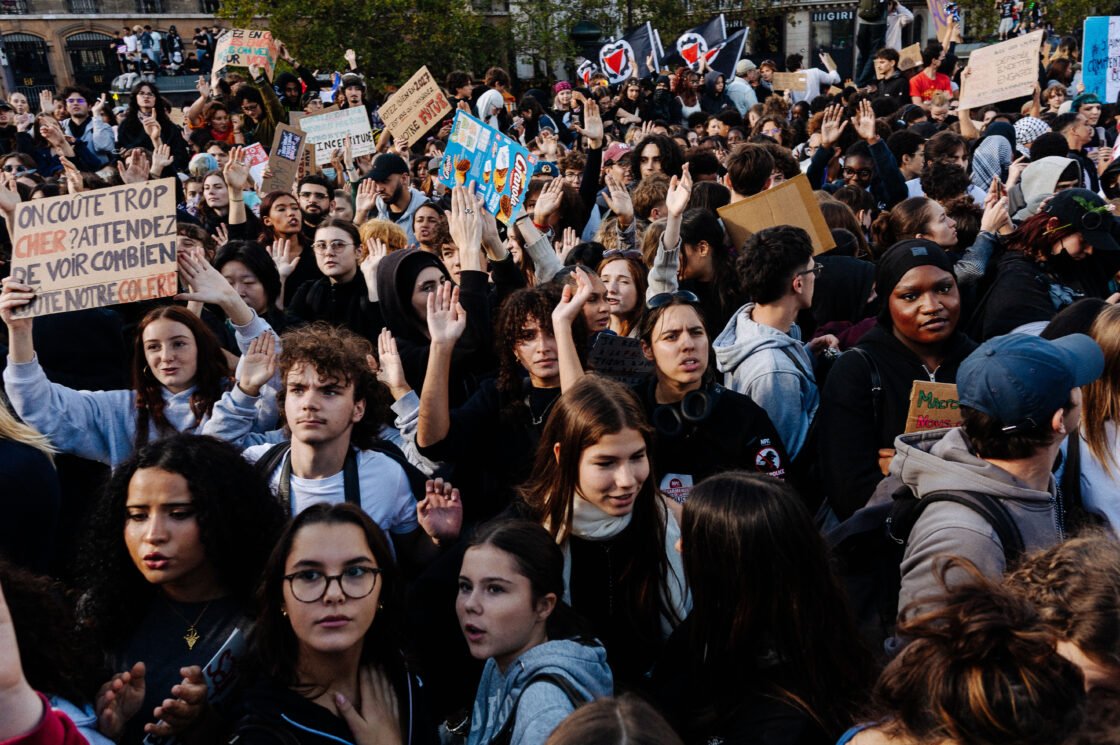
Europe’s autumn has erupted into a sprawling wave of civil unrest, stretching from Lisbon to Athens and hitting Paris with particular severity. What began largely as student demonstrations over crumbling campus infrastructure and overcrowded classrooms has rapidly expanded into a broader societal revolt. In France, where authorities deployed 70,000 police officers and gendarmes, the Ministry of Interior reported that approximately 320,000 people demonstrated across the country on October 31, including 70,000 in Paris, though organizers maintain the actual participation figures were considerably higher.
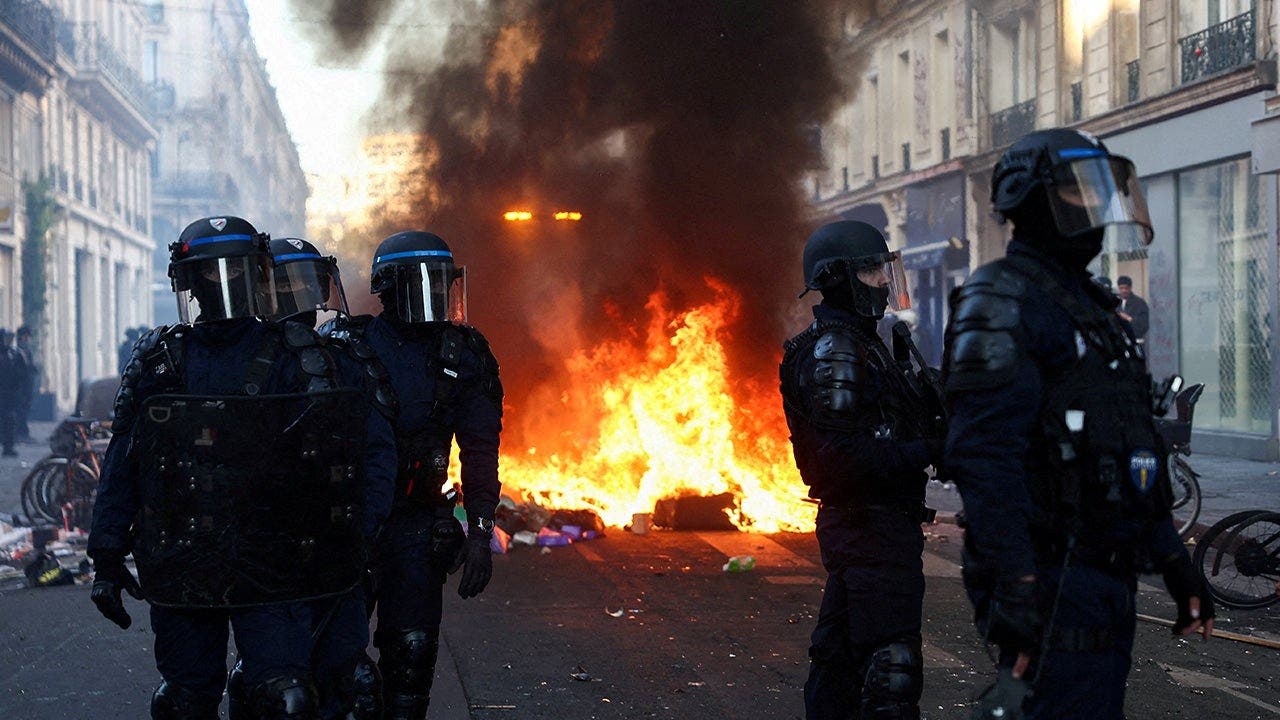
The demonstrations have frequently descended into violent clashes. Protesters have hurled rocks and pyrotechnics at police cordons, while law enforcement has responded with tear gas and water cannons. Beyond France, similar demonstrations and strikes have materialized in Spain, Portugal, Belgium, Greece, Italy, Ireland, Germany, and Austria. The scale of the movement has laid bare deep anxieties over intergenerational mobility, with a generation of young Europeans facing the stark realization that their living standards may fall short of their parents.
Stagnant Wages and Housing Costs Fueling the European Protests
At the heart of the unrest lies a severe economic squeeze. Household budgets across the continent are being consumed by skyrocketing housing expenses, persistent inflation, and high utility bills. According to Eurostat data, food and non-alcoholic beverages accounted for 13.1 percent of total household expenditure across the European Union in 2024, with specific national shares climbing to 18.1 percent in Portugal, 15.7 percent in Greece, and 14.7 percent in Italy.
The housing crisis is equally acute, particularly for younger residents. Across the EU, 26.9 percent of young people aged 15 to 29 lived in overcrowded households. The disparity between wages and rent in major urban centers has left workers with razor-thin margins. In Lisbon, where average net salaries hover around €1,408 against a city-centre rent of €2,561, a full-time working couple can be left with just €253 after paying rent, before accounting for food, electricity, and transport. Zurich presents the highest rent in comparative figures at €5,502 alongside the highest average net salary at €7,321 per person.
Gulshan Sachdeva, a professor of European Studies at Jawaharlal Nehru University, noted that while each country maintains distinct historical and political contexts, a unifying economic thread binds the demonstrations together. What we are witnessing is a combination of several crises: economic stagnation, rising living costs, housing
and strained public infrastructure, Sachdeva explained to The Times of India.
Government Deficits, Bond Yields, and the Fiscal Strain on the EU
European governments find themselves caught between mounting public demands for increased spending on schools, welfare, and fuel subsidies, and rigid fiscal rules enforced by the European Union. Under the EU’s fiscal framework, reference values cap government deficits at 3 percent of GDP and public debt at 60 percent of GDP. Yet several member states far exceed these thresholds.

France’s government debt has reached 119 percent of GDP, while Belgium stands at 110 percent, Spain at 101 percent, and Portugal at lower levels. Budget deficits are similarly strained, with France recording a government debt of 119 percent of GDP, Belgium at 110 percent, Spain at 101 percent, and Portugal at 92.5 percent. This high borrowing requirement has spooked financial markets. During the height of the recent riots, the yield on France’s 10-year bonds climbed to almost 5.1 percent — a level not seen in 23 years — forcing the government to pay significantly higher interest bills to keep borrowing compared to Germany, which pays 3.4 percent.
At the same time, many European economies are experiencing sluggish growth or outright contraction. The Age reported that the French economy contracted slightly in the first quarter of 2026, grew by a meager 0.2 percent in the second quarter, and shrank by 0.1 percent in the third quarter.
Decentralized Organizing and the Rise of Digital Activism
Unlike traditional labor movements led by hierarchical trade unions, the current wave of protests draws its strength from decentralized digital organizing.
Ahead of major mobilization dates, digital monitoring recorded hundreds of thousands of posts and millions of views across social channels. This horizontal structure allows thousands of participants to mobilize rapidly without waiting for institutional sanction. However, it also creates a distinct leadership vacuum.
Political actors across the spectrum are attempting to channel this profound public anger.

Heidi Klum Arrives at 25th Halloween Party as Giant Severed Hand
Supermodel Heidi Klum marked the 25th anniversary of her annual Halloween celebration on October 31, 2026, by arriving...

18,000 Protesters Join Gen Z regelt Demonstrations Across Germany
Rising living costs, education cuts, and deteriorating public services have fuelled youth-led demonstrations across Europe, culminating in a...

Wanted: New Central Bank Chief. Expertise and Political Acumen Required
Christine Lagarde will step down as European Central Bank president in February 2026 after more than seven years...
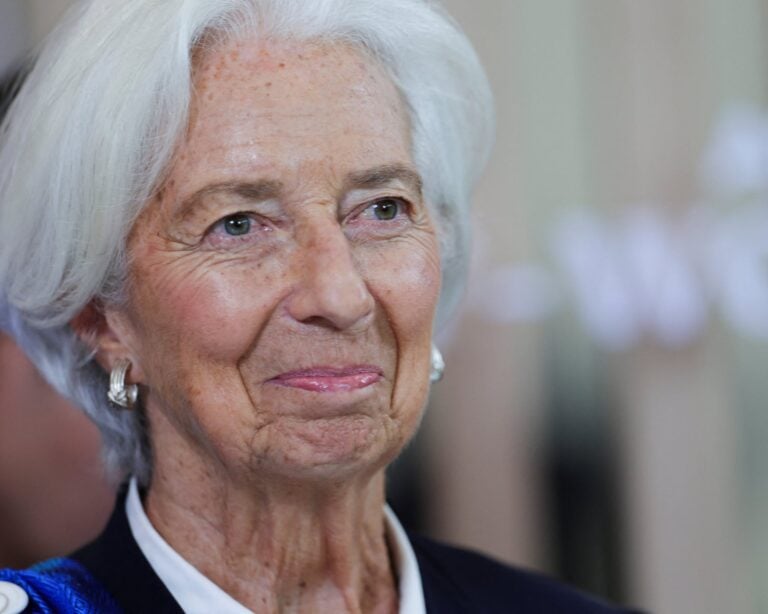
Christine Lagarde to Step Down as ECB President Nine Months Early
European Central Bank President Christine Lagarde announced she will step down next February, cutting her term short by...