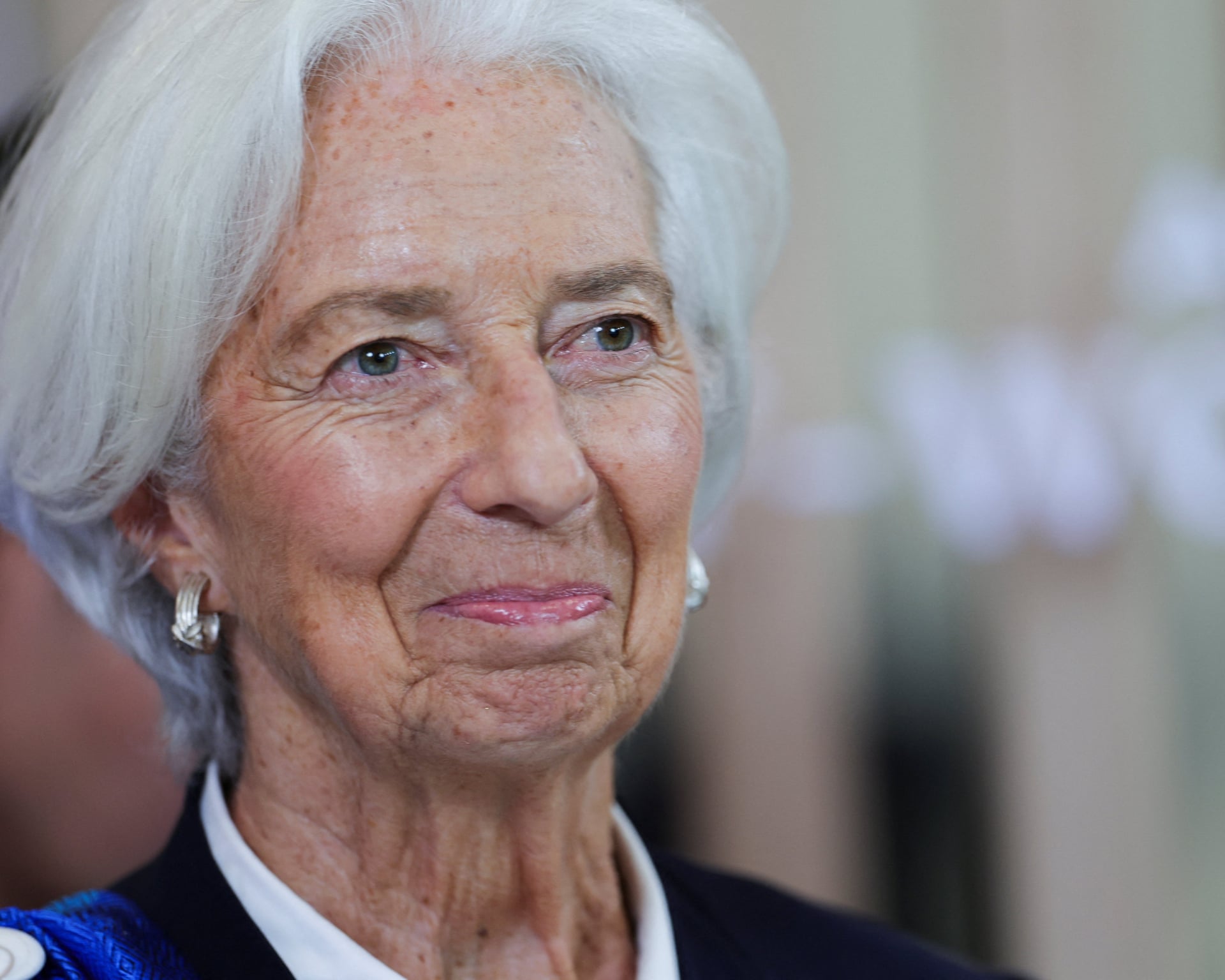
European Central Bank President Christine Lagarde announced she will step down next February, cutting her term short by nine months. Speaking after a decision to hold interest rates steady at 2.5%, Lagarde cited a desire for freedom of speech on global affairs.
Christine Lagarde Exits Nine Months Early to Reclaim Public Voice
Eurozone monetary policy will soon undergo a leadership transition. Ending months of speculation, European Central Bank President Christine Lagarde confirmed she will leave her post in February rather than October next year. The departure announcement followed a press conference addressing the central bank’s decision to maintain its key deposit rate at 2.5%, even as inflation rose to 3.8% last month—the highest level recorded since September 2023.
I have just informed my colleagues that I will step down as @ECB President on 7 February 2027.It has been a source of great pride to serve this institution.I thank all of those who have supported me on this journey over the past seven years. pic.twitter.com/eSLLTaDAej
Bound by strict neutrality mandates required of independent central bankers, Lagarde stated that her role prevented her from openly addressing broader economic and geopolitical challenges. Her early exit removes those professional constraints.
I want to have the freedom of speech, the freedom of expression and the freedom to engage on matters that are not monetary policy matters.
Christine Lagarde, European Central Bank President, via Theguardian
Lagarde noted that while neutrality is the price we pay for being independent
, she felt increasingly uncomfortable remaining silent on global developments. I’m interested in the truth, and I see the truth being very often damaged, contradicted by misrepresentation,
she said.
Navigating Economic Crises and Institutional Change
When Lagarde took the lead of the central bank in late 2019, she inherited an economy characterized by sluggish growth, low inflation, and negative interest rates. Within three months, the institution faced the onset of the Covid-19 pandemic, setting a tone of continuous crisis management.
During her tenure, she weathered the energy shock following Russia’s 2022 invasion of Ukraine, global trade turbulence under Donald Trump, and subsequent energy disruptions stemming from conflict in the Middle East. Frederik Ducrozet, head of strategy and macro research at Pictet Wealth Management, observed that the central bank needs to be pragmatic and flexible
given the sequence of shocks.
Beyond steering monetary policy across the eurozone, Lagarde earned praise for fostering consensus within the central bank’s large governing council. Ngozi Okonjo-Iweala, the director general of the World Trade Organization, credited Lagarde with bringing consensus-building skills honed during her previous leadership of the International Monetary Fund to the European Central Bank.
The Political Timing of the Succession Race
Lagarde’s early departure immediately triggered the race to find her successor, a process managed by the European Council of EU heads of state. Potential candidates mentioned in financial circles include Klaas Knot, a former governor of the Dutch central bank, Pablo Hernández de Cos, a former governor of Spain’s central bank and currently general manager of the Bank for International Settlements, German central bank president Joachim Nagel, and Nadia Calviño, the president of the European Investment Bank.
The timing of her February exit has drawn scrutiny due to the French presidential elections scheduled for next spring. By stepping down early, Lagarde—a French national—ensures her successor will be appointed while pro-European centrist Emmanuel Macron remains in the Élysée Palace. Holger Schmieding, chief economist at Berenberg bank, noted that European authorities are aiming to guard against the risk of right-wing candidate Marine Le Pen winning the French presidency.
While some critics argue the early resignation politicizes the central bank, others view the move as protective. Marcel Fratzscher, president of the German Institute for Economic Research, said Lagarde is demonstrating a high degree of responsibility towards Europe
by giving institutions the opportunity to appoint a successor committed to European values.
Unresolved Market Pressures Await the Next President
Political uncertainty in France has already unsettled financial markets, causing investors to shun French debt and sending government borrowing costs sharply higher. While the central bank maintains that market volatility driven by domestic French politics falls outside its direct remit, economists warn that broader contagion could force difficult decisions.
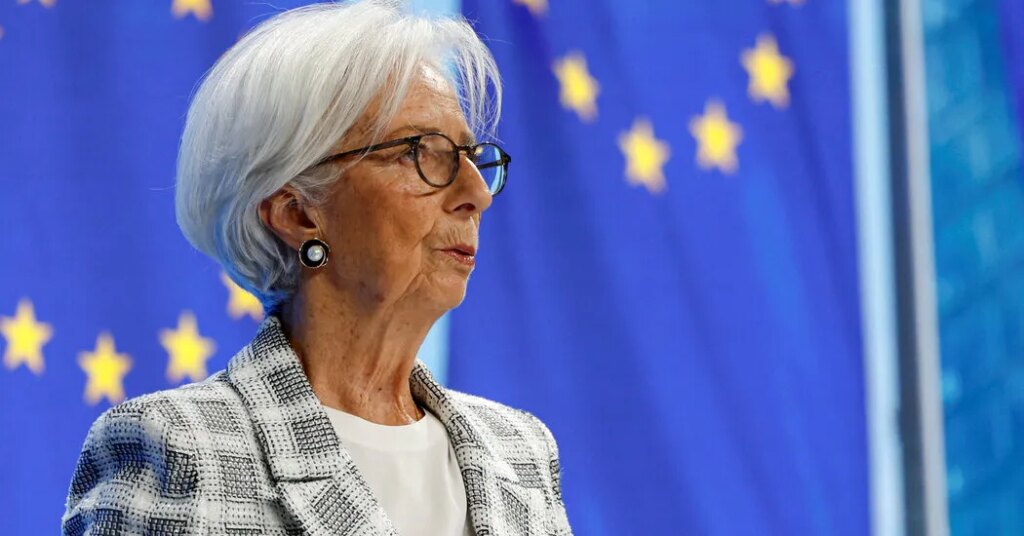
Gita Gopinath, a Harvard professor and former I.M.F. deputy managing director, pointed out that the next central bank president must be prepared to make hard choices regarding market intervention. It’s important to have a person at the helm who is able to take, along with their committee, these very independent decisions,
Gopinath said.
To ease market concerns regarding her departure, Lagarde confirmed that a process has already started to identify my successor,
adding that there are plenty of excellent candidates.
Meanwhile, French President Emmanuel Macron expressed deep gratitude for Lagarde’s tenure and stressed that the succession must be prepared in an orderly and balanced way
alongside European partners.
Keep reading
- Wanted: New Central Bank Chief. Expertise and Political Acumen Required
- G20 Ministers Scrap Family Photo Over Sergey Lavrov Presence in Atlanta
- Jin Tae Hyun and Park Si Eun Urge Couples to Plan Children Early (world-today-news.com)
- Secondary Schools Wait Months For Overdue Student Laptops From Olive Group (archyde.com)
Wanted: New Central Bank Chief. Expertise and Political Acumen Required
Christine Lagarde will step down as European Central Bank president in February 2026 after more than seven years...
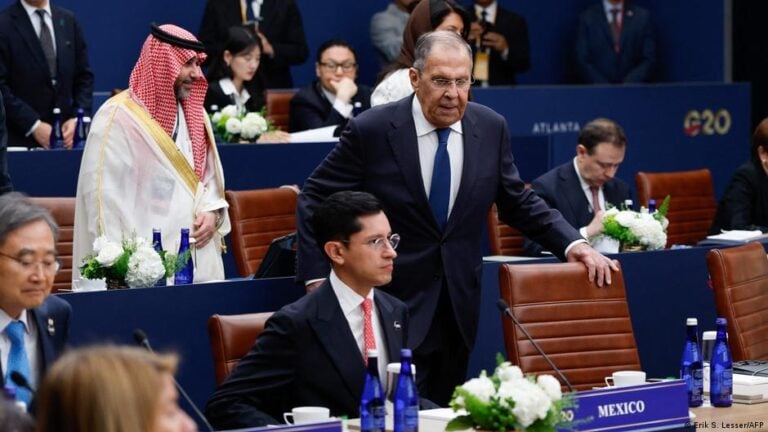
G20 Ministers Scrap Family Photo Over Sergey Lavrov Presence in Atlanta
Foreign ministers from G20 nations concluded two days of talks in Atlanta on Saturday without a joint communique,...
Joseph Kabila Leads New Rebel Alliance Against President Tshisekedi
Former Democratic Republic of Congo President Joseph Kabila has emerged as the leader of the Front for the...

Ukraine Drones Strike Novokuybyshevsk Refinery, Ending Attack Pause
Ukrainian drones struck the Novokuybyshevsk oil refinery in Russia’s Samara region on October 30, marking the end of...