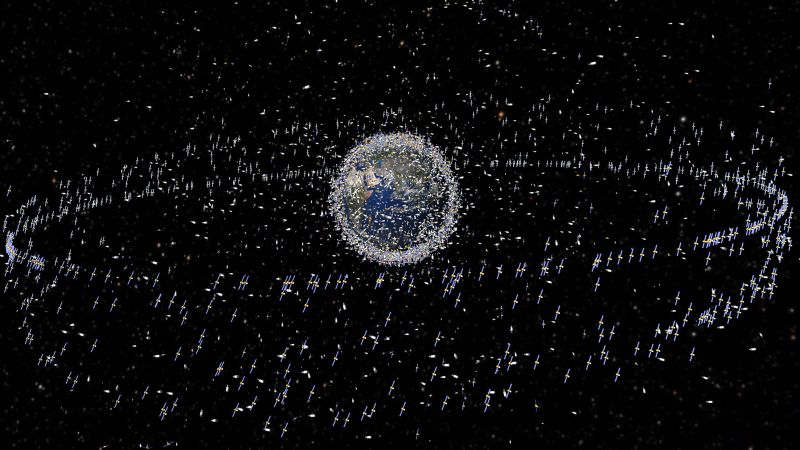
Falling space debris is a growing global threat as defunct satellites and rocket parts reenter Earth’s atmosphere multiple times daily. To track these uncontrolled descents more accurately, researchers have successfully repurposed earthquake-monitoring seismometers to detect the hypersonic sonic booms generated by tumbling spacecraft.
Reusing Earthquake Networks to Track Hypersonic Debris
Defunct satellites, empty rocket stages, and abandoned launch hardware plummet back toward Earth with increasing frequency. While most debris burns up entirely during descent, larger components survive the extreme heat and shredding aerodynamic forces, threatening infrastructure, the environment, and human populations on the ground.
Current civil and military monitoring networks rely primarily on ground-based radar and optical tracking to monitor objects in low Earth orbit. However, these traditional systems struggle to predict where debris will land once an object begins breaking apart in the upper atmosphere.
To solve this blind spot, researchers turned to environmental seismology—the practice of using earthquake-monitoring instruments to measure non-seismic vibrations. As space debris plunges through the upper atmosphere, it travels at hypersonic speeds exceeding Mach 25. This extreme velocity creates thunderous shock waves that propagate downward as sonic booms, generating distinct ground vibrations that register on seismometers designed to detect natural earthquakes.
“We’ve known for a long time that space debris reentering the atmosphere produces sonic booms, exactly the same way as natural meteoroids or supersonic aircraft produce sonic booms.”
Benjamin Fernando, postdoctoral research fellow at Johns Hopkins University, via CNN
Testing the Method on China’s Shenzhou-15 Spacecraft
To put the seismic tracking concept into practice, researchers analyzed data from the uncontrolled reentry of China’s Shenzhou-15 spacecraft orbital module, which plunged back into the atmosphere on April 2, 2024. Measuring roughly 3.5 feet wide and weighing more than 1.5 tons, the module was large enough to pose a genuine threat to populated areas.
As the massive module screamed northeast over Santa Barbara and Las Vegas at hypersonic speeds, it triggered a dense array of instruments on the ground. By analyzing the intensity and timing of the signals recorded by 127 seismometers across southern California, the research team reconstructed the object’s complete trajectory, estimated its altitude, and tracked how it fragmented during descent.
The results exposed a significant gap in existing military tracking models.
A Growing Hazard for Aviation and Communities
The push for independent, near real-time tracking tools comes as experts warn that the hazards posed by orbital debris extend far beyond ground impacts. Commercial aviation faces an increasingly measurable risk from deorbiting material passing through crowded air corridors. Researchers at the University of British Columbia published a paper indicating a 26% chance that space debris will fall through the world’s busiest airspace during an uncontrolled reentry over the coming year.
While the odds of a direct midair collision remain low, jet engines are vulnerable to microscopic particles in a manner comparable to aircraft flying through volcanic ash. Furthermore, burning debris can release toxic residues into the atmosphere that linger for hours and drift across regions, while rare space hardware may carry hazardous radioactive isotopes from historical missions.
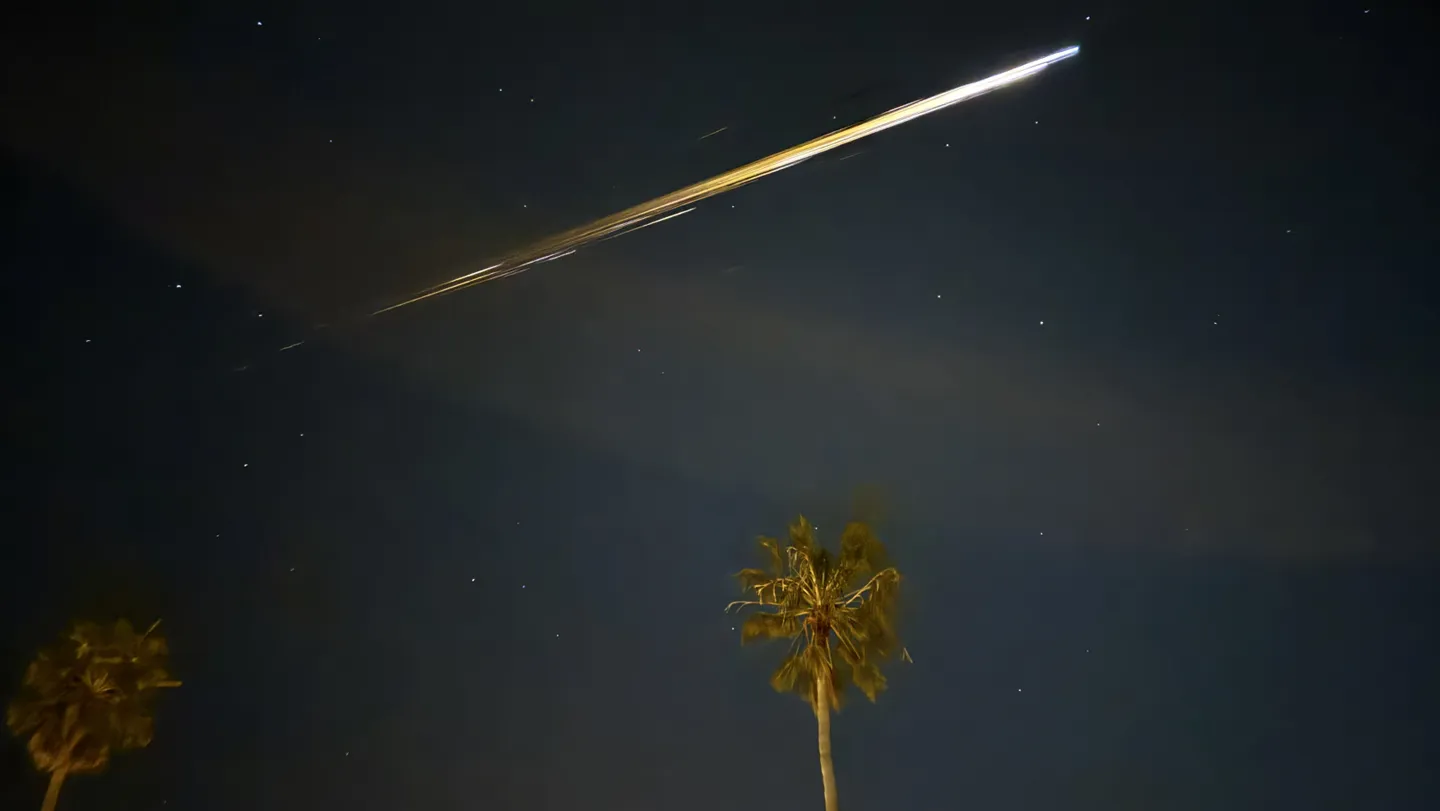
“What we are trying to investigate in the studies we are running is to see what is really the threshold for risk for an aircraft. At what risk should we react?”
Benjamin Virgili Bastida, European Space Agency space debris system engineer, via Space.com
Researchers emphasize that seismic monitoring cannot provide advance warning before an object falls, but it can supply independent verification within minutes or seconds of reentry. That rapid turnaround could help authorities quickly locate crash sites, assess environmental contamination, and safely manage airspace closures—including upcoming major deorbit events like NASA’s planned disposal of the International Space Station in the South Pacific.
Keep reading
Scientists Name New Genus of Australian Plant Bugs After Taylor Swift
Scientists have named a newly described genus of Australian plant bugs Swiftiephylus in honor of Taylor Swift, drawing...
NASA Images Crater Formed by SpaceX Falcon 9 Rocket Crash on the Moon
A NASA spacecraft circling the Moon has captured the sharpest views yet of a fresh crater carved by...
NASA Discovers McGetchin, Largest Newly Formed Lunar Crater
NASA’s Lunar Reconnaissance Orbiter has discovered McGetchin, the largest newly formed lunar crater ever found in the solar...

Study Links Climate Breakdown to Deadly Langtang Lirung Glacier Collapse
Human-induced climate change contributed significantly to the catastrophic glacier collapse and subsequent flash floods on the Nepal-Tibet border,...