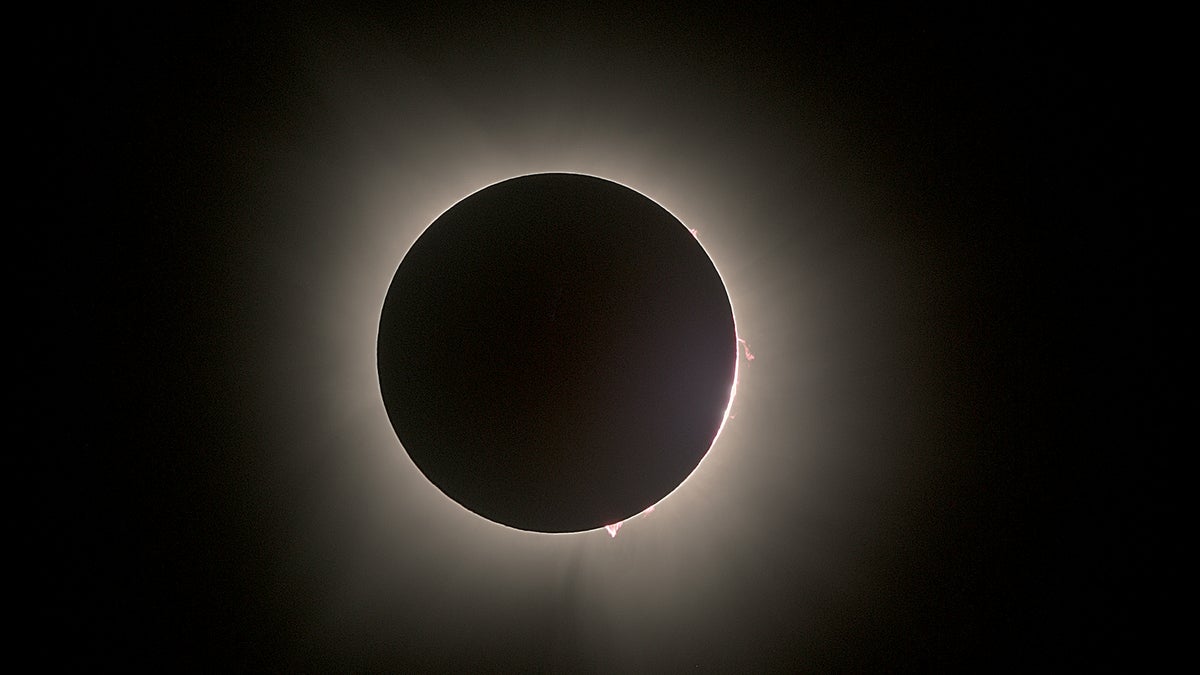
Skywatchers across North America and the Channel Islands are preparing for an unusual celestial lineup on August 12, 2026, when a partial solar eclipse coincides with the peak of the Perseid meteor shower. Authorities urge proper eye protection, as experts warn that partial eclipses carry severe retinal risks.
August 12 Cosmic Alignment: What North America and Europe Will See
August is shaping up to be a significant month for stargazers, bringing two major astronomical events to the sky within days of each other. This rare phenomenon occurs when the Moon passes directly between Earth and the Sun, temporarily blocking a portion of the solar disk (NASA).
Viewing times will vary widely across the continent. For instance, the eclipse will peak in Anchorage, Alaska, at 8:21 a.m. ET, and in Washington, D.C., at approximately 1:53 p.m. ET.
In Maine, residents can expect the moon to cover a notable portion of the sun. Shawn Laatsch of the University of Maine’s Versant Power Astronomy Center noted that viewers in the greater Bangor area will see the partial eclipse between 12:54 p.m. and 2:49 p.m.. At its peak at 1:53 p.m., as much as 23.6 percent of the sun will be blocked. Further north and east, coverage increases; Caribou will see about 25 percent coverage, while Portland will experience about 21 percent. The islands have not seen the sun this obscured since the famous 1999 eclipse.
Safety Warnings and Essential Viewing Equipment
Because the Sun is never completely covered from North America and most viewing regions during this event, health officials and astronomers emphasize that it is never safe to look directly at it without proper eye protection. The UK Health Security Agency (UKHSA) issued a warning explaining that the sun will appear dimmer than usual during the eclipse, making it easier to look at directly and increasing the risk of severe, painless retinal damage. Following the 1999 total solar eclipse, the Royal College of Ophthalmologists recorded about 70 cases of vision problems, with roughly 40 percent of those affected having looked at the sun for less than a minute.
Regular sunglasses, no matter how dark, provide no safe protection for viewing the Sun (Mashable, ITV).
“You should never look directly at the sun for more than a second or two without protection. Solar eclipse glasses and solar filters block out 99% of the sun rays.”
Shawn Laatsch, University of Maine’s Versant Power Astronomy Center
For those without direct-viewing gear, indirect projection alternatives are widely recommended. Observers can use pinhole viewers, project the sun’s image through a colander or the gaps between tree leaves onto a sheet of paper, or use a flat mirror covered with paper featuring a small hole to cast a reflected image onto a pale screen indoors. In Orono, the Versant Power Astronomy Center will host free public viewing from the Historic Clark Telescope Observatory, offering magnified views of sunspots alongside solar filter glasses sold for $3 a set.
The Peak of the Perseid Meteor Shower
“You have to be patient, but it’s a great spectacle if you’re lucky to be in a region where you can see it.”
Europe's Solar Eclipse is Coming…
Pierre Langlois, manager for space astronomy and planetary science missions at the Canadian Space Agency
For those missing the August 12 partial eclipse, North American observers will wait until 2045 for the next partial solar eclipse in Maine, while a total solar eclipse visible in the state will not occur until May 1, 2079.