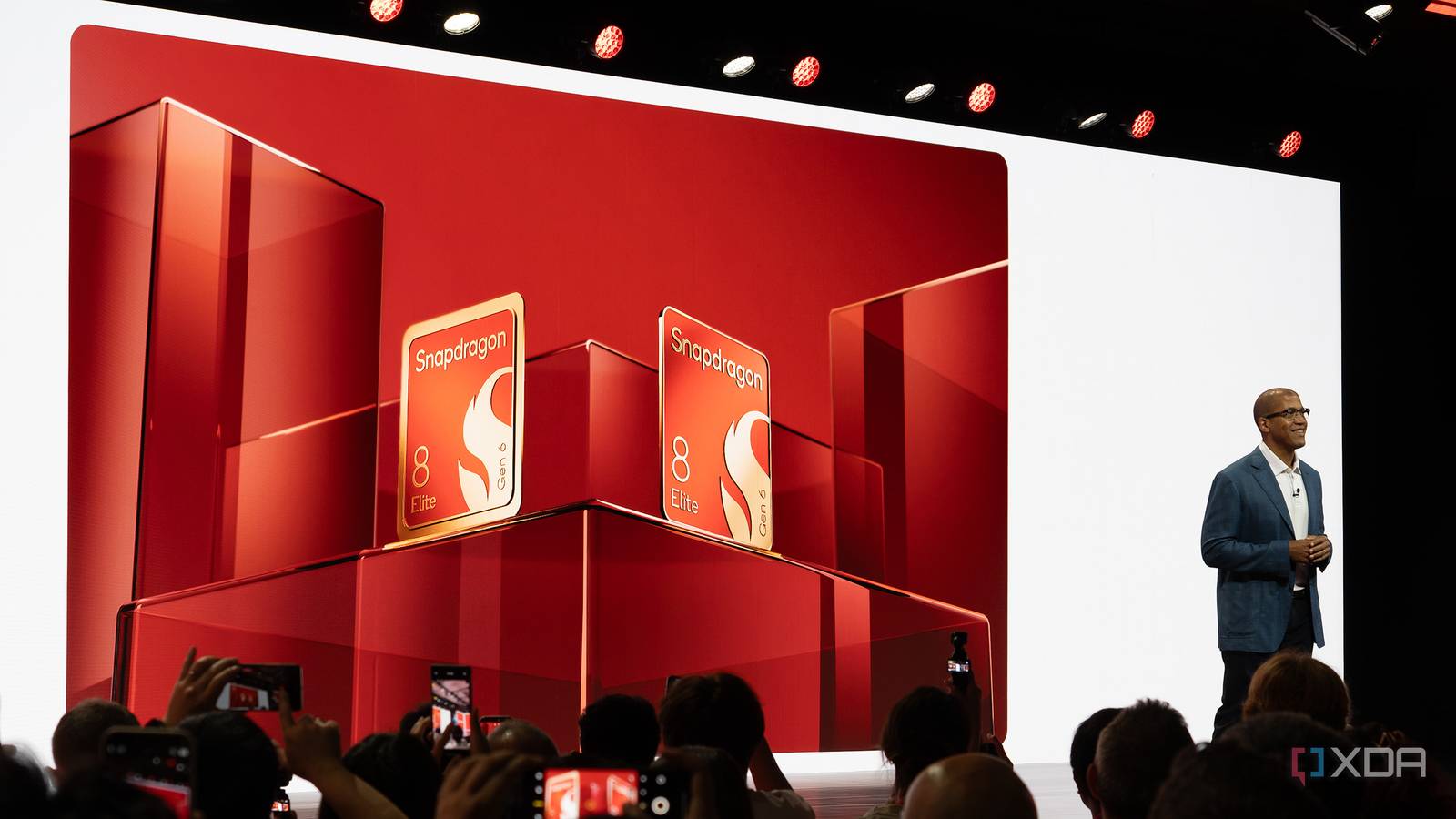
The launch targets on-device agentic AI as the smartphone industry faces a broader contraction driven by skyrocketing memory costs.
The Snapdragon 8 Elite Gen 6 Lineup and Dual-Tier Strategy
Qualcomm is shaking up its flagship mobile lineup with two distinct top-tier mobile chips: the standard Snapdragon 8 Elite Gen 6 and the more powerful Snapdragon 8 Elite Extreme Gen 6. According to the chipmaker’s hardware specifications and announcements, the Extreme version targets the highest-end smartphones on the market by offering substantial gains in performance and graphics efficiency. While the company has not yet named specific devices for the Extreme chip beyond the currently China-exclusive Xiaomi 18 Pro and Xiaomi 18 Pro Max (which aren’t coming to the U.S.), and Motorola’s Signature 27 (it’s making its way to the US), industry watchers expect it to land in ultra-high-end smartphones like Samsung’s inevitable but still-unannounced Galaxy S27 Ultra.
Powering the New Era of Agentic AI on Device
The entire new chipset generation is built on Taiwan Semiconductor Manufacturing Co.’s 2-nanometer manufacturing process. Qualcomm is positioning phones running on these high-end processors as self-contained “AI hubs” able to process AI models and produce tokens without relying on the cloud. Both versions of the processor top out at 5.0GHz for their prime cores and 4.0GHz for their performance cores, with 16MB of Oryon Flex Cache. In addition to the central processor (CPU), the new Qualcomm chipsets also include a graphics processing unit (GPU) as well as a neural processing unit (NPU) to handle AI workloads, which can handle agents running in the background.
During the launch presentation in Taipei, Qualcomm President and CEO Cristiano Amon outlined the company’s shift toward proactive artificial intelligence intent during a press event ahead of COMPUTEX on June 01, 2026.
“We’re going into this transition from what is a phone-centric model to now an agentic-centric model for new experiences.”
Cristiano Amon, CEO and President of Qualcomm Incorporated
The Extreme variant packs a new Hexagon NPU capable of running Mixture-of-Experts models with 30 billion parameters, accompanied by 50% larger shared memory. Qualcomm also added security features to control agentic access to sensitive data to control agentic access to sensitive user data while background agents handle complex multi-step workflows. Like the Snapdragon 8 Elite Extreme Gen 6, the Elite Gen 6 also features the X105 5G Modem-RF, which Qualcomm says paves the way for next-gen 6G AI-enhanced connectivity, though it’s still unclear how AI fits into the next-generation wireless standard.
Deepening Ties With Google and Expanding Gaming Capabilities
Stage appearances during the launch event emphasized Qualcomm’s ongoing partnership with Google. Google’s head of platforms and devices, Rick Osterloh, joined Amon onstage to highlight how the processing power and sensor array enable Google’s Gemini to understand the user’s context—if the person is in a car, for example—thanks to the chip’s processing power and sensors.

On the entertainment front, the Extreme Gen 6 introduces AI-dedicated Adreno matrix cores designed to power features like AI super resolution and frame generation through Adreno Neural Fusion. Mobile titles supporting these hardware enhancements include Diablo Immortal, War Thunder Mobile, and Farming Simulator 26. Additionally, from a camera perspective, the new chip is the first consumer smartphone camera to capture 8K/60fps, and also supports cinema-grade video with APV and 4K/240fps slow-motion video.
Navigating a Shrinking Smartphone Market Amid Memory Shortages
The hardware rollout arrives as the broader smartphone industry is reeling from a worldwide contraction due to skyrocketing memory costs that have driven up the price of finished devices. Counterpoint Research data cited by industry reporting indicates the overall smartphone market is expected to shrink 14% in terms of units shipped in 2026, and potentially another 1% in 2027.
Smartphone companies have responded by focusing more on the premium tier of devices, which are targeted at consumers with more disposable income. By partnering with premium brands including Motorola, Xiaomi, and ZTE for its latest architecture, Qualcomm is betting that consumers will pay for advanced on-device processing capabilities even as broader hardware shipments contract.
Worth a look

IO Interactive Delays 007 First Light on Switch 2 Until March 2027
IO Interactive has pushed back the Nintendo Switch 2 launch of 007 First Light to March 2027, marking...
/article-new/2025/03/Foldable-iPhone-2023-Feature-Homescreen.jpg)
Ookla Releases Android Foldable Benchmarks Ahead of iPhone Duo Launch
Ookla has released comprehensive speed and signal benchmarks for Android foldables in the United States ahead of Apple's...

Amazon Drops Samsung 75-Inch M70H Mini-LED 4K TV to Record Low Price
According to Mashable, this price cuts over 22% off the television's $729.99 list price just as the college...

Pixel 11 Pro XL Released With 6.8-Inch Display and Tensor G6
Google released its large-screen flagship smartphone, the Pixel 11 Pro XL, priced starting at $1,099 in the US...