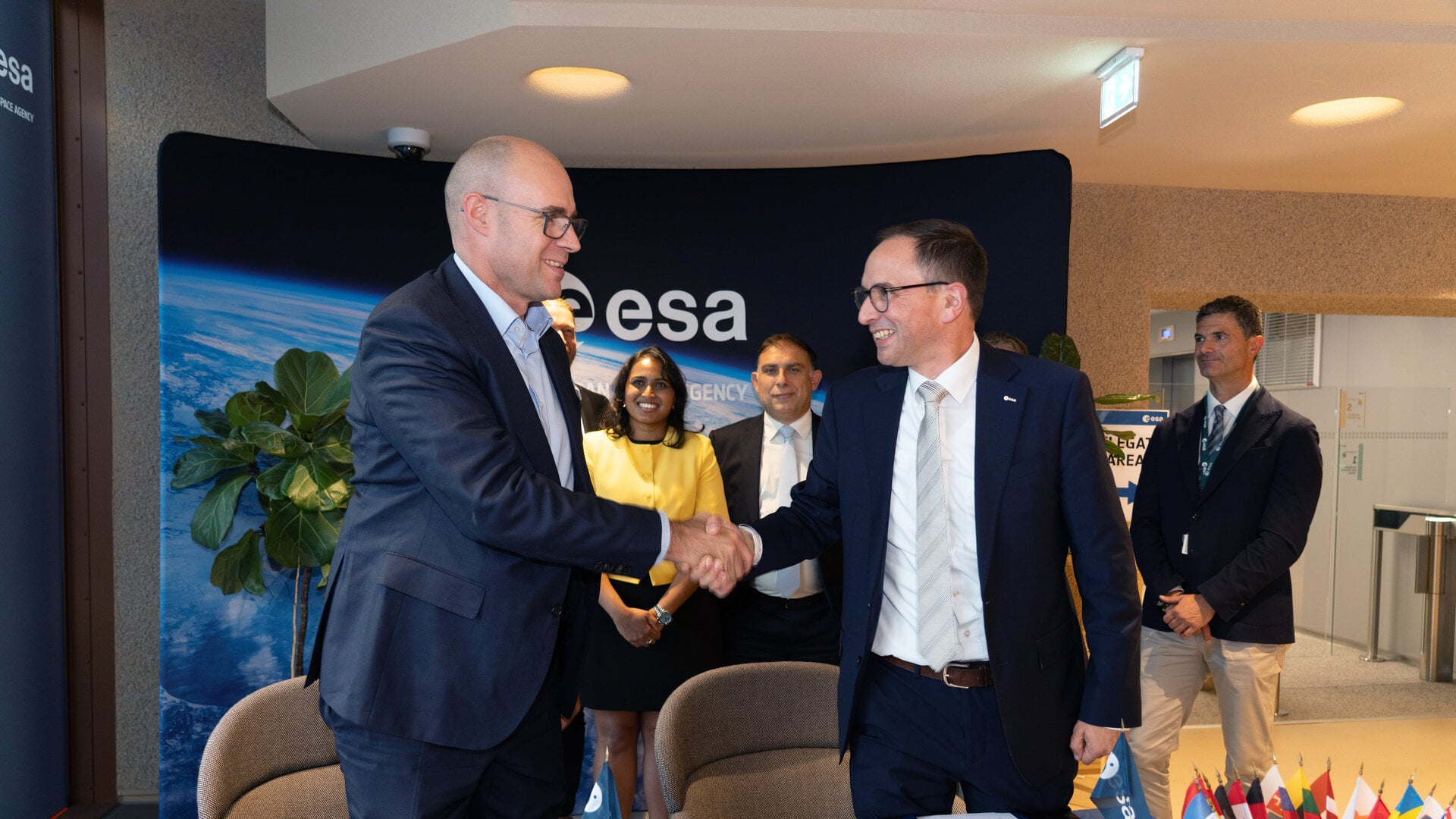
ClearSpace signed a contract on September 22, 2026, with the European Space Agency to advance Phoenix, a geostationary orbit servicing spacecraft. The initiative aims to extend the operational life of aging satellites through advanced rendezvous and docking capabilities, backed by a broader programme estimated at roughly €100 million.
Geostationary satellites operate in high-value, demanding real estate 36,000 kilometers above the Earth while traveling at speeds near 11,000 kilometers per hour. These platforms form the backbone of critical global communications, broadcasting, and weather monitoring infrastructure. Yet their operational lifespans are frequently cut short not by structural failure or payload obsolescence, but by a simple depletion of propellant.
Satellites require propellant to maintain their precise orbital positions through station-keeping and to preserve attitude control, keeping their onboard antennas and instruments correctly oriented. Once that fuel is exhausted, the vehicle can no longer manage these critical maneuvers, rendering an otherwise healthy payload useless. ClearSpace, a Luxembourg-based in-orbit servicing venture, is positioning its Phoenix program to change that calculus for satellite operators across Europe.
Advancing the Phoenix Mission Architecture Under ESA
The European Space Agency formalized its backing with a contract signed on September 22, 2026, taking the Phoenix project into its next development phase. The activity is funded through the Industrial Competitiveness programme line within the Agency’s Advanced Research in Telecommunications Systems program. The broader Phoenix development effort carries an estimated price tag of approximately €100 million.
This latest funding push targets the mission architecture and core technologies required for commercial operations. Specifically, engineers will mature rendezvous, proximity operations, docking, and servicing systems, working to demonstrate that individual components can operate together reliably in conditions representative of actual orbital environments. The work builds directly on early foundations laid by ClearSpace Luxembourg with backing from the Luxembourg government and the Luxembourg Space Agency.
Laurent Jaffart, director of resilience, navigation and connectivity at the European Space Agency, emphasized the strategic importance of the partnership.
“In cooperation with our Member States and European industry, we’re taking Phoenix to the next level by working to mature the dual-use technologies that will deliver clear benefits for sustainability, resilience, and the competitiveness of Europe’s space industry.”
Laurent Jaffart, Director of Resilience, Navigation and Connectivity at ESA
Engineering a Universal Docking System for Orbit
Most existing geostationary satellites were built without any standardized fixtures or interfaces to assist future servicing craft. ClearSpace engineered its docking system to adapt to these legacy client satellites rather than forcing operators to adopt a new manufacturing standard.
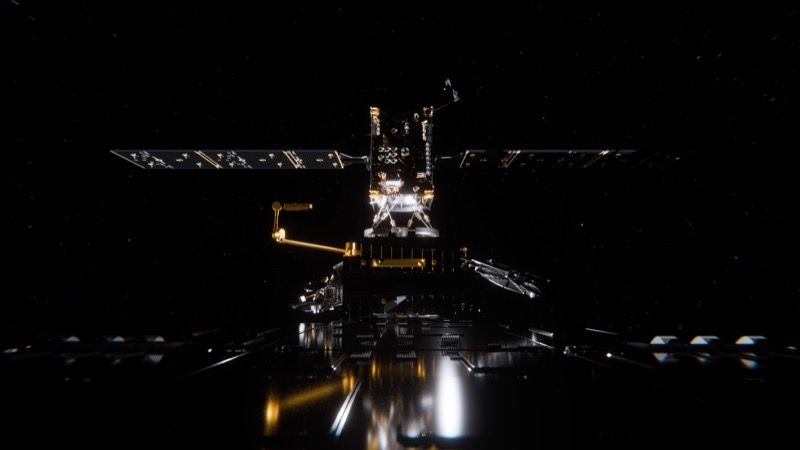
Once locked in place, the Phoenix servicer takes over station-keeping, repositioning, and attitude control duties, effectively granting aging space assets a new lease on life.
Luc Piguet, CEO and co-founder of ClearSpace, highlighted the collaborative nature of the enterprise.
“Phoenix is the result of a shared ambition to make in-orbit servicing a practical and valuable capability for satellite operators.”
Luc Piguet, CEO and co-founder of ClearSpace
Beyond life extension, the underlying rendezvous and docking technology holds potential for multiple orbital missions, including satellite relocation, inclination correction, on-orbit inspection, and controlled end-of-life disposal. Refueling capabilities could also be integrated into future iterations, offering operators a way to postpone expensive replacement manufacturing and launches.
Testing Ground and the Road to Commercial Service
While the ultimate target is geostationary orbit, validation is proceeding step by step. ClearSpace and the European Space Agency are preparing the Prelude mission to test close-up autonomous navigation between two smaller spacecraft. Prelude is scheduled to launch in 2027, with an operational duration expected to run between 7 and 12 months once deployed.
Industry tracking notes that Phoenix is specifically targeting a geostationary satellite scheduled for retirement between 2028 and 2030.
Northrop Grumman’s SpaceLogistics flew its Mission Extension Vehicles, MEV-1 and MEV-2, which docked with Intelsat satellites in 2020 and 2021, providing years of propulsion before undocking in early 2025. Northrop Grumman followed up with a robotic Mission Robotics Vehicle designed to install propulsion pods onto aging satellites.
While the North American approach utilized a probe inserted into a client satellite’s main engine nozzle, ClearSpace is developing its own distinct docking architecture to service a broader range of spacecraft platforms. The distinction gives Europe an indigenous servicing capability, strengthening industrial competitiveness and infrastructure resilience as commercial activity in geostationary orbit intensifies.
Worth a look

Super El Niño Projected to Cause Over 450,000 Heat Deaths Worldwide
Concurrently, California officials have declared a state of emergency, mobilizing emergency supplies, flood-fighting equipment, and National Guard logistics...
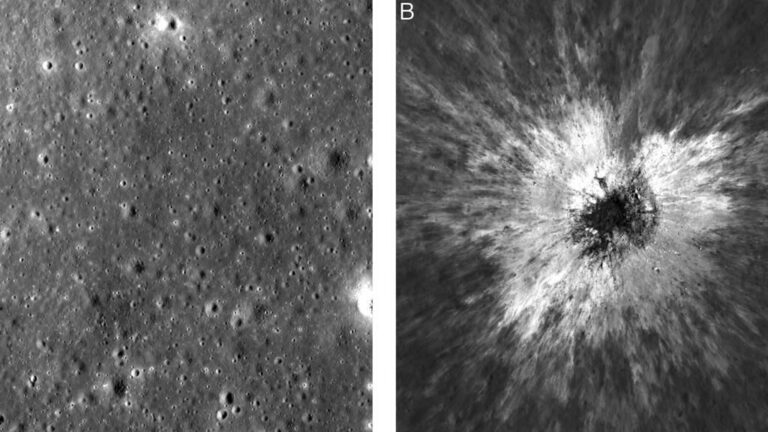
NASA Discovers Rare Massive Lunar Crater Created by 2024 Impact
NASA has discovered a massive, 730-foot-wide lunar crater created by an asteroid or comet impact in spring 2024.

Sand Hoppers Move Hundreds of Tons of Sand on California Beaches
Inch-long beach crustaceans known as sand hoppers dig fresh burrows nightly along Southern California shores, moving an estimated...

Scientists Discover 13 Fatty Acids in Cat Urine That Form Unique Scents
Researchers in Japan, Germany, and Spain have discovered 13 unusual branched-chain fatty acids in domestic cat urine that...