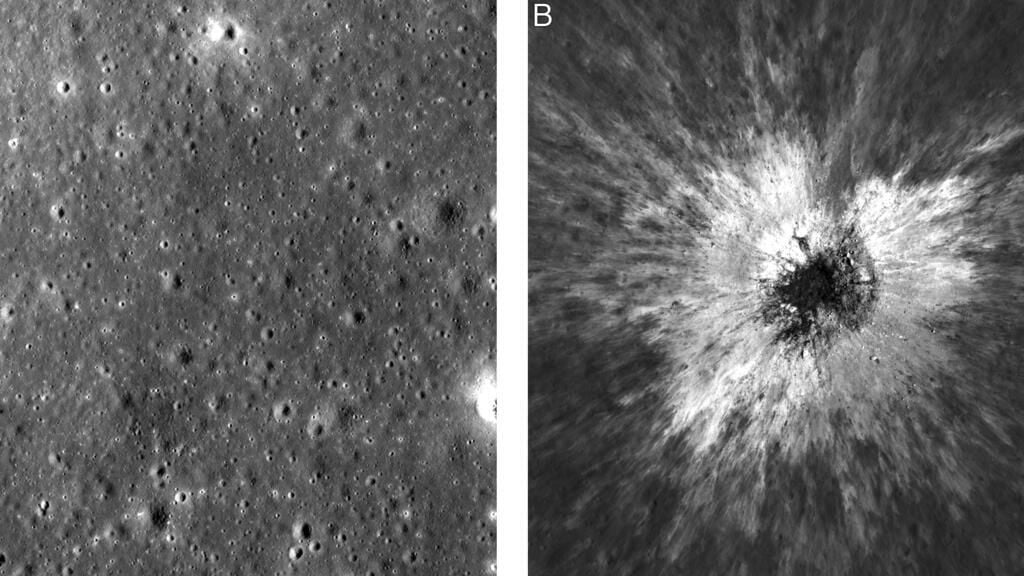
NASA has discovered a massive, 730-foot-wide lunar crater created by an asteroid or comet impact in spring 2024. Named McGetchin after an Apollo-era scientist, the site marks the largest recently formed impact crater ever identified in the solar system, with scientists estimating such events happen roughly once every 132 years.
Robert Wagner and the Lunar Reconnaissance Orbiter Discovery
Although the crater had been sitting on the Moon’s surface for months, it went unnoticed until a researcher spotted it during a routine scan. NASA researcher Robert Wagner discovered the massive impact site by comparing hundreds of wide-angle camera frames from the Lunar Reconnaissance Orbiter, a spacecraft that has been actively mapping the lunar environment since 2009.
Wagner was using specialized software to compare wide-angle images taken in 2011 with newer frames captured in 2025. The fresh impact zone stood out immediately. It appeared as an unusually large, bright spot circled by a dark halo, prompting a closer look from mission specialists who honed in with narrow-angle cameras.
Size, Depth, and the Geology of the McGetchin Impact Site
Subsequent high-resolution imaging revealed staggering physical dimensions. The crater measures about 222 meters across and roughly 43 meters deep, featuring a rim that rises nearly 8 meters above the surrounding terrain. Researchers estimate that the impact released approximately 65 billion kilojoules of energy.
“Scientists estimate that an impact of this magnitude happens on the Moon about once in a century or even longer.”
NASA
The impacting object itself is believed to have been the size of a building three to six stories high, comparable to a humpback whale measuring roughly 10 to 20 meters across. Because the Moon has no atmosphere to slow down or burn up incoming space debris, the asteroid or comet struck the surface with full force between April and May of 2024. The resulting crater formed near the boundary dividing ancient highlands from dark volcanic plains. The uneven subsurface layers caused the impact to carve out a non-perfect circle, widening on one side where it struck softer soil compared to harder ancient lava layers.
Implications for Future Lunar Exploration and Artemis Missions
The violent collision did more than carve out a massive hole; it redistributed lunar material across a vast distance. Scientists identified surface changes more than 120 kilometers away from the rim, scattered by high-speed streams of ejecta thrown out during the impact. Thermal imaging of the site also revealed a large cold spot surrounding the warm crater, caused by surface impacts fluffing up loose regolith and making the sediment less dense and harder to retain heat.
Researchers detailed these findings in two studies published in Science Advances, noting that observing a fresh impact of this scale in real time provides vital geological data. As space agencies including the United States and China prepare for future crewed missions under initiatives like Artemis, understanding how debris spreads and how craters evolve offers a critical baseline for astronaut safety.
Keep reading

Sand Hoppers Move Hundreds of Tons of Sand on California Beaches
Inch-long beach crustaceans known as sand hoppers dig fresh burrows nightly along Southern California shores, moving an estimated...

Scientists Discover 13 Fatty Acids in Cat Urine That Form Unique Scents
Researchers in Japan, Germany, and Spain have discovered 13 unusual branched-chain fatty acids in domestic cat urine that...

Google Patents Filing Details New Text Classification Method for Office Systems
While traditional office automation approaches historically relied on multi-label document categorization based solely on body text, newly surfaced...
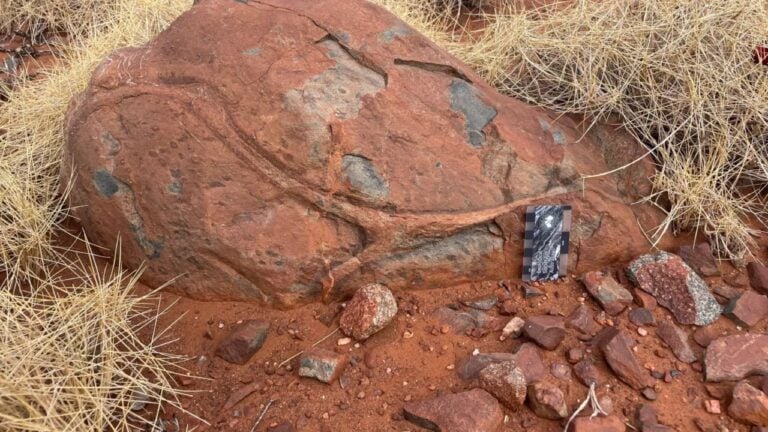
Ancient rocks from Western Australia suggest Earth was already dragging surface water into its mantle and using it to generate volcanoes 3.1 billion years ago — through a primitive recycling process that may have preceded modern plate tectonics
Geologists examining ancient volcanic formations in Western Australia have discovered evidence that water was influencing Earth's interior and...