
Kenai Voters Reject Two Local Judges in Rare Election Outcome
Alaska voters have delivered a decisive message at the ballot box, with preliminary election results from Tuesday indicating that two Kenai-based judges will not be retained for new terms. The outcome follows a rare recommendation from the Alaska Judicial Council, which had urged voters to reject both Superior Court Judge Kelly Lawson and District Court Judge Martin Fallon. As of Wednesday afternoon, the numbers showed both jurists trailing significantly in their retention bids.
According to preliminary election results, Judge Lawson was rejected by approximately 58.2% of voters in her district, while Judge Fallon faced rejection from about 59.1% of voters in his. These figures reflect ballots cast on Election Day and during the early voting period. While the Alaska Division of Elections is still processing remaining ballots, the margin of defeat suggests a clear shift in local judicial oversight. This marks the first time since 2014 that the council—which is responsible for evaluating judicial performance and nominating candidates—has recommended against retaining a judge.
A Rare Move by the Alaska Judicial Council
The Alaska Judicial Council evaluates members of the bench based on five core criteria: legal ability, impartiality and fairness, integrity, judicial temperament, and diligence. Both Lawson and Fallon failed to meet these established benchmarks. For Judge Lawson, the council reached a unanimous decision to recommend against retention, citing concerns regarding her judicial temperament. The evaluation noted a lack of “patience, dignity, and courtesy in her communications with court employees,” a finding supported by reports from staff and court records.
Judge Fallon’s evaluation focused heavily on administrative failures. The council reported that five of its members voted against his retention, with one abstention. The review highlighted significant delays in resolving cases, including a specific instance where a decision was left pending for eight months. Fallon was previously reprimanded by the state Supreme Court for failing to dispose of cases in a timely manner and for signing pay affidavits that were not accurate. Under state law, judges are prohibited from receiving pay if they have cases that have been “ripe” for a decision for longer than six months.

The Historical Context of Judicial Retention
The impact of this election is notable when viewed through the lens of Alaska’s legal history. While judicial retention votes are a standard feature of the state’s election process, it is exceptionally uncommon for multiple judges to be removed in a single cycle. In fact, only once before—in 1982—have Alaska voters opted to remove two judges in the same election.
“So as a result of this rigorous process, we have found, historically, that almost all of the time the judges who are appointed and then do go on to serve are very successful,” said Susanne DiPietro, executive director of the Alaska Judicial Council. Susanne DiPietro
DiPietro suggested that despite the high-profile nature of the gubernatorial and U.S. Senate races, voters appeared to be paying close attention to the council’s specific recommendations regarding the judiciary.
Practical Consequences for the Kenai Courthouse
Under state law, judges who are not retained may remain on the bench for 90 days following the election. Courts spokesperson Rebecca Koford confirmed that while having two vacant positions creates an operational burden, there is a established mechanism for continuity. The court system utilizes retired judges to serve as pro tempore officials to fill the gap until new appointments are made.
The process for filling these vacancies will begin soon. The state will advertise the open positions and accept applications, with the Alaska Judicial Council expected to meet in early May to nominate candidates for the governor’s final appointment. In the meantime, the focus remains on the final tallying of ballots. While the current results are preliminary, all votes are scheduled to be counted by November 18, with official certification set for November 25.
Justice Jude Pate of the Alaska Supreme Court was on track for retention with 58.5% of the vote. Juneau Superior Court Judge Marianna Carpeneti, who faced a split recommendation from the council, remained on track for retention with 66.6% support.
Related reading

Wyoming Cave Systems Offer Unique Underground Exploration Opportunities
Wyoming's underground sites offer diverse geology and history Wyoming’s mountain ranges provide some of the most significant opportunities...
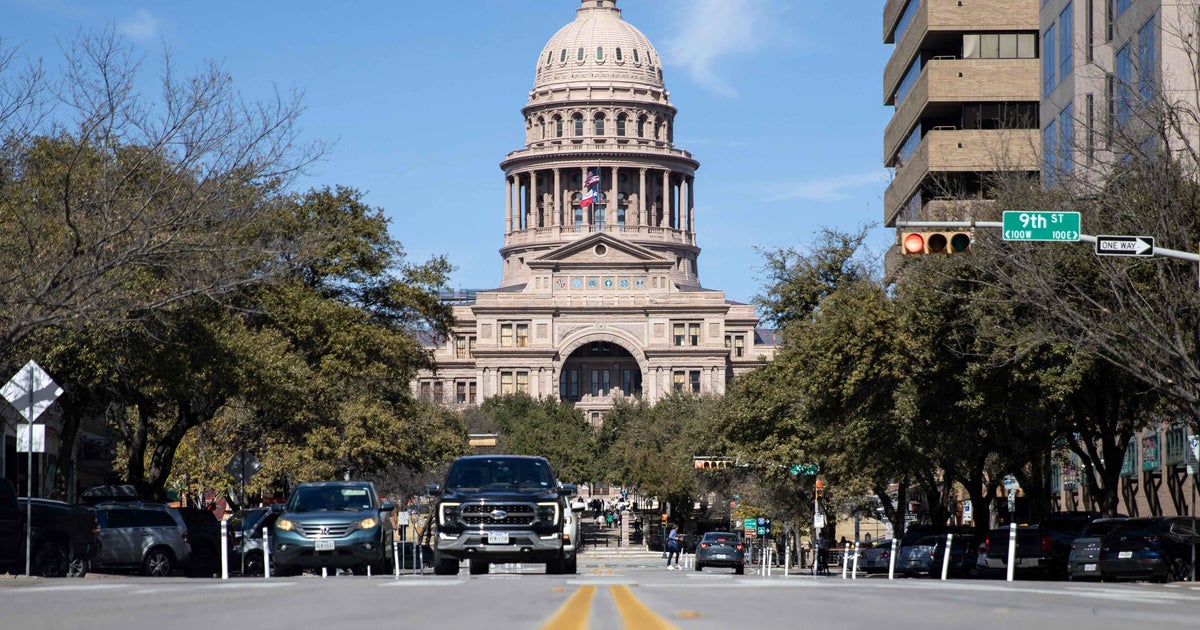
Democrats win Texas statewide offices and control Texas House
Texas Turns Blue, but for How Long? On an election night that delivered surprises across the nation, the...

Death Investigation Underway After Human Remains Found in Dorchester County
Life in a quiet Dorchester County neighborhood was abruptly Wednesday afternoon, as deputies responded to a scene that...

A $40,144.73 mortgage arrearage has pushed a Yelm family’s home toward a public foreclosure auction
A $40,144.73 mortgage arrearage has pushed a Yelm family's home toward a public foreclosure auction. The amount, detailed...