
Anchorage Ballots Cast Under the Cloud of a Decoy Candidate Scheme
Voters braved near-freezing temperatures in Anchorage on Monday morning to cast early ballots in a Senate race that could tip the balance of power in Washington, shaking off late-breaking allegations of political sabotage. As reported by AFP, Democratic candidate Mary Peltola faces accusations that her campaign helped orchestrate a decoy plot by recruiting a second candidate named Dan Sullivan to siphon votes from the Republican incumbent, Senator Dan Sullivan. Despite the controversy landing like a political thunderclap in national circles, Alaskans standing in line at local polling places met the news with a collective shrug.
The stakes in Alaska extend far beyond local politics. With control of the United States Senate hanging in the balance, President Donald Trump has seized on the revelations to preemptively challenge the election results. While a federal judge rejected a preliminary bid by the administration on Sunday, federal authorities have since launched a criminal investigation into the affair without detailing its legal basis. Meanwhile, local voters wading through weeks of saturation advertising, direct mail, and contested lawn signs are processing the turmoil through the lens of everyday economic pressures rather than procedural scandal.
Voters Focus on Inflation and Living Costs Over Campaign Sabotage
For independent voter Dale Brown, the decoy tactic is a clear symptom of a broken system. “American politics has gone to this absolute dog-and-pony show of lies,” the 25-year-old carpenter told AFP, labeling the maneuver “immoral” while noting it remains technically legal. Brown pointed out that similar tactics of running ghost candidates have been deployed elsewhere, such as in Florida’s 2020 Senate race. Ultimately, the controversy failed to alter his ballot. Brown cast his vote for Democrats, citing deep frustration with ongoing inflation under President Trump.
That sentiment echoes across the state, where economic realities hit home faster than political theater. Airline pilot Luke Clement noted that Alaska’s geographic isolation leaves residents uniquely vulnerable to macroeconomic shocks. “Everything is shipped in, and everything is dependent on fuel costs,” Clement told AFP, tying his financial anxieties directly to persistent inflation driven by Trump’s war on Iran. While Clement expressed regret that the campaign deteriorated into ugly mudslinging, he emphasized that distinguishing between the candidates on the ballot required little effort.
Distinguishing the Ballots Amid National Pressure
Voters face a ballot featuring two distinct individuals named Sullivan, but election administrators and clear labeling have largely mitigated voter confusion. The incumbent’s name carries explicit identifiers noting he is a “registered Republican” and the “incumbent,” whereas Daniel J. Sullivan, Jr. lists no political affiliation. Election volunteers in Anchorage reported that voters arrived well-prepared to walk through the layout.
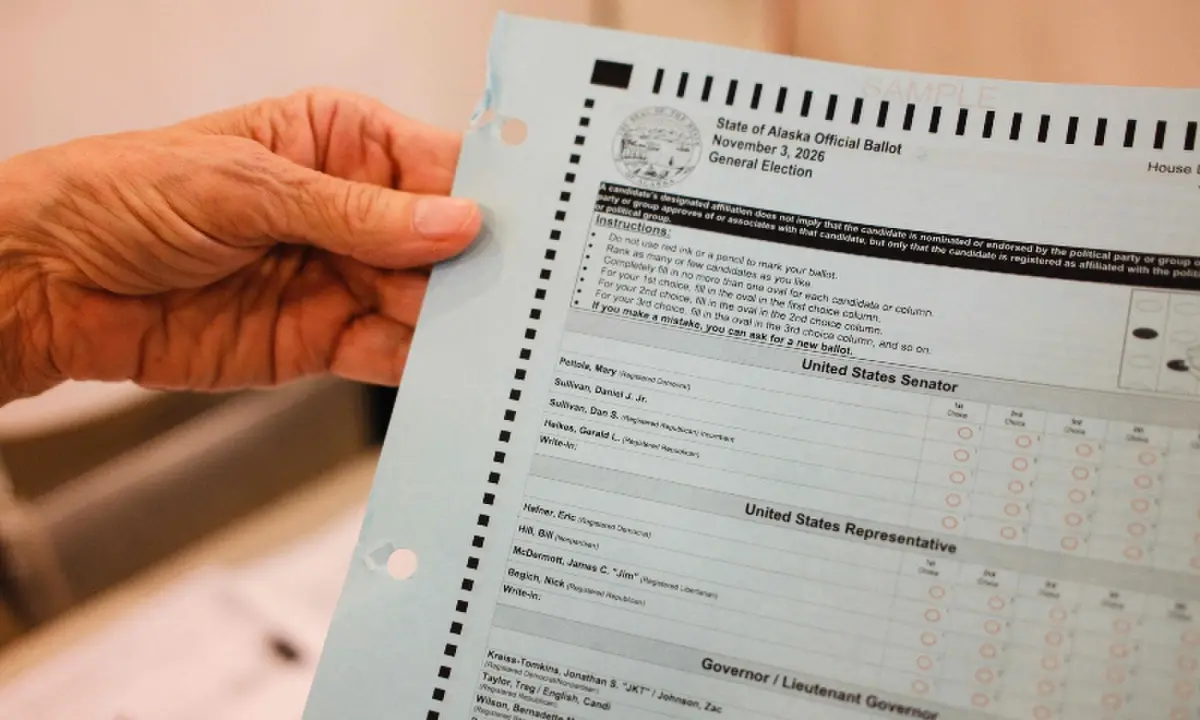
“I heard people in line saying, ‘Be sure to vote for the right Dan Sullivan,'” Rae Hart, a 37-year-old criminal investigator and Republican voter, told AFP. Hart acknowledged that the duplicate names carry a high potential for confusion, yet she observed that few voters appeared genuinely fooled by the maneuver.
Peltola has denied any personal knowledge of the scheme, but the fallout has deeply polarized the electorate. Surgical technologist Zara Oakley, 41, argued that the ensuing federal investigations and presidential attacks are designed to distract from substantive policy debates. With polls showing the race is neck-and-neck in a historically conservative state, Oakley viewed the challenges to the electoral process as an assault on democratic norms. As the final ballots are tallied in Anchorage, the definitive question remains whether the noise from Washington will ultimately sway an electorate already fixed on the cost of living at the edge of the American frontier.
More on Alaska
Related reading

Armatrix secures Rs 67.28 crore seed round at 4.8x valuation premium
Deeptech Startup Armatrix Secures Rs 67 Crore Seed Round at Multi-Fold Valuation Premium Deeptech robotics firm Armatrix has...

Irish road bowling finds new momentum in small-town West Virginia
Irish Road Bowling Rolls Into Small-Town America On a rural backroad in West Virginia, you might catch a...
PECAA Hosts AI in Optometry Discussion in Milwaukee
Practicing doctors, practice owners, and key staff members across Wisconsin will gather in Milwaukee on November 4, 2026,...

Betty Jane Erwin Passes away at 79 in Savannah
Community members and loved ones are remembering Betty Jane Erwin, who passed away on Monday, October 19, 2026,...