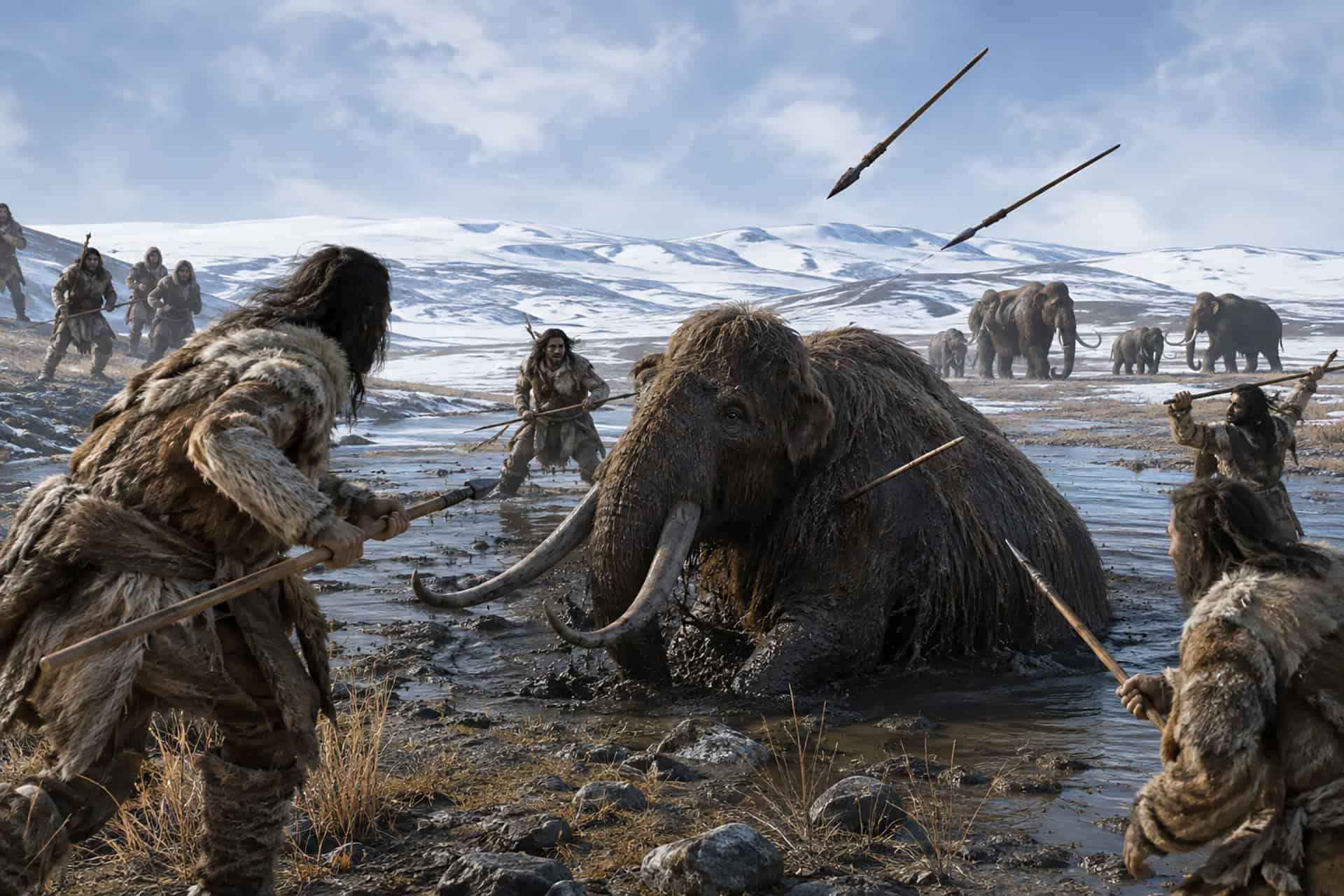
Ancient human hunters and scavengers across Eurasia and North America selectively targeted female woolly mammoths between 30,000 and 20,000 years ago, according to a recent ancient DNA analysis of 521 mammoth remains published in the journal Current Biology.
Genetic Evidence Reveals a Striking Female Bias at Ice Age Sites
For more than a century, archaeologists have puzzled over the enormous bone beds left behind at Ice Age camps. A new genetic study led by researchers at the Centre for Palaeogenetics has upended traditional assumptions about how prehistoric humans interacted with woolly mammoths. By analyzing genome-wide ancient DNA from 521 woolly mammoths spanning the last 50,000 years, scientists discovered a stark contrast between animals that died naturally and those found in archaeological bone accumulations.
While investigating the data, the research team divided the specimens into two distinct groups. The first group comprised 421 mammoths recovered from natural deposition sites where the animals died without human involvement. In these natural settings, 66 percent of the mammoths were male, aligning with earlier research suggesting that solitary males frequently perished in natural traps or environments that preserved their remains. At 11 archaeological bone accumulation sites spanning Poland, Austria, the Czech Republic, Germany, and Russia, the trend reversed entirely. Around 70 percent of the mammoths recovered from these human-associated sites were female.
“The people weren’t just fooling around – they knew what they were doing. They probably had a structured way to interact with mammoths, one that we cannot really understand.”
David Díez-del-Molino, evolutionary geneticist at the Centre for Palaeogenetics
Why Prehistoric Hunters Focused on Female Herds
The persistent female bias across multiple archaeological sites indicates that Ice Age hunters were not merely scavenging animals that died by chance. Instead, they repeatedly procured mammoths from female-dominated groups. Researchers suggest that the underlying social structures of the animals made matriarchal herds far more vulnerable.
Similar to living elephants, woolly mammoths likely traveled in matriarchal family groups consisting of adult females and young offspring of both sexes. Adult males generally roamed alone or in loose bachelor groups across much wider territories. According to lead study author Hannah Moots, a postdoctoral researcher at the Centre for Palaeogenetics—which operates as a collaboration between Stockholm University and the Swedish Museum of Natural History—female-led herds likely maintained more predictable seasonal movement patterns and stable home ranges.
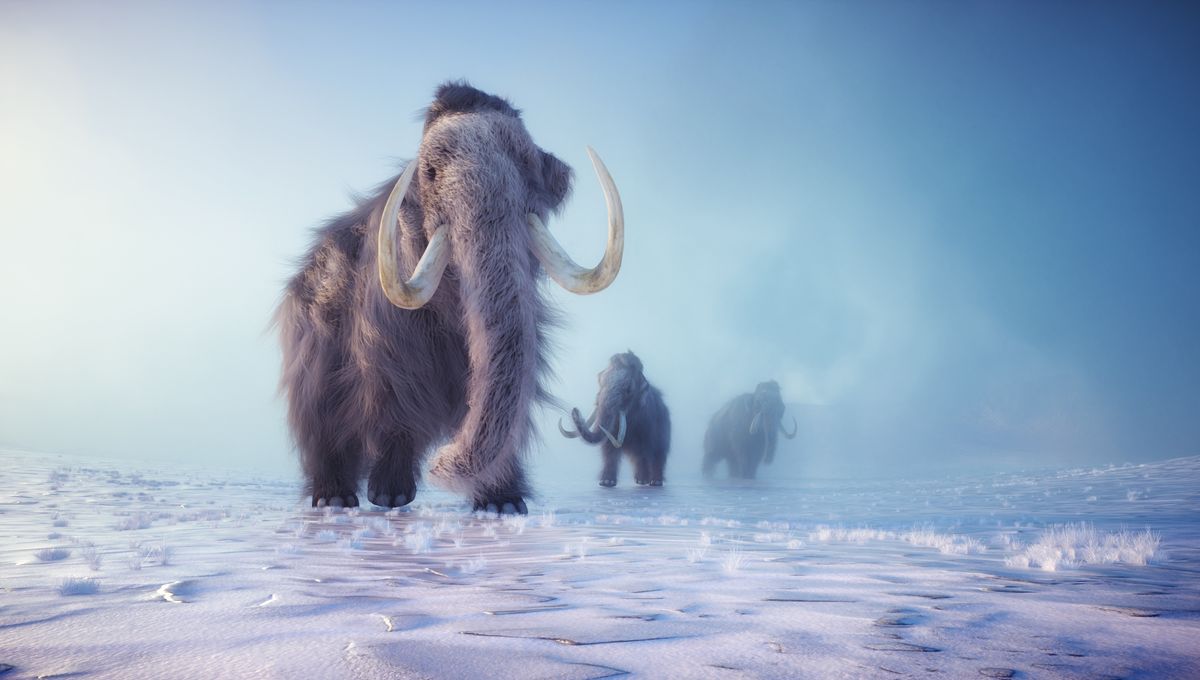
“One could also speculate that it would have been easier to pin down a herd with juveniles, where the females would have been reluctant to run away.”
Love Dalén, evolutionary geneticist and study co-senior author
Physical differences also separated the sexes. An adult male mammoth weighed up to 6 tons and stood approximately 11 feet (3.4 meters) tall at the shoulder, whereas adult females averaged about 4 tons and 9.5 feet (2.9 meters) in height. While smaller size made females potentially easier to handle, researchers emphasize that the hunting strategy involved complex landscape utilization. Scientists suggest that hunters drove herds into natural barriers, swamps, or mud bogs to immobilize them before launching attacks with spears, darts, or arrows. Evidence of projectile points embedded directly in the bones supports this tactical approach.
Uncovering Rare Genetic Anomalies in the Last Mammoths
Beyond revealing hunting preferences, the genetic dataset uncovered an unexpected chromosomal anomaly in the final generations of the species. A single specimen from Wrangel Island—the isolated Arctic outpost where the very last woolly mammoths survived until approximately 4,000 years ago—carried XX/X0 mosaicism. In this condition, some cells contain two X chromosomes while others possess only one, a genetic pattern comparable to Turner syndrome in humans.

Researchers identified the condition as the first documented sex chromosome mutation ever found in an extinct species. While it remains uncertain whether the mutation stemmed from the extreme isolation of the small Wrangel Island population or represented a rare developmental event, the discovery highlights how advanced ancient DNA methodologies can detect subtle physiological disorders in animals that vanished millennia ago.
Related reading
- Ancient rocks from Western Australia suggest Earth was already dragging surface water into its mantle and using it to generate volcanoes 3.1 billion years ago — through a primitive recycling process that may have preceded modern plate tectonics
- NASA’s Roman Space Telescope Captures First Starlight Test Image
Ancient rocks from Western Australia suggest Earth was already dragging surface water into its mantle and using it to generate volcanoes 3.1 billion years ago — through a primitive recycling process that may have preceded modern plate tectonics
Geologists examining ancient volcanic formations in Western Australia have discovered evidence that water was influencing Earth's interior and...

NASA’s Roman Space Telescope Captures First Starlight Test Image
NASA’s Nancy Grace Roman Space Telescope has activated its 300-megapixel Wide Field Instrument and captured its first starlight...
NASA Researchers Identify Largest Newly Formed Impact Crater in Solar System
What began as a routine data-quality check on a computer screen ended with the identification of a record-breaking...
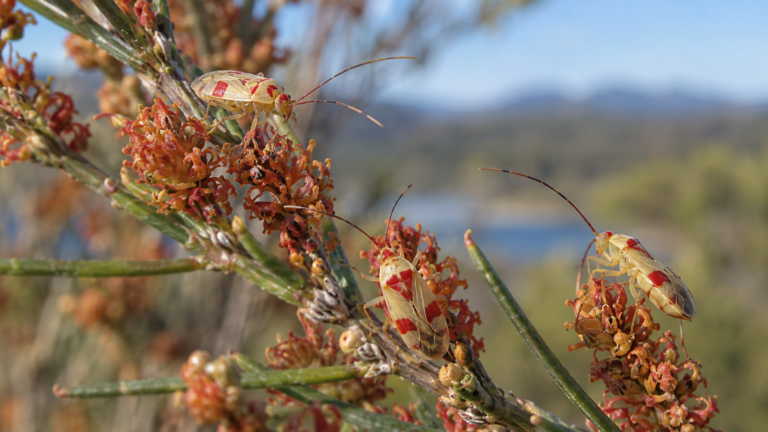
Scientists Name New Genus of Australian Plant Bugs After Taylor Swift
Scientists have named a newly described genus of Australian plant bugs Swiftiephylus in honor of Taylor Swift, drawing...