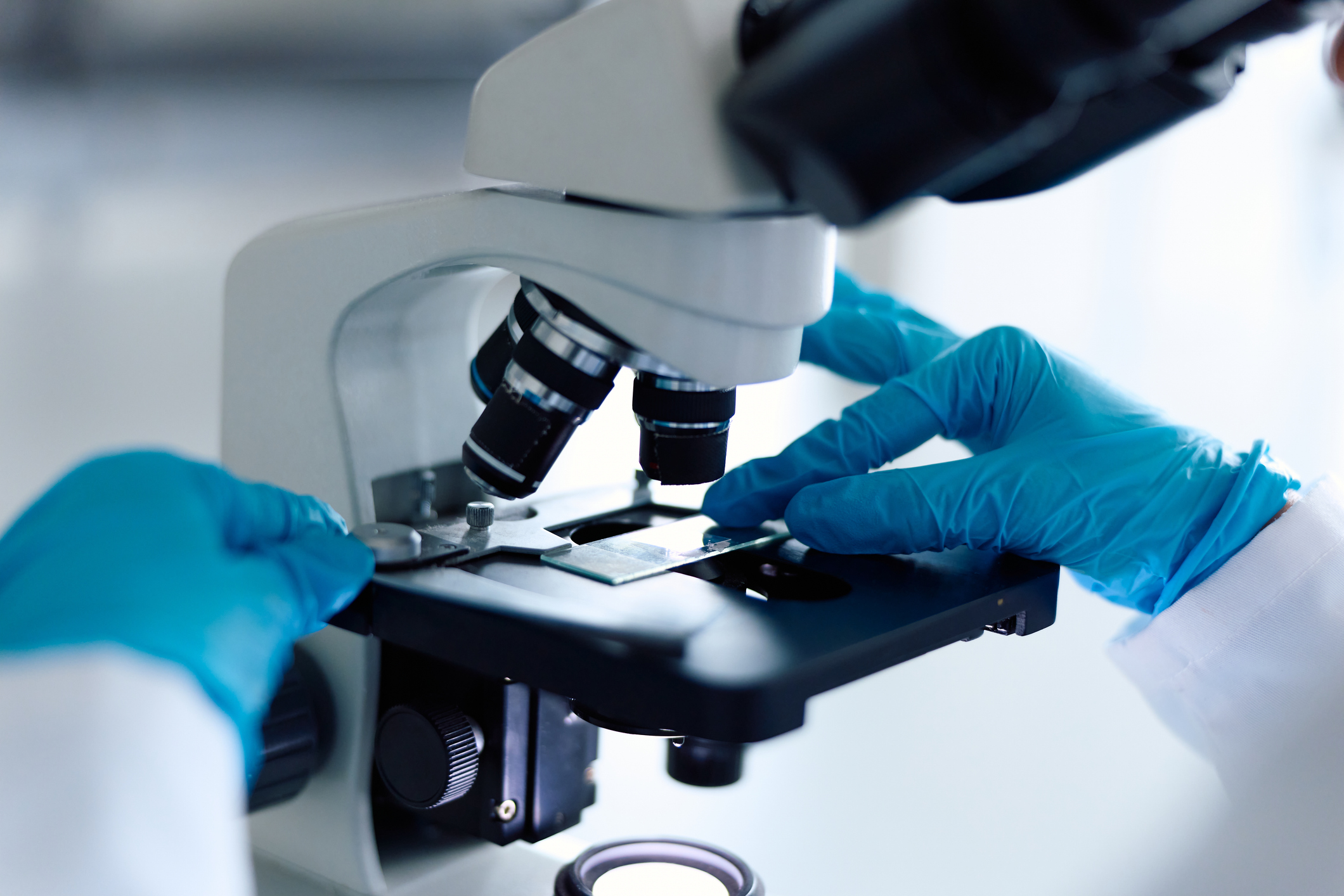
Researchers at McGill University have built a biocomputer that runs on living bacteria, using their ability to multiply inside microscopic channels to explore thousands of possible answers to a hard math problem at once. The system, detailed in a study published in Microsystems & Nanoengineering and announced Nov. 3, caps a 20-year collaboration among scientists in Canada, Europe, the UK and Australia.
Bacteria as parallel processors
The device works by turning a mathematical problem into a physical maze. Researchers translated a classic puzzle into a graph of possible choices, then rebuilt that graph as a network of tiny, fluid-filled channels. Each route through the network stands for one possible solution, and junctions act as decision points.
They then released two bacterial species into the tunnels: Escherichia coli, which moves through fluid in a predictable, measurable way, and Vibrio natriegens, which reproduces very quickly. As the bacteria swim and divide, they test many routes simultaneously — and each division creates another biological processor.
Electronic (sequential) computers are not meant, or designed, to solve decision trees,
said Dan Nicolau, the study’s senior author and a professor of bioengineering at McGill, in an email. Standard machines grind through one possibility at a time; the bacteria work in parallel.
The Subset Sum test
The team put the biocomputer through the Subset Sum Problem, a puzzle in which a machine must decide whether some combination of numbers in a set adds up to a target value. The catch: every number added makes the possible combinations grow exponentially, and conventional computers can take centuries — or even millions of years — to solve large versions.

The researchers identified winning routes by watching where the bacteria traveled, using automated image analysis to trace their paths through the correct tunnels. Larger-scale tests pushed networks representing problems with up to 100 numbers. To keep the population from overcrowding, the team adjusted the temperature of the system to slow bacterial growth.
One million chips at once
Nicolau frames the advantage in computing-power terms. Individual bacteria are slow processors, but their numbers do the work.
Modern electronic computers make millions of operations per second using one chip. With bacterial division, we have 1 million chips working at the same time. More chips mean you can resolve the problem faster, even if for each ‘processor,’ the number of operations per second is slower.
Because the bacteria do the exploring rather than stored memory, the system needs no RAM — a point Nicolau drove home with a video-game hypothetical. Running Doom, the 1993 first-person shooter, on the biocomputer is theoretically possible, he said, but (The biocomputer) must be huge!

Protein folding, cryptography and the definition of a computer
The researchers say the device is not meant to replace electronic or quantum computers. It is a resource-efficient tool for problems those machines handle badly — with possible applications in encryption, molecular biology and artificial intelligence, including mapping the structure of proteins.
Nicolau pushed back on the idea that AI already solves such problems, arguing that AI only scans existing data rather than solving fresh ones.
We propose this technology to solve problems, not estimate based on past information.
His definition of the machine itself is stripped down. A computer is a device which accepts (input) numbers and gets out (output) numbers. Full stop,
he said. All other uses of the word computer (are) from our point of view, well, poetical.
The study lists limitations plainly: errors at channel junctions and the risk of overcrowding as populations multiply. It remains a proof of concept, funded by the U.S. Defense Advanced Research Projects Agency, Canadian research councils, an Australian fellowship and the European Union — but the 20-year effort shows living microbes can be wired into something that computes.

HOXA10 Gene Preserves Lifelong Supply of Bone Stem Cells, Study Finds
A study published online November 4 in Science Advances identifies the gene HOXA10 as the brake that keeps...
NASA Swift Observatory Faces Uncontrolled Reentry After Failed Rescue
The Neil Gehrels Swift Observatory is on a collision course with Earth after two decades in orbit, following...
NASA Simulated Mars Mission Crew Emerges After 378 Days
Four volunteers exited a sealed 1,700-square-foot habitat at NASA's Johnson Space Center on October 31, 2026, successfully concluding...
4.1-Billion-Year-Old Meteorite From Mars Discovered in Sahara Desert
Discovered in the Sahara Desert in 2022, a nearly two-pound rose-colored rock found in Mali has been identified...