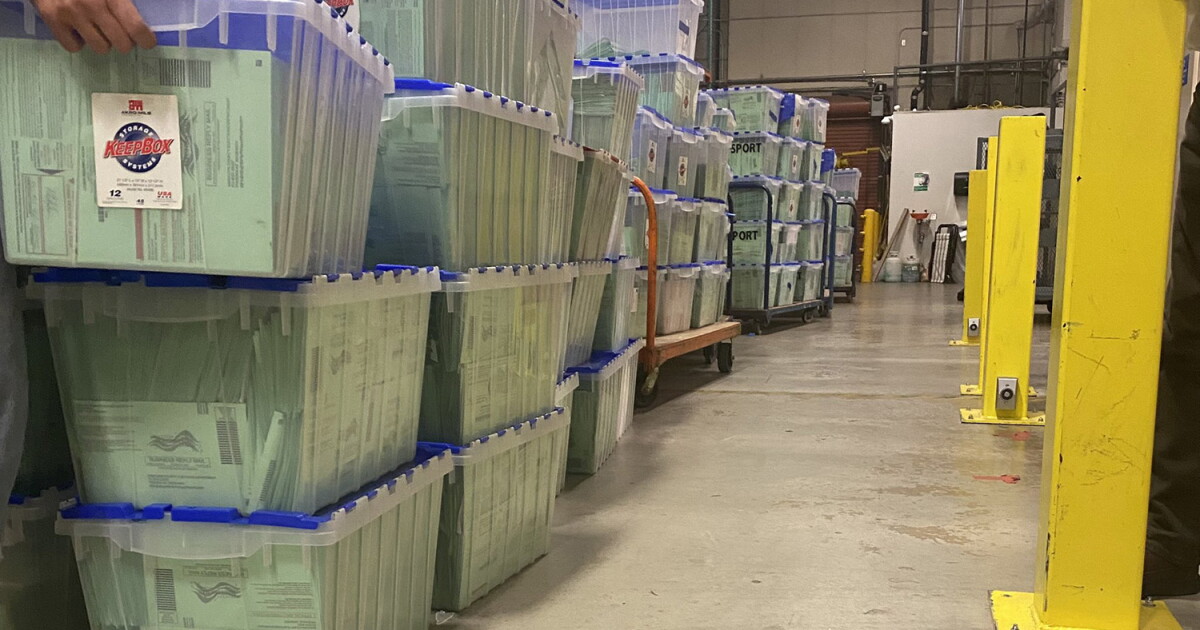
As of the morning of November 6, 2026, Arizona’s electoral map remains a puzzle of hundreds of thousands of uncounted ballots. According to reporting from KJZZ, election officials in Maricopa County are still working through approximately 207,000 ballots, a significant portion of the roughly 400,000 votes estimated to be outstanding across the state. For voters and candidates alike, these remaining envelopes represent more than just numbers; they are the final, decisive data points in a series of legislative and congressional contests that have stayed too close to call since polls closed on Tuesday.
The Mechanics of the Remaining Count
The ballots currently sitting in county offices aren’t a uniform stack. They exist in several distinct categories, each requiring a different level of administrative processing. Some are “late-early” ballots dropped off at polling locations, while others are provisional ballots that require additional verification. According to Democratic strategist Sam Almy of Uplift Strategies, who spoke with KJZZ, the process is inherently time-consuming because every single signature must be verified to maintain the integrity of the count. While ballots received by mail earlier in the week are moving through the system more quickly, the sheer volume of late-arriving ballots means the final results may not be settled for another week or more.

This is where it gets really interesting for people who really get into these numbers. They look for trends. What we see is the early ballots typically follow a trend. Then the people who showed up at the polls followed a trend. And then once it comes down to early ballots, or late-early ballots rather, those are also going to follow a trend.
Historically, Arizona’s count has often stretched into a multi-day affair, a reality that reflects the state’s reliance on mail-in voting. While the 10-to-13-day window for a final, certified tally is standard, the pressure on candidates in tight races remains intense. For the average voter, this delay can feel like a departure from the instant gratification of national election nights, but it is a feature—not a bug—of a system designed to ensure every legal vote is validated before being added to the final column.
Shifting Trends in Congressional Races
The impact of these ballots is most visible in Arizona’s congressional districts. In the 1st Congressional District, the race between Amish Shah and Jay Feely became a focal point as the count progressed. Following the reporting from the Associated Press, the race in CD1 has been called for Democrat Amish Shah. This victory marks a notable shift for the north Valley area, encompassing Scottsdale and Cave Creek, as Shah becomes the first Democrat in years to hold the seat, having previously narrowed the gap against incumbent Republican David Schweikert in 2024.

Meanwhile, the landscape in other districts remains fluid. In the 6th Congressional District, the contest between Juan Ciscomani and JoAnna Mendoza has tightened, even as initial batches of ballots from Pima County leaned in directions that challenged conventional expectations. The uncertainty in these races is a direct result of the “late-early” ballot trends, which often flip the script on Election Night projections. Unlike in some previous cycles, Democrats have found themselves in an unusual position where fewer outstanding ballots may actually serve as a tailwind for their candidates.
Broad Impacts and Legislative Stakes
The consequences of these uncounted votes extend far beyond Washington. Several state legislative races are currently hanging in the balance, with control of the House and Senate potentially resting on the final tally. Democrats have already made a significant move by breaking the Republican hold on the Arizona Corporation Commission, a development that signals a broader shift in the state’s political climate. For the residents of Arizona, these results will dictate policy on everything from energy utility regulation to cost-of-living adjustments—issues that were central to the 2026 campaign cycle.
While the AP has called the 8th Congressional District for incumbent Republican Abe Hamadeh, who held off a challenge from Bernadette Greene-Placentia, other races like the 5th Congressional District remained a nail-biter for nearly three days. That contest saw Republican hopefuls initially trailing Democratic challenger Elizabeth Lee, a surprise that underscored just how volatile and unpredictable these final counts can be. As the counties continue their work, the final margins in these legislative battles will determine the functional power dynamic in the state capitol for the next two years.
The transition from election night uncertainty to a settled result is a slow, methodical process. For now, the counties continue to release updates, providing the necessary clarity for a state navigating a shifting political landscape. The finality of these races will not arrive with a single breaking headline, but rather through the steady, quiet verification of the remaining hundreds of thousands of ballots.
Worth a look

NRS Urges Nigerian Content Creators to Register Businesses and Obtain Tax IDs for Incentives
Nigeria’s Creative Economy Faces Tax Formalization Mandate The Nigeria Revenue Service (NRS) has signaled a shift in how...
WFCA Fire Map tracks Pine Creek Fence Boundary Piles RX Fire in Wyoming
Tracking the Pine Creek Fence Boundary Piles Rx Fire As of November 6, 2026, the Western Fire Chiefs...

WSET Meteorologist Predicts Snow Totals for Virginia Winter 2026-2027
Virginia’s Winter Forecast: A Season of Uncertainty As residents across Virginia prepare for the colder months, the question...

Vermont House and Senate Election Results by District
Vermont Legislative Shifts: A Detailed Breakdown of the 2016 Election Results The 2016 Vermont legislative elections resulted in...