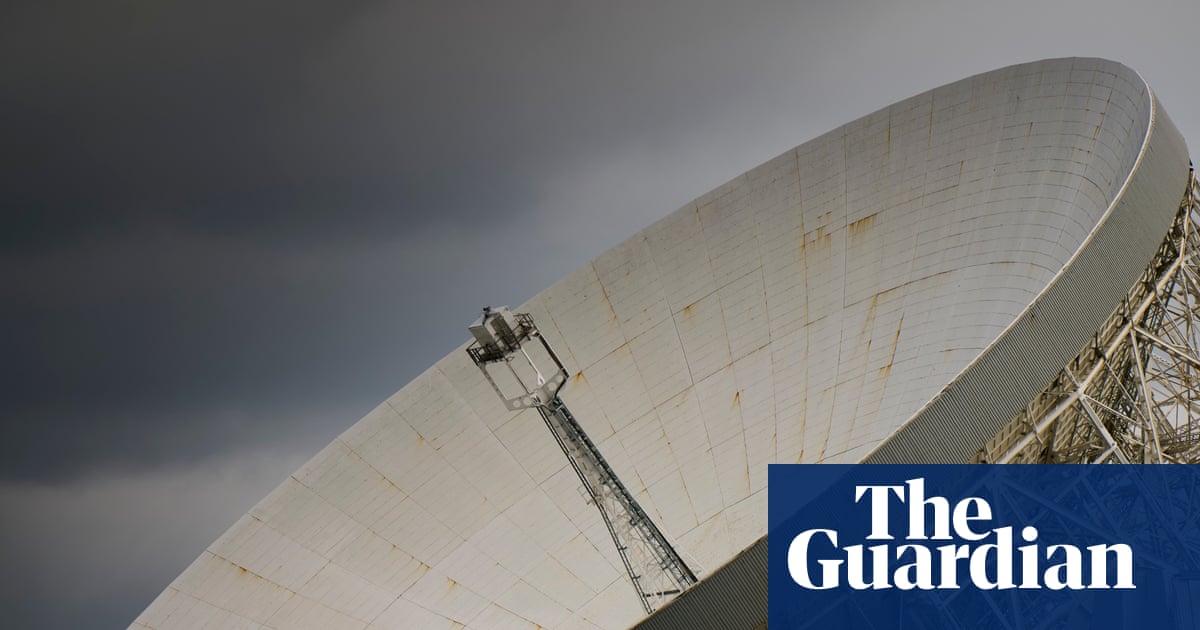
More than 100 artists, writers, and scientists have urged Prime Minister Andy Burnham to reverse slashed funding for the Jodrell Bank Observatory. UK Research and Innovation announced it will withdraw support for the e-Merlin radio telescope network in March 2028, threatening 28 jobs and a vital UK astronomy facility.
A growing coalition of notable figures, including electronic band New Order, astronaut Chris Hadfield, and poet laureate Simon Armitage, has signed an urgent letter demanding government intervention for the deep space observatory in Cheshire. The facility houses the Grade I-listed Lovell telescope, which famously tracked the Sputnik launch in 1957, and serves as the central hub for mapping the universe’s earliest billion years.
Funding Cuts Threaten the e-Merlin Network and Observatory Jobs
The controversy stems from a decision made by the observatory’s primary funder, UK Research and Innovation (UKRI), to strip financial backing from the e-Merlin network. This national radio astronomy facility will lose its operational agreement when the current contract terminates in March 2028. Observers warn that without alternative financial lifelines, all observations at the Cheshire site will cease entirely.
The planned shutdown places 28 direct jobs at the observatory at risk while impacting nearly 3,000 researchers who rely on its instrumentation. This specific closure is part of a broader rolling package of reductions administered by the Science and Technology Facilities Council (STFC), an agency funded by UKRI. The STFC faces severe financial constraints driven by cost overruns, steep electricity and staff expenses, and high foreign exchange rates affecting international scientific partnerships. Across the council’s portfolio, these measures are projected to cause roughly 800 job losses.
“We believe that to shut it down to save just £2.8m a year is foolish and shortsighted,”
Signatories of the letter to government ministers, via The Guardian and AOL
Wider Impacts on Global Astronomy and UK Research Standing
The signatories emphasize that closing the home of e-Merlin would effectively dismantle some of the sharpest observational tools available to astronomers studying galaxies and planet formation. Beyond pure astrophysics, the observatory plays a critical role in planetary defense and global safety. Its instruments track space debris, hazardous asteroids, active satellites, and destructive solar flares.
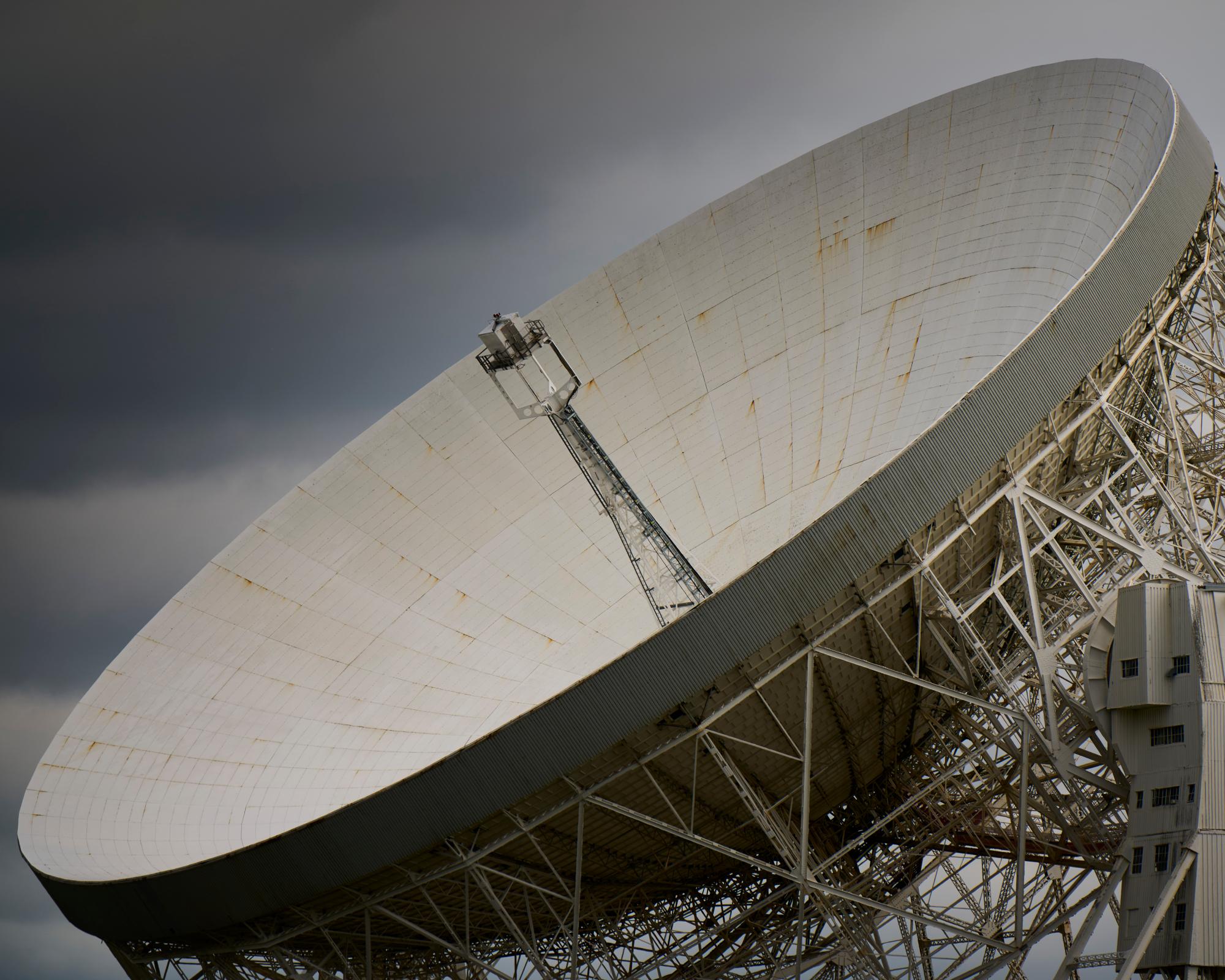
The institution also hosts the headquarters of the Square Kilometre Array Observatory (SKAO), an international collaboration operating sister telescopes in South Africa and Western Australia. The open letter questions whether it is viable to house SKAO discoveries in a headquarters situated directly next to what would become a silenced and disused radio telescope.
Other international astronomy projects have absorbed heavy blows in the same funding cycle. The Rubin Observatory in Chile, which commenced its astronomical survey operations just last month, faces a 20% reduction in UK participation. The Next-Generation Transit Survey absorbed a 45% reduction, and the UK is withdrawing entirely from the Event Horizon Telescope collaboration, which previously enabled scientists to image the supermassive black hole at the center of the Milky Way.
Appeals to Ministers and the Defense of Regional Innovation
The open appeal was addressed directly to Prime Minister Andy Burnham, along with Business Secretary Jonathan Reynolds and the leadership of UKRI. Supporters argue that the modest savings achieved by cutting the observatory’s budget pale in comparison to the long-term damage inflicted on the nation’s scientific leadership and international reputation.
In defense of the reductions, a spokesperson for the STFC noted that the agency had undertaken a rigorous prioritisation process to focus investment on the areas that will deliver the greatest long-term scientific capability, impact and value for the UK.
With the March 2028 deadline approaching, scientists, cultural figures, and regional leaders continue to press ministers for immediate emergency funding to preserve the UNESCO World Heritage site’s continuous operations.
Keep reading

NASA Discovers McGetchin, Largest Newly Formed Lunar Crater
NASA’s Lunar Reconnaissance Orbiter has discovered McGetchin, the largest newly formed lunar crater ever found in the solar...

Study Links Climate Breakdown to Deadly Langtang Lirung Glacier Collapse
Human-induced climate change contributed significantly to the catastrophic glacier collapse and subsequent flash floods on the Nepal-Tibet border,...

NASA Discovers Massive McGetchin Crater on Moon Formed in 2024
NASA researcher Robert Wagner has discovered a massive, 730-foot-wide lunar crater named McGetchin.

Greenland And Antarctica Lost Over 12 Trillion Tons Of Ice Since 1979
Satellite observations reveal that Greenland and Antarctica have shed massive amounts of ice since 1979.