
Geochemical analyses of Paleoproterozoic sedimentary rocks in Madhya Pradesh’s Barwah-Harda inlier reveal shifting oceanic redox gradients and atmospheric oxygen levels between 2.5 and 1.8 billion years ago, mirroring regional basins while showing poor phosphorite mineralization intensity, according to a Geological Survey of India field study.
Sedimentary rocks provide direct evidence of ancient geo-environmental changes, offering insights into Earth’s evolution, paleogeography, and tectonic shifts. Chemogenic sediments specifically record global oceanic conditions, while clastic sediments highlight broader environmental transitions. Paleoproterozoic sedimentary basins document major geochemical shifts driven by the progressive yet fluctuating oxygenation of the Earth’s surface and oceans. Between 2.5 and 1.8 billion years ago, the sequential deposition of iron, manganese, and phosphorus highlighted dynamic redox gradients, shifting marine nutrient cycles, and evolving atmospheric oxygen levels.
Geological Framework of the Barwah-Harda Inlier
Rocks exposed in Barwah and Harda, termed the Harda Inlier, serve as time equivalents to the Bijawar group and share a similar lithostratigraphic package. These sequences comprise chert breccia, quartzite, cherty limestone, dolomitic limestone (stromatolitic) and clay, alongside a volcano-sedimentary rock sequence consisting of conglomerate, carbonate rocks, sandstone, shale, and phosphorite rocks with minor mafic intrusions.
The typical lithostratigraphic succession of the Bijawar group is developed around the Hirapur phosphorite deposit in the Chhatarpur and Sagar districts of Madhya Pradesh, extending for 80 kilometres in an east-west direction. While the westernmost part is the thickest, the easternmost part is the thinnest and largely covered by Deccan trap and upper Vindhyan sediments.

Mineralogical Sampling and Analytical Methodology
Researchers carried out the study as part of the Geological Survey of India field season programme for FS 2013-14, collecting field evidence, mineralogical, and geochemical data to record geological patterns and mineralization intensity. Channel samples with a 1.0-metre sample interval were collected for P2O5 analysis from 1.5 kilometres southeast of Modri village. Meanwhile, samples for MnO were collected from 1.5 kilometres west and 600 metres north of Nandiya village.
The samples were pulverized up to 120-mesh size under precautions preventing anthropogenic contamination and analyzed using an X-Ray Fluorescence Spectrometer at the GSI Chemical Laboratory. The precision of XRF for major oxide data stands at ±5%, utilizing GSR-1M standards for routine calibration and quantification. Petrochemical data referenced in the study were drawn from work conducted by Jauhari et al. in 2021.

Contrasting Mineralization Intensity in the Bijawar and Aravalli Basins
Biological activity created micro-environments that favored both phosphogenesis and the precipitation of iron and manganese as ancient ocean chemistry shifted. The origin of Paleoproterozoic phosphorite deposits in the Aravalli Basin (Rajasthan/Madhya Pradesh) and the Bijawar Basin (Madhya Pradesh/Uttar Pradesh) represents some of the earliest global phosphogenic events in Earth’s history. While both deposits formed around 2.0 to 1.9 Ga, their genetic mechanisms differ significantly: Aravalli deposits are primarily biogenic (microbial) in origin, whereas Bijawar deposits are predominantly chemogenic (inorganic).
Despite sharing the same spatio-architectural domain and depositional environment as the classic Bijawar sections, the Barwah-Harda inlier section exhibits very poor mineralization intensity. Researchers note only isolated peaks with no continuity or defined zones of phosphorite, presenting an unanswered geological question regarding the absence of significant mineralization despite identical lithopackage characteristics.
Worth a look
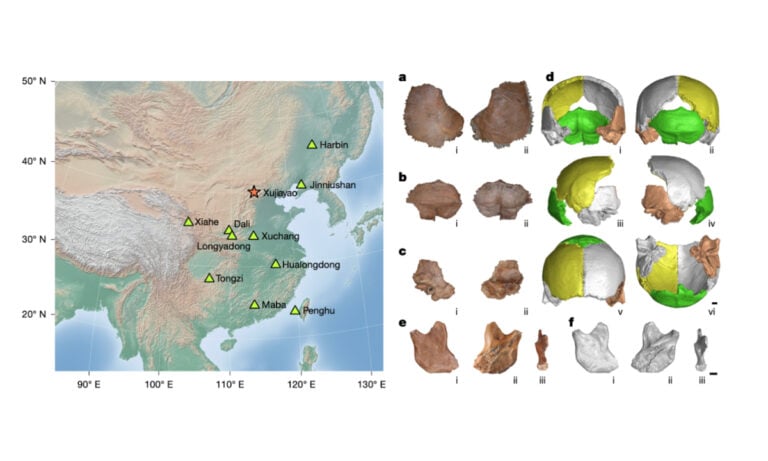
Chinese Academy of Sciences Identifies Denisovans via Protein Analysis
Researchers from the Chinese Academy of Sciences have identified the Xujiayao and Bianfu Cave hominins as Denisovans.
Antarctic Intermediate Water Becomes Saltier as Sea Ice Declines
A vast, freshwater-rich layer of the Southern Ocean known as the Antarctic Intermediate Water has abruptly reversed decades...
SpaceX launches 27 Starlink satellites on Falcon 9 from Vandenberg
SpaceX launched 27 Starlink satellites into low Earth orbit aboard a Falcon 9 rocket from Vandenberg Space Force...

Airbus to Build Two of Four More Galileo Satellites
The European Space Agency has awarded contracts to Airbus and Thales Alenia Space to build four additional Galileo...