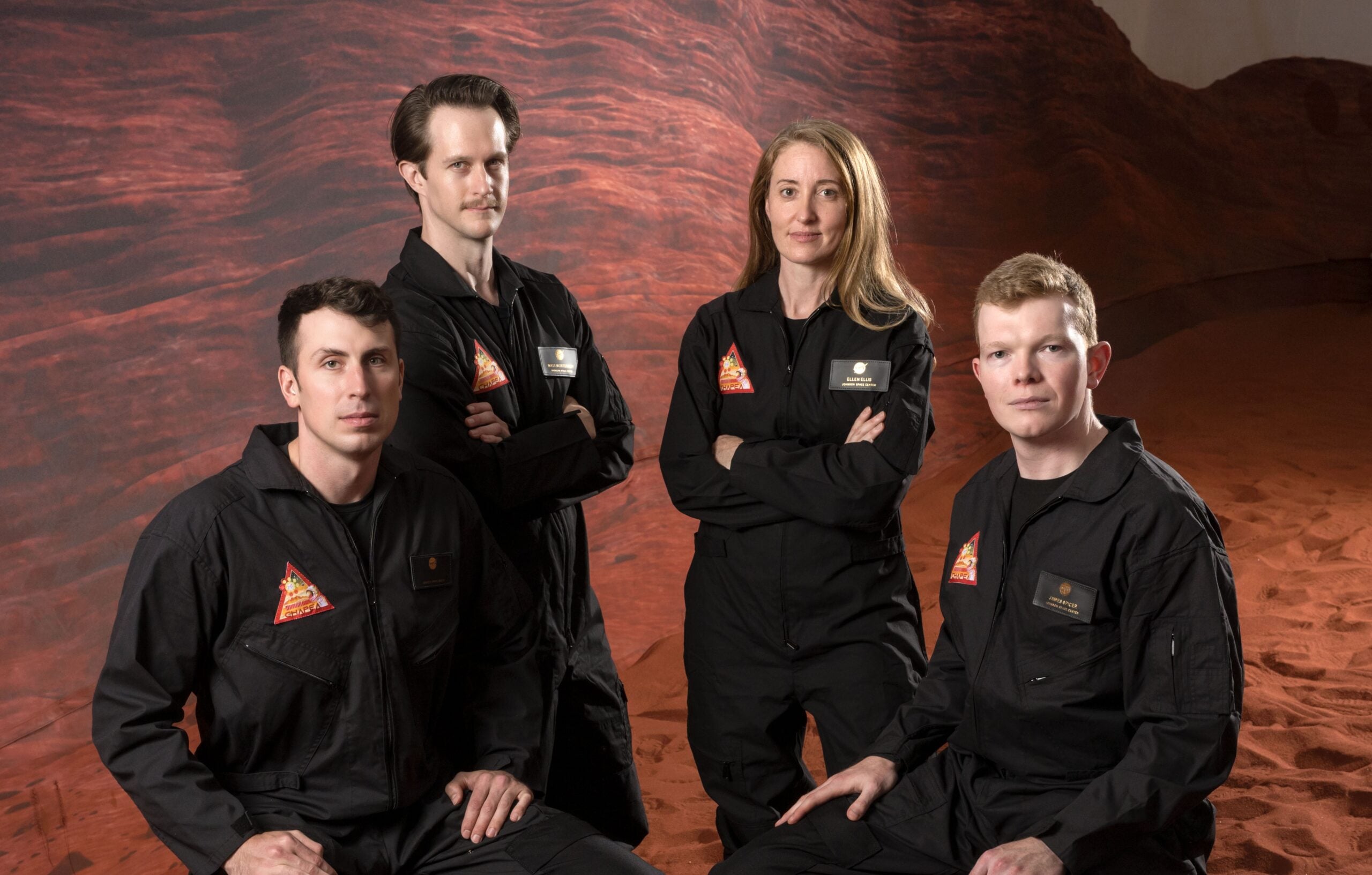
Four volunteers exited a sealed 1,700-square-foot habitat at NASA’s Johnson Space Center on October 31, 2026, successfully concluding 378 days of isolation that simulated the psychological and physical strains of a mission to Mars.
The crew members—commander Ross Elder, medical officer Ellen Ellis, Matthew Montgomery, and flight engineer James Spicer—stepped outside into Earth’s atmosphere after more than a year in a facility and cut off from natural sunlight. The project, designated as Mission 2 under NASA’s Crew Health and Performance Exploration Analog program, began on October 19, 2025.
Life Inside the Mars Dune Alpha Habitat
Throughout their 378-day confinement, the volunteers lived within a 1,700-square-foot, 3D-printed structure designed to replicate deep-space operating conditions. Their daily routine included cultivating crops, performing habitat maintenance, executing simulated spacewalks, and conducting continuous health assessments.
Crew from NASA's simulated Mars mission emerges after 378 days in isolation https://t.co/NuXHeuuS5N
Operating under conditions meant to mimic a planetary expedition, the crew managed tight limits on supplies while enduring artificial communication delays. Messages transmitted between the habitat and mission control carried delays, with NASA simulating communication delays that lasted up to 44 minutes.
Data Collection for Artemis and Future Deep Space Flight
NASA researchers monitored the crew’s physiological and psychological responses to isolation throughout the deployment. Flight surgeons and behavioral scientists will analyze the records to refine medical support practices and dietary planning for future human spaceflight.
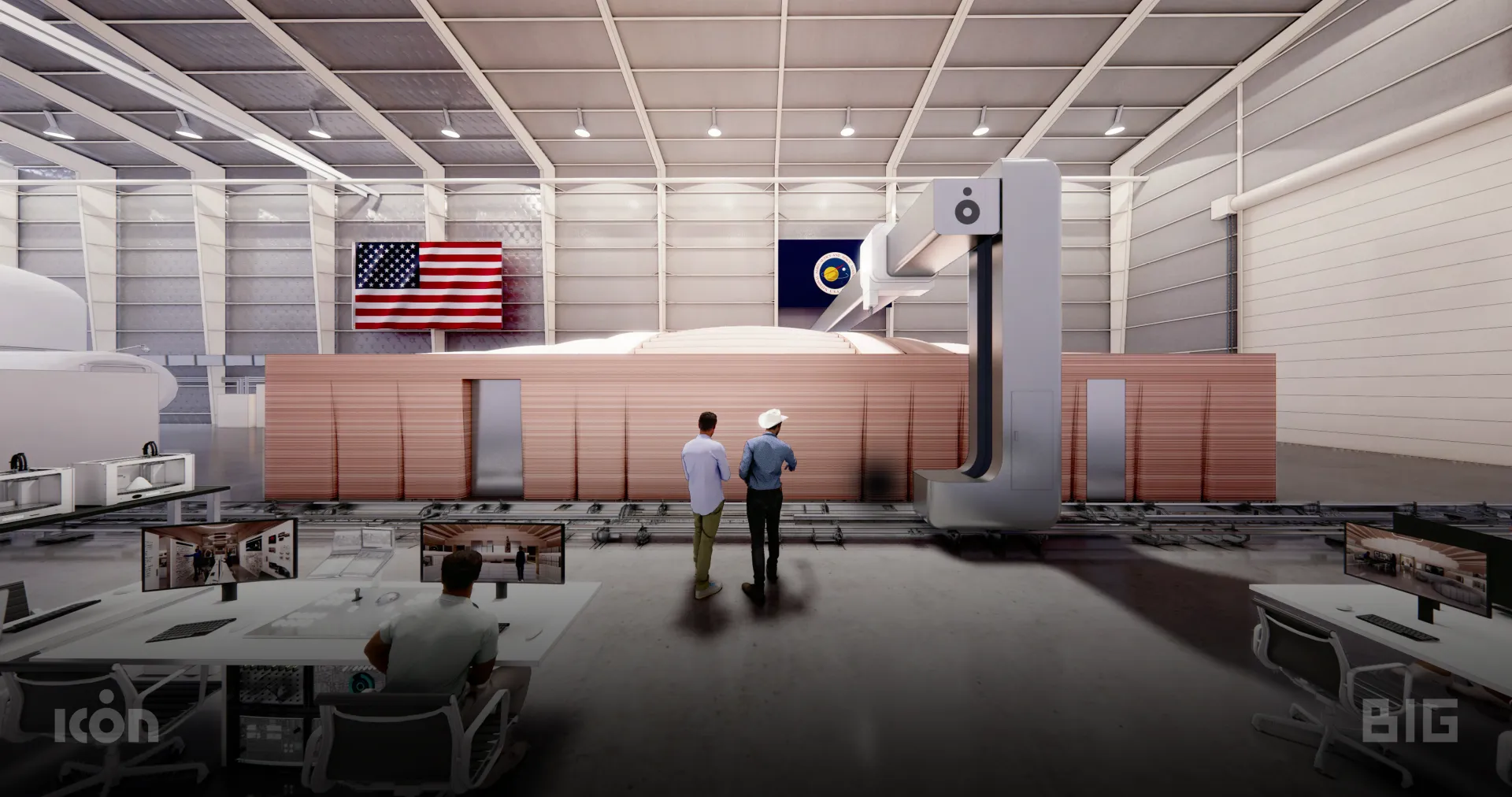
According to agency officials, the findings will inform preparations for the Artemis program and planned lunar base operations. Investigators aim to optimize food system design, manage bandwidth on the Deep Space Network, and establish requirements for life-support systems built by commercial contractors.
For more than a year, they have lived in an isolated environment, conducting critical research and helping us better understand what it will take to send humans to Mars.
Vanessa Wyche, director of the Johnson Space Center
This deployment follows a preceding yearlong analog run that concluded in July 2024. NASA has outlined a plan to conduct three long-duration Mars simulations of this scale.
Expansion Into Combined Lunar and Martian Analogs
NASA is preparing for a successor study titled the Moon and Mars Exploration Analog, announced on July 1, 2026. Scheduled to begin no earlier than August 2027, the next program will fold the Human Exploration Research Analog together with the CHAPEA facility.

The integrated study will use the HERA habitat as a spacecraft and the CHAPEA facility as a planetary base. Participants will simulate months of transit followed by surface work.
As the CHAPEA Mission 2 volunteers transition into a two-week medical and psychological evaluation period, Commander Elder summarized the significance of their return to Earth.
For Mars, the risks are great, but through seeking understanding, strong vision and leadership, creativity, fortitude, hard work, and an incredible foundation, the goal of putting humans on Mars is not only achievable, but rather inevitable.
Ross Elder, mission commander
4.1-Billion-Year-Old Meteorite From Mars Discovered in Sahara Desert
Discovered in the Sahara Desert in 2022, a nearly two-pound rose-colored rock found in Mali has been identified...

You start painting pictures of squirrels twirling their mustaches’: A biologist on whether animals can lie
Biologist James O'Hanlon tackles tactical deception and whether animals can truly lie in his 2026 book Liars, Cheats...

GSI Study Reveals Ancient Redox Shifts in Bijawar Basin
Geochemical analyses of Paleoproterozoic sedimentary rocks in Madhya Pradesh's Barwah-Harda inlier reveal shifting oceanic redox gradients and atmospheric...
Chinese Academy of Sciences Identifies Denisovans via Protein Analysis
Researchers from the Chinese Academy of Sciences have identified the Xujiayao and Bianfu Cave hominins as Denisovans.