
Biologist James O’Hanlon tackles tactical deception and whether animals can truly lie in his 2026 book Liars, Cheats and Copycats,
mapping a vast spectrum from unconscious camouflage to calculated social manipulation.
Published by Columbia University Press in 2026, explores tactical deception aimed squarely at manipulating what another animal believes.
The Fine Line Between Evolution and Intent
Most deception in the natural world happens without any awareness from the creature involved, according to Livescience. A moth evolves to look like a hornet. Orchid mantises mimic flowers to lure in pollinators.
Yet scientists are paid to be pedantic. Questions around animal lying usually yield a yes, but
or a possibly
response. Researchers can never know for certain what goes on inside an animal’s brain. Even so, many behaviors strongly mimic lying.
Alarm Calls and Cuttlefish Chameleons
Golden snub-nosed monkeys use deceptive alarm calls to scare off other members of their group and steal their food. Eventually, other group members learn to ignore the calls when the trick becomes too frequent. This dynamic suggests that animal societies may develop their own rules to keep lying in check.

Similarly, the drongo bird is renowned for its ability to deceive meerkats by cycling through different alarm calls and borrowing calls from other bird species.
In another striking case, researchers studying cuttlefish observed the invertebrates changing one side of their body to look like a male and the other to look like a female. Initial resistance from scientists arose simply because cuttlefish are little invertebrates. Yet the evidence shows it is no different from strategies seen in large-brained mammals.
Consciousness and Social Pressures
Distinguishing between camouflage like a tiger’s stripes and tactical deception comes down to intent and choice. Tiger stripes work whether the animal is aware of them or not. Tactical deception relies on some form of choice to work. This raises difficult questions about consciousness and whether animals make deliberate decisions.

GSI Study Reveals Ancient Redox Shifts in Bijawar Basin
Geochemical analyses of Paleoproterozoic sedimentary rocks in Madhya Pradesh's Barwah-Harda inlier reveal shifting oceanic redox gradients and atmospheric...
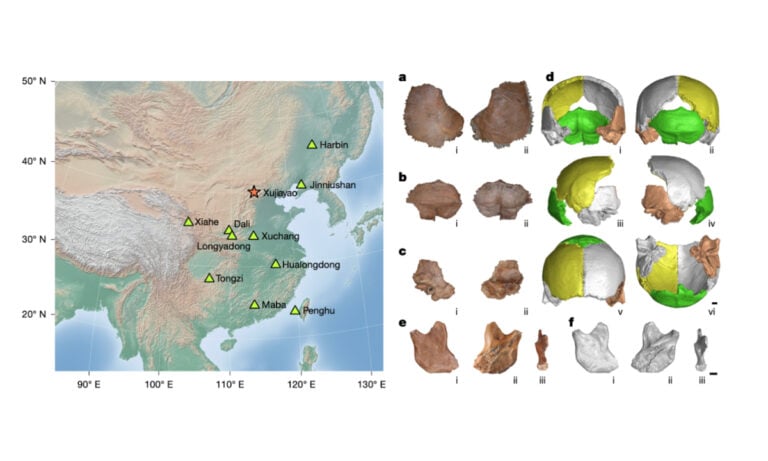
Chinese Academy of Sciences Identifies Denisovans via Protein Analysis
Researchers from the Chinese Academy of Sciences have identified the Xujiayao and Bianfu Cave hominins as Denisovans.
Antarctic Intermediate Water Becomes Saltier as Sea Ice Declines
A vast, freshwater-rich layer of the Southern Ocean known as the Antarctic Intermediate Water has abruptly reversed decades...

SpaceX launches 27 Starlink satellites on Falcon 9 from Vandenberg
SpaceX launched 27 Starlink satellites into low Earth orbit aboard a Falcon 9 rocket from Vandenberg Space Force...