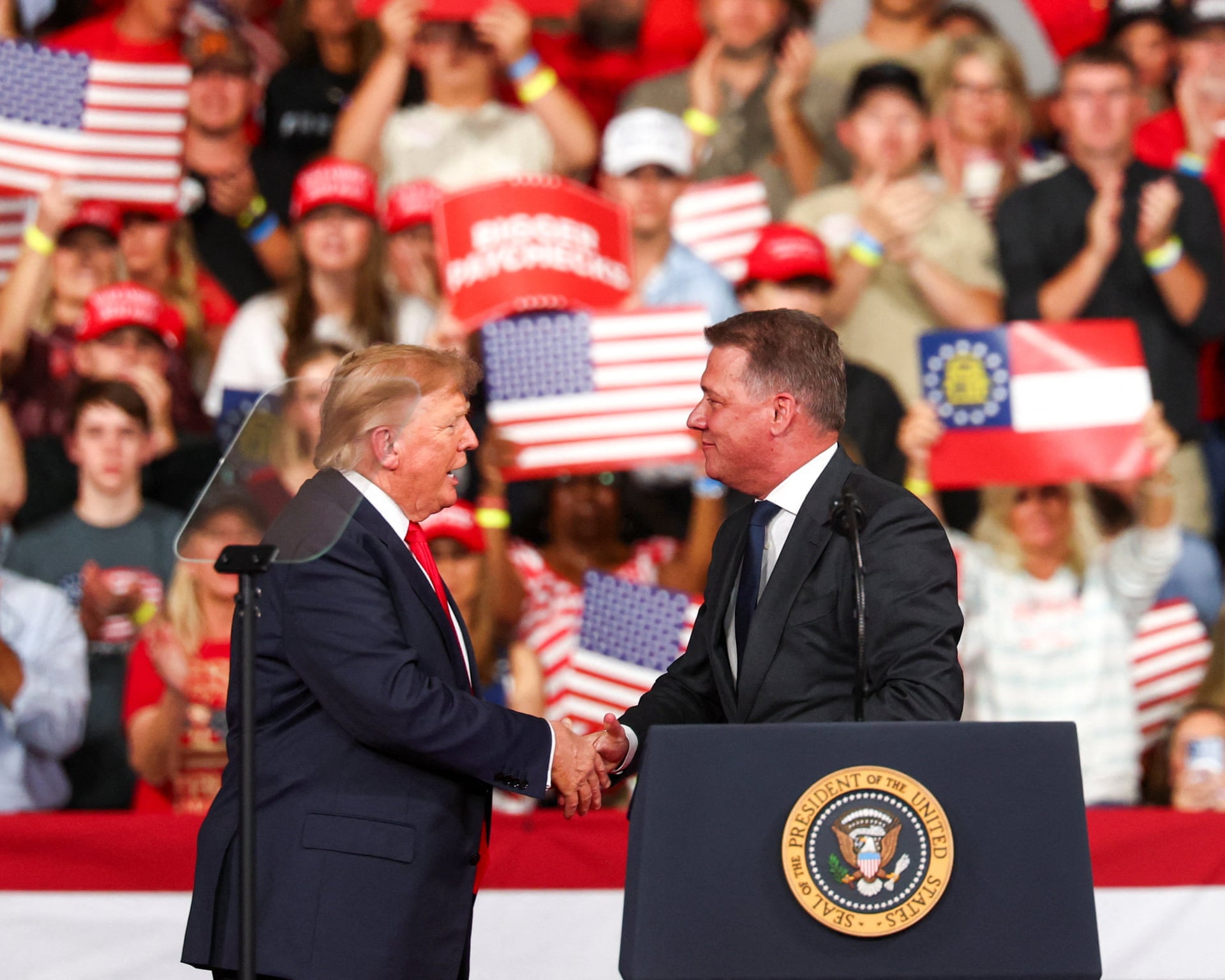
Audi chief executive Gernot Döllner faced sharp backlash in Germany on October 26, 2026, after appearing alongside U.S. President Donald Trump at a Georgia campaign rally to announce a proposed $4 billion manufacturing facility, drawing accusations of violating corporate political neutrality.
The appearance on October 24, 2026, at a rally in Perry, Georgia, placed Audi’s leadership at the center of a political and industrial storm. U.S. President Donald Trump announced to the crowd that the luxury carmaker intended to invest $4.2 billion in nearby Macon, Georgia to construct a manufacturing facility capable of producing 200,000 vehicles annually. Döllner subsequently took the stage, thanked the U.S. president for his support, and told attendees that the project represented a commitment to the North American market.
PERRY — President Donald Trump on Saturday announced German automaker Audi will spend $4.2 billion to build its first U.S. manufacturing facility near Macon, touting the massive project at a campaign rally aimed at boosting Georgia Republicans https://t.co/BGhoIGv8Vy
Döllner stated that the automaker plans to produce its largest and most premium SUVs directly in Macon. He noted that factory construction is scheduled to begin next year, with car production slated to start in the 2030s.
This is a long-term investment because we believe in the American market.
Gernot Döllner, Audi CEO
Union Leaders and Politicians Condemn the Rally Appearance
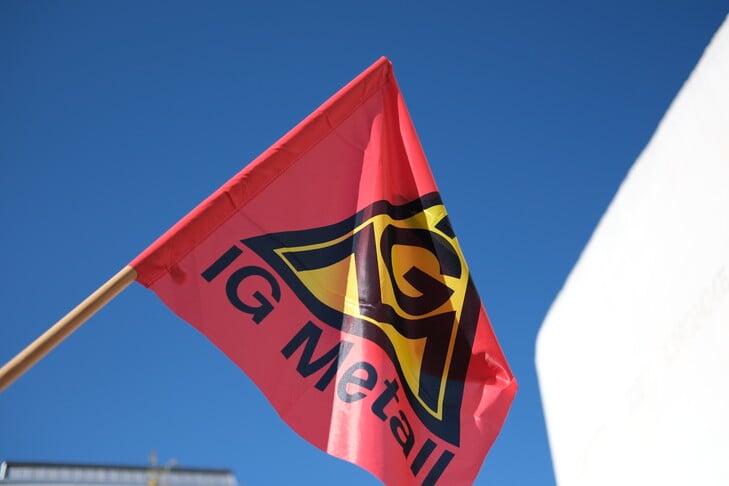
Labor representatives in Germany condemned the staging immediately. Christiane Benner, first chairwoman of the industrial union IG Metall and deputy chair of the Volkswagen supervisory board, argued that Döllner had breached internal corporate rules that explicitly forbid public appearances with political figures or sponsorship of political events in the three months preceding an election. MEP Dennis Radtke from the center-right Christian Democratic Union party also criticized the appearance, arguing that Trump’s policies heavily damage German industry.
.@POTUS: "Audi is going to build one of the largest plants — they're going to make 200,000 cars a year. They're closing up in Mexico and Canada; they're coming into our country with a brand new, gorgeous plant right in Georgia." pic.twitter.com/bvFl4JlJdr
The way in which Gernot Döllner presented himself and Audi in the USA is highly embarrassing, politically unacceptable, and unworthy of the company — and, above all, unworthy of the people who work at Audi.
Christiane Benner, IG Metall first chairwoman
Political figures joined the criticism, with German Social Democrat transport spokesperson Isabel Cademartori calling the appearance a disgrace
in light of Volkswagen’s corporate history.
Tariff Pressures and Global Restructuring Behind the Macon Investment Plan
The proposed Georgia plant marks an effort by Audi to establish its first manufacturing footprint inside the United States. As the sole premium German car manufacturer lacking domestic production in the U.S., Audi has remained uniquely exposed to trade policies. The company incurred approximately €1.2 billion in tariff-related costs during the previous year due to a punishing 15% import levy.
However, the announcement arrives while parent company Volkswagen manages a contentious restructuring program. Volkswagen is pursuing plans to eliminate roughly 100,000 jobs and scale back excess production capacity to counter heavy financial losses in China, expensive transitions to electric vehicles, and high domestic operating expenses. German manufacturing sites, including the Neckarsulm factory, face potential closure risks early next decade.
Volkswagen Supervisory Board Must Still Decide on the Project
Despite the high-profile rollout in Georgia, the proposed manufacturing plant has not yet secured formal authorization. Company rules dictate that major capital expenditures require approval from Volkswagen’s supervisory board, where labor representatives hold significant influence. Analysts at Metzler noted that while establishing domestic U.S. production makes sound economic sense to mitigate trade barriers, the timing and political optics of creating jobs abroad while downsizing operations at home created an unfavorable public impression.
.@POTUS: I am thrilled to announce a massive auto manufacturing investment in the Great State of Georgia.Audi has just committed to invest $4.25 BILLION in Macon — to begin construction next month on a massive plant that will produce 200,000 cars per year. pic.twitter.com/KHqdie8Tzb
Automotive expert Ferdinand Dudenhöffer described the executive’s actions by comparing him to Tesla chief Elon Musk, pointing to parallels in how industry leaders align with American political figures. As supervisory board discussions approach, labor leaders maintain that securing employment at domestic German facilities remains their primary objective, ensuring the proposed North American strategy will face intense scrutiny within corporate governing bodies.
Stop us if you’ve heard this one before. Days before a tight election, Georgia Republican leaders unveil a blockbuster jobs deal and hold it up as proof voters should keep the GOP in charge. #gapol https://t.co/Hq04bgcnFE
More on Gernot Döllner
Keep reading
ABS-CBN Wins 7th ACGS Golden Arrow Award
ABS-CBN Corporation secured its seventh ASEAN Corporate Governance Award on October 26, 2026, receiving a Golden Arrow Award...
Ghana Gold Board Rejects Allegations of Endorsing Illegal Mining
The Ghana Gold Board has rejected allegations that its chief executive endorsed illegal mining during an engagement with...
Volkswagen AG plans to build its first U.S
Volkswagen AG plans to build its first U.S. manufacturing facility for the Audi brand in Macon, Georgia.

Tata, Honda, Hyundai Unveil 3 EVs by End 2026
Tata Motors, Honda, and Hyundai prepare to unveil three locally manufactured electric cars for the Indian market by...