The High Price of Defeat in Chicago’s School Board Elections
In the first full-scale election for the Chicago Board of Education, the math of political influence has taken a jarring turn. Outside political groups poured nearly $12 million into a campaign to unseat candidates aligned with the Chicago Teachers Union (CTU). Yet, as the final votes were tallied following Tuesday’s election, the reality revealed by a Chicago Sun-Times analysis suggests that record-breaking spending did not guarantee a political mandate.
The primary driver behind this spending surge was a collection of independent super PACs, which are legally barred from coordinating directly with campaigns but operate with no limits on the funds they can raise or spend. While these groups managed to secure a win for their preferred presidential candidate, Jessica Biggs, their success in district-level races was far more uneven—and in several instances, remarkably expensive.
When Spending per Vote Becomes a Liability
The financial strategy of the Common Ground Collective, heavily funded by billionaire Michael Sacks, serves as a stark case study in the diminishing returns of political advertising. Through November 2, the group spent roughly $7 million to influence the outcome of the school board races. In District 1b, they funneled $473,000 into the campaign of Michelle Pierre, effectively spending $43 for every vote she received. Pierre lost the race.
The Illinois Network of Charter Schools also saw similar trends, with $4.4 million in spending resulting in defeats where the cost reached as high as $31 per vote. When looking at the broader landscape, the financial disparity is striking. In District 3a, the spending on behalf of candidate Peter Gonzales ballooned to roughly $76 per vote, a figure that highlights the sheer volume of capital being deployed to move the needle in local school board politics.
For some, this infusion of cash became a political hurdle rather than an asset. Michelle Pierre noted that the constant barrage of super PAC advertising, which often attacked her opponents, created a narrative that she struggled to separate from her own platform. As she put it, the public perception of billionaires intervening in local education elections likely had a backlash effect, with voters wary of the influence of outside money.
The Union’s Leaner Financial Footprint
By comparison, the CTU-backed candidates operated with a significantly smaller financial cushion. The CTU PAC and Our Schools PAC spent a combined $2.6 million through November 2. In the races they won, the cost per vote was consistently less than $4. This disparity underscores a fundamental divide in the current election cycle: the union’s reliance on an established network of educators and parents versus the super PACs’ reliance on high-dollar media buys.
Despite the nearly $12 million spent by anti-CTU groups—a total that includes spending by The Urban Center—the union appears poised to secure as many as 10 of the 20 available seats, with four races remaining too close to call. The outcome suggests that while money can dominate the airwaves, it cannot always overcome the logistical advantages of incumbency and grassroots mobilization.
“That narrative was shared constantly. This narrative of billionaires intervening in elections probably had an impact,” said Michelle Pierre, reflecting on the campaign.
A Shifting Boardroom Landscape
The goal of these deep-pocketed groups was to “declaw” the CTU’s influence on the board, which has historically been bolstered by appointments from Mayor Brandon Johnson or union-backed elections. Chuck Swirsky, director of Common Ground, argues that the election still represents a shift, noting that the union will hold fewer seats than its current 15-member majority. For Swirsky, the win for Jessica Biggs, which cost roughly $16 per vote, represents a “clear repudiation” of the union’s previous control.
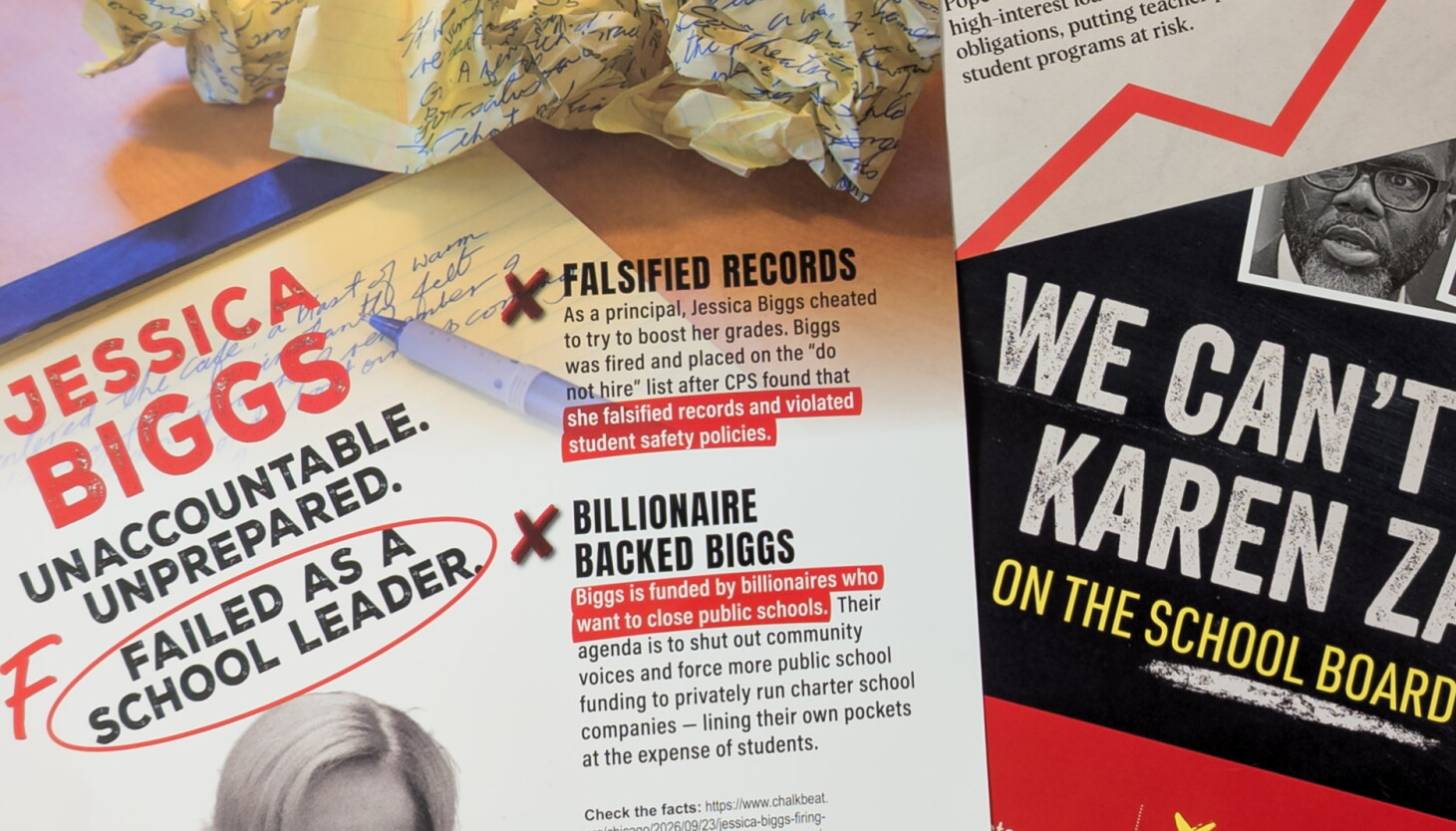
However, the results on the ground remain complex. Candidates like Connie Anderson, who faced a significant spending disadvantage in District 10b, found that voters were ultimately more responsive to her platform than to the deluge of outside advertising. Her victory serves as a reminder that the cost-per-vote metric, while useful for tracking political efficiency, is a poor predictor of voter sentiment in a climate where constituents are increasingly sensitive to the source of campaign funding.
As the new board prepares to take office in January, the legacy of this election will likely be defined by the tension between the sheer scale of the spending and the actual electoral outcomes. With the final results of the remaining close races yet to be determined, the impact of these millions on the future of Chicago Public Schools remains a subject of intense scrutiny.
Related reading

Southeastern Oklahoma State Honors Top Ten Freshmen Students
Southeastern Oklahoma State University honors the 2025-26 Top Ten Freshmen Southeastern Oklahoma State University held a ceremony and...

Carolyn Jane Norman, 80, Beloved Mother and Community Supporter
Carolyn Jane Norman passes away at age 80 Carolyn Jane Norman, a long-time resident of East Grand Forks,...

NYCFC and D.C. United Face Season Finale Amid Injury Struggles
New York City FC and D.C. United are both mathematically eliminated from the MLS postseason, setting the stage...

Ohio University graduate Michael Whittemore releases Ecology book
Michael Whittemore bridges ecological science and professional practice Michael Whittemore is currently managing a multifaceted career that spans...