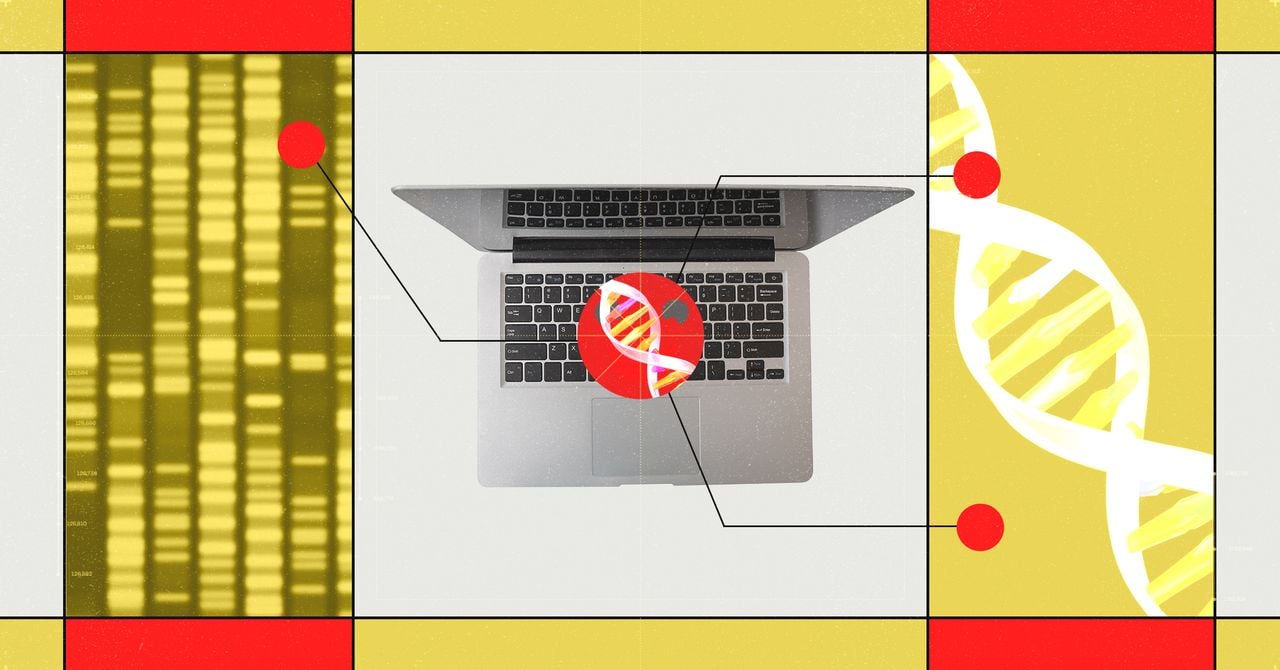
Hugging Face released an open-source model family named Carbon that allows users to query genomic sequences in natural language. The model runs locally on standard hardware to help researchers analyze DNA mutations, with developers omitting viral data from its training to prevent misuse.
The AI platform Hugging Face has released an open-source model designed to bridge the gap between genomic data and conversational text. Known as Carbon-X, the tool lets researchers chat with DNA using plain language to examine how genetic changes influence gene activity and health. The development follows Nvidia’s agreement in September to acquire Hugging Face for nearly $13 billion, marking a major milestone for the platform.
Developed in collaboration with researchers at Zhongguancun Academy in China and the University of Naples Federico II in Italy, the model is trained on genomic sequences and natural language so that people can ask questions about the effects of DNA changes on gene activity and health and get conversational answers in return. Lewis Tunstall, a senior research scientist at Hugging Face, says the tool is meant to help researchers design new drugs and genetic therapies, and it could potentially aid patients in interpreting their own genomes.
Hugging Face's new AI model, Carbon-X, can help people "chat with DNA." https://t.co/mvS4PHvFAL
Carbon-X Architecture and Local Laptop Performance
Unlike massive cloud-bound models, Carbon-X was deliberately built so it can run locally on standard user hardware like a laptop, allowing researchers to query specific parts of a genome without uploading sensitive or identifiable patient data to external servers. No data is sent to Hugging Face or any other company.
The development team built the model by taking an existing language model, specifically Qwen3-14B, and expanding its vocabulary to read DNA in groups of six letters. They then trained it on 300 billion chunks of data, or tokens, that combined DNA sequences, English text, and examples linking DNA to biological descriptions. To prevent potential biological hazards, the team explicitly excluded viruses from the training data.
We’ve unlocked a new capability in language models, which is fundamentally about being able to chat with DNA.
Lewis Tunstall, Senior Research Scientist at Hugging Face
Carbon Model Family Trained on Eukaryotic DNA
The broader Carbon foundation model family includes several iterations tailored for specialized genomics tasks.
This model family was trained on approximately 1 trillion tokens, which works out to about 6 trillion DNA base pairs, drawn specifically from eukaryotic DNA and RNA sequences. Every Carbon model and its associated tooling is available on the Hugging Face Hub under the Apache-2.0 license.
actual logo https://t.co/dDxqJr40Vfhttps://t.co/Ae5EQGrkYS pic.twitter.com/88ZJkomM72
Using Carbon-A, Hugging Face Bio built the Carbon Annotation Database, which holds approximately 566 million predicted protein-coding loci, representing a database roughly 16 times larger than RefSeq annotations.
Applications in Variant Analysis and Drug Design
Developers caution that they haven’t validated the model yet with actual wet lab experiments, so they cannot say how accurate its predictions are.

>

Mercedes-AMG Refreshes GLE 63 S And GLS 63 Lineup
Mercedes-AMG has rolled out its refreshed, high-output BiTurbo V8 lineup for 2027, pairing the familiar 603-horsepower engine with...

Les Éditions du Boréal Splits with Best-Selling Haitian-Canadian Author
Canadian publishing house Les Éditions du Boréal severed ties with Haitian-Canadian author Thélyson Orélien on October 21, 2026,...

Blackmagic Design Offers Limited-Time DaVinci Resolve Studio AI Sale
Blackmagic Design has launched a limited-time 20% discount on DaVinci Resolve Studio 21 alongside editing keyboards and color...

OpenAI Rolls Out Locked Chats with 4-Digit PIN on October 20, 2026
OpenAI rolled out a new privacy feature on October 20, 2026, allowing ChatGPT users to lock sensitive individual...